🏛️ Bagan Archaeological Zone (Myanmar)
🔎 Quick Facts and Why It Matters
The Bagan Archaeological Zone in Myanmar is a vast expanse of ancient temples and pagodas, notable for its extensive collection of religious monuments that date back to the 9th century. This site is one of the world's richest archaeological locations and a cherished emblem of Myanmar’s cultural heritage.
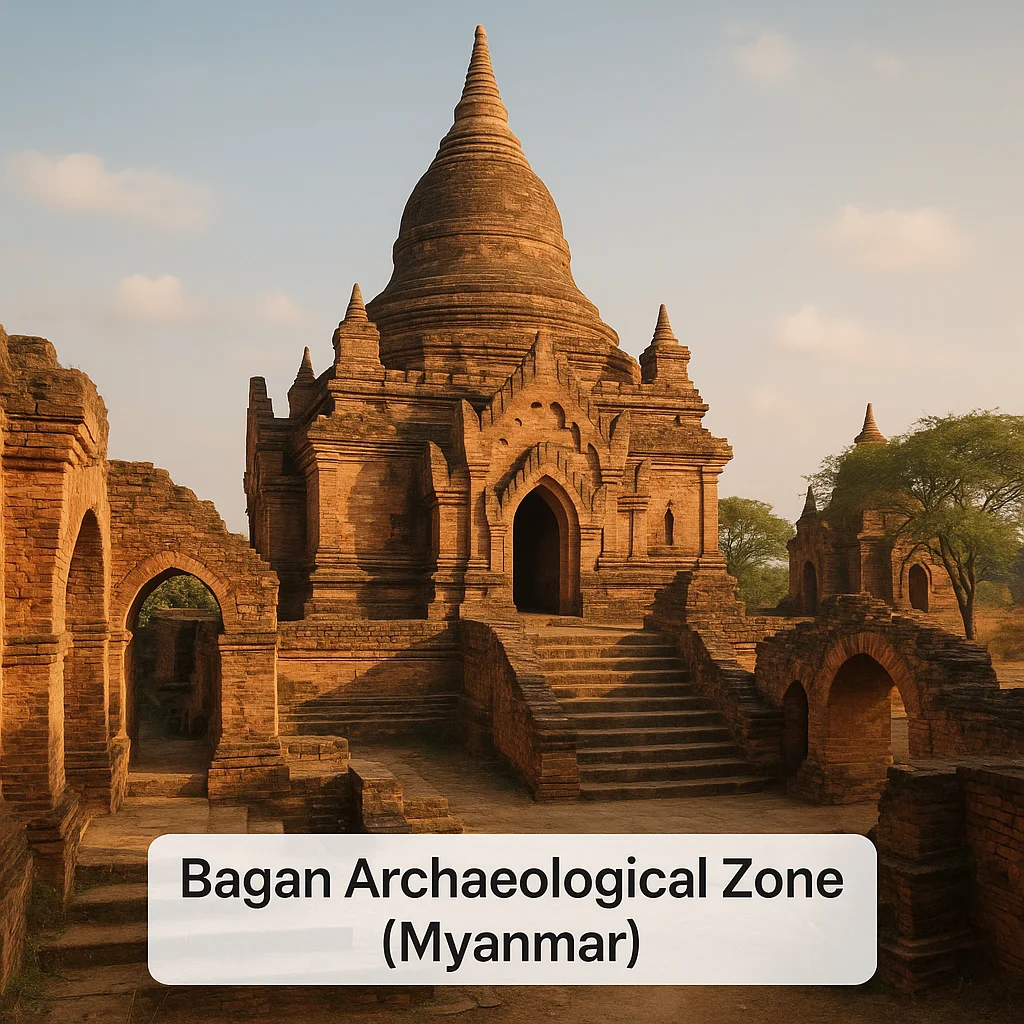
The site is special not only for its sheer number of temples but also for the way these structures capture the evolution of ancient Burmese architecture and Buddhism. Visitors to Bagan can experience the wonder of these monuments up close, walk through time amidst the ruins, and take in sweeping views of the pagoda-dotted horizon.
This guide will introduce you to the highlights of Bagan, offering insights into its history, architecture, and practical tips for visiting. Whether you're a history enthusiast or a cultural adventurer, understanding Bagan's significance enhances the journey.
- Location: Mandalay Region, Myanmar
- Era: 9th to 13th century
- Typical visit length: 1–3 days
- Visiting difficulty: Moderate walkability
- Best seasons: November to February
- Highlights: Ananda Temple, Shwesandaw Pagoda
🗺️ Where It Is and How to Orient Yourself
Bagan is located in the Mandalay Region of Myanmar, near the banks of the Ayeyarwady River. It's approximately 180 kilometers southwest of Mandalay, which serves as the typical gateway city with its major airport and rail connections.
While it's theoretically possible to visit Bagan as a very long day trip from Mandalay, it is far more practical and rewarding to stay overnight. The site’s vastness and the number of temples to explore make a multi-day visit ideal.
Imagine Bagan as a gentle, riverfront plain dotted with thousands of ancient structures. This mental image can help you appreciate its grandeur, especially during sunrise or sunset when the monuments cast long shadows over the landscape, creating a truly magical view.
🕰️ History in a Nutshell
The Bagan Archaeological Zone was predominantly constructed by the Burmese kings of the Bagan Kingdom during the 9th to 13th centuries. It served as a religious and political center, with temples dedicated primarily to Buddhism.
The site reached its zenith during the Bagan Dynasty’s golden age in the 11th century. However, the city's prominence waned following Mongol invasions in the late 13th century, which led to its abandonment as a political capital.
Despite centuries of decline, the resilient structures of Bagan survived, albeit some left in ruins by earthquakes and the passage of time. Recent efforts have focused on restoration and conservation, preserving Bagan’s essence for future generations.
⭐ Top Highlights You Should Not Miss
- Ananda Temple
- Shwesandaw Pagoda
- Sulamani Temple
- Dhamma Yangyi Temple
- Htilominlo Temple
Ananda Temple is renowned for its four standing Buddha images and exquisite terracotta tiles. The best photo spot offers a full view of the massive façade with its tiered terraces.
The Shwesandaw Pagoda provides one of the most iconic sunrise views in Bagan. From its terrace, a panorama of countless pagodas against a rising sun sets a perfect scene.
Sulamani Temple is noted for its elaborate brickwork and mural paintings. A wide-angle shot capturing the temple with its gates fully visible conveys its architectural brilliance.
Dhamma Yangyi Temple, the largest in Bagan, is a must-see for its haunting vastness and intriguing unresolved mysteries of construction.
Htilominlo Temple captivates with its detailed plaster carvings and an ornate, golden spire. A view that includes the courtyard and full temple structure is compelling.
🧱 Architecture, Materials, and Design (Made Simple)
The majority of Bagan’s structures were built using brick, with stucco used extensively for decorative details. This choice reflects local availability and the architectural evolution from earlier wood structures.
Bagan’s architectural style is a unique blend rooted in Indian influence, featuring pointed arches, conical pagodas, and symmetrical design principles that served functional and aesthetic purposes.
Key features that make Bagan recognizable include its gilded stupas, extensive use of mural paintings, and the strategic use of light through window placements. While many temples remain in their original state, some have been restored to safeguard their history.
🎟️ Visiting Guide (Time, Tickets, and What to Expect)
A standard visit often ranges from one to three days. Adventure seekers might explore quickly in a single day, though a more leisurely exploration benefits those staying longer.
Entrance to the Bagan Archaeological Zone requires a paid permit valid for several days, allowing access to all temple sites. Additionally, some temples might offer guided tours for a more detailed experience.
Typically, the temples are open from morning till late afternoon, with hours varying by season. Visitors should plan to carry sufficient water, wear suitable footwear for walking, and ensure sun protection.
🚆 How to Get There and Move Around
Bagan is reachable via domestic flights from Mandalay, Yangon, or Heho, as well as by train or bus. Once there, electric scooters and bicycles are popular for temple hopping, offering ease of access and maneuverability.
Beginners should consider starting from Nyaung U, which is relatively flat and offers numerous nearby temples. This area provides a good base for exploring the zone.
Keep in mind that some structures have steep stairs and uneven pathways, so navigation can vary in difficulty. Those with mobility concerns should plan for sites with easier access.
🌤️ Best Season, Weather, and Time of Day
The best time to visit Bagan is from November to February when temperatures are cooler and the risk of rain is minimal. This period also offers clearer skies and ideal photographic light.
Visiting during the early morning or late afternoon offers the most rewarding experiences, as the monuments are bathed in gentle light and the temperatures are more comfortable for exploring.
If it happens to rain, exploring the Bagan Archaeological Museum or taking in the scenic beauty from indoor vantage points offers an excellent alternative.
⚠️ Safety, Rules, and Respectful Etiquette
Wear sturdy shoes suitable for environment with uneven stones and stairs. Check temple-specific guidelines for dress code, respecting local customs by covering shoulders and knees in sacred spaces.
Photography is usually allowed, though using flash or drones may be restricted. Always observe posted signage and respect any guidelines provided by staff.
Be mindful of preservation efforts by not climbing on fragile structures or touching ancient murals. Stick to paths and remain cautious of slippery surfaces and busy areas.
🗺️ Nearby Places and a Simple One-Day Itinerary
Near Bagan, visitors can explore Mount Popa, a revered pilgrimage site, or the local markets in Nyaung U. Alternatively, the city’s Archaeological Museum offers a valuable indoor excursion.
- Morning: Sunrise at Shwesandaw Pagoda
- Midday: Visit Ananda and Sulamani Temples
- Afternoon: Explore Dhamma Yangyi and Htilominlo Temples
- Evening: View sunset from a river boat cruise
This itinerary combines iconic temple visits with leisure, allowing a balanced exploration that includes breathtaking views and serene moments by the river.
🧩 Stories, Myths, and Common Questions
Q: Is Bagan the largest collection of temples in the world?
A: Bagan is one of the most important, but other sites like Angkor in Cambodia are comparable in grandeur.
Q: Was Bagan ever a "lost city"?
A: No, Bagan was not lost but rather neglected over centuries until restoration began in earnest in the 20th century.
Q: How hard is the walk around Bagan?
A: While many areas are accessible on foot, the vastness makes bicycling or taking a scooter preferable.
Q: Is Bagan suitable for children?
A: Yes, with supervision due to uneven surfaces and the wealth of exploration possibilities.
Q: Is hiring a guide necessary?
A: Not essential, but a guide adds context and enriches the understanding of each temple's unique history.
📌 Summary and Who This Site Is Best For
- A vast complex of ancient temples and monuments
- Located in Myanmar’s Mandalay Region
- Built from the 9th to 13th century
- Highlights include Ananda and Shwesandaw Temples
- Features intricate brickwork and spiritual architecture
- Recommended visit: 1–3 days
- Best time: November to February
- Respectfully explore, follow cultural and safety guidelines
- Nearby exploration includes Mount Popa and local markets
- Memorable as a sunrise and sunset location
Bagan appeals to a wide array of visitors, from history buffs to photographers, offering extensive insights into Burmese heritage. Families will find it engaging, though supervision is important, and those interested in photography will find unparalleled vistas.
The serene beauty of Bagan, coupled with its rich historical and cultural significance, rewards those who take the time to explore it thoroughly. Its vast and varied landscape makes Bagan an unforgettable destination, encouraging visitors to respect and cherish its ancient heritage.
As you plan your trip, remember that mindful travel helps preserve such sites for future generations, enriching the world’s historical tapestry.