🏛️ Alhambra (Spain)
🔎 Quick Facts and Why It Matters
The Alhambra is a mesmerizing palace and fortress complex located in Granada, Spain. Famous for its stunning Islamic architecture and beautiful gardens, it is one of the most important monuments of Islamic heritage in Europe.
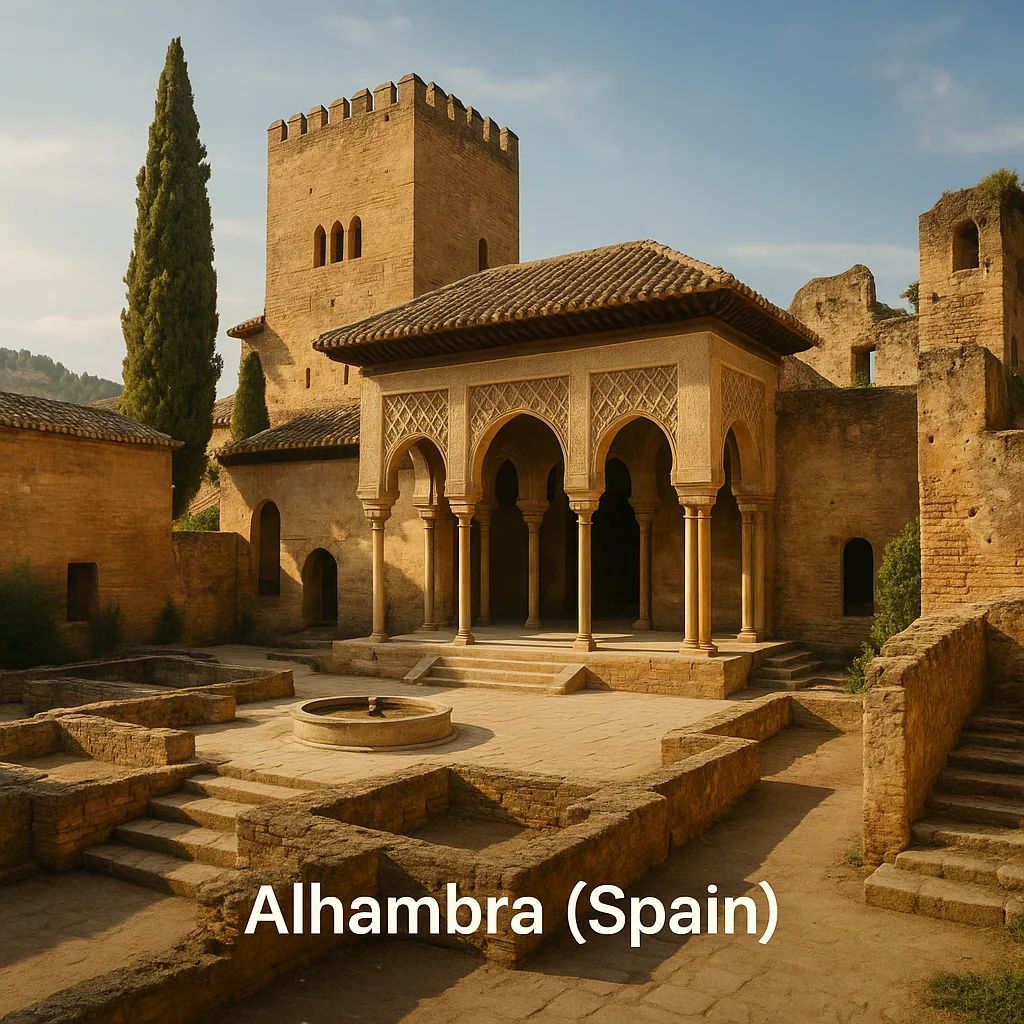
This site is special due to its intricate architectural details, historical significance, and the breathtaking views it offers over the city of Granada. Visitors can explore the remnants of a once-thriving Moorish civilization, enjoying walkable grounds and museum-like experiences.
In this guide, you'll learn about the history and architecture of the Alhambra, discover key highlights you should not miss, and get practical tips for making the most out of your visit.
- Country: Spain
- Region: Andalusia, near the Sierra Nevada mountains
- General Era: Medieval (13th to 15th centuries)
- Typical Visit Length: 2–4 hours
- Difficulty: Moderate due to uneven terrain
- Best Season: Spring and Fall for mild weather
- Highlight: The Nasrid Palaces
🗺️ Where It Is and How to Orient Yourself
The Alhambra is situated in the southern region of Andalusia, Spain, in the city of Granada. This city provides a charming blend of historical richness and lively modern life, all set against the backdrop of the Sierra Nevada mountains.
The nearest major city is Malaga, which also serves as a typical gateway for visitors due to its international airport. Granada itself is accessible by train or road, and while a day trip is possible from Malaga, an overnight stay in Granada is recommended for a deeper experience.
Imagine the Alhambra perched on a hilltop, overlooking Granada, with extensive views of the surrounding plains and distant mountain ranges—helping you to mentally map its commanding location.
🕰️ History in a Nutshell
The Alhambra was primarily constructed in the 13th century by the Nasrid dynasty. It served as the royal palace and fortress of the last Muslim emirs in Spain before the Reconquista (the period during which Christian kingdoms reconquered the Iberian Peninsula from Muslim rule).
At its peak, the Alhambra was a vibrant court oasis, surrounded by bustling city life and fertile lands. However, after the Christian conquest in 1492, parts of the complex were altered or abandoned, leading to its decline. Yet, the exceptional craftsmanship ensured its survival through the ages.
Today, it remains as a historical monument, illustrating the transition between the medieval Muslim and Christian worlds through its construction and design.
⭐ Top Highlights You Should Not Miss
- The Nasrid Palaces
- The Alcazaba
- The Generalife Gardens
- The Palace of Charles V
- The Court of the Lions
Explore the Nasrid Palaces, the heart of the Alhambra, where intricate stucco work, carved wooden ceilings, and tranquil courtyards will captivate your imagination. Make sure to capture a wide view of the palaces with the Sierra Nevada mountains visible in the distance.
The Alcazaba, a fortification with towering walls, offers panoramic views of Granada. Best photos can be taken with the entire fortress backdrop, alongside the city spread below.
Walk through the Generalife Gardens, known for their lush greenery and refreshing water features—an ideal spot for photos with vibrant flora framing the entire garden layout.
The Palace of Charles V, although not completed in the Renaissance style, provides a stark contrast to the Moorish architecture. Look for the circular courtyard and giant exterior columns for a full structure view.
The Court of the Lions, with its iconic fountain and delicate columns, is a must-see. Ensure your photograph frames the entire courtyard, capturing the harmonious proportions and symmetry.
🧱 Architecture, Materials, and Design (Made Simple)
The Alhambra is primarily constructed from local stucco, wood, and brick, blended seamlessly with decorative tiles and marble. The original builders utilized traditional Moorish techniques, focusing on light-infused spaces and intricate geometric patterns.
The style is predominantly Islamic, with significant influences from Persian and Byzantine art, resulting in its distinctive arches, serene courtyards, and vibrant mosaics—a testament to the cultural exchanges of the time.
Look for the intricate muqarnas (stalactite-like decorations), arabesques (scrolling vines and patterns), and the Arabic calligraphy revealing poetry along the walls. Some parts have been restored, such as the facades and flooring, conserving the original feel while ensuring stability.
🎟️ Visiting Guide (Time, Tickets, and What to Expect)
For a comprehensive visit, plan for 3 to 4 hours to explore the main areas. Quick visits might focus on key highlights and take about 2 hours, while deep dives—including museums—can extend beyond 4 hours.
Entry involves a paid zone for most areas, including guided tour options. It is important to book tickets in advance, as visitor numbers are limited, and popular times can sell out quickly. Details can change, so check ahead for current requirements.
The Alhambra typically operates from morning until late afternoon, closing at varying times based on season. First-timers should arrive early to avoid crowds, bring along water and sun protection, and wear comfortable walking shoes.
🚆 How to Get There and Move Around
Granada is accessible via public buses, taxis, or rental cars. There is a reliable public bus service from downtown Granada to the Alhambra, making it a convenient choice. Taxis are also abundant and provide a faster, direct route.
If you prefer walking, the pathways leading to the Alhambra may be steep and uneven, but offer rewarding views as you ascend. For newcomers, starting at the main entrance closer to the Nasrid Palaces is recommended for an easier orientation.
Accessibility within the site may be challenging due to steps, cobbled stones, and inclined paths, so visitors with mobility issues should take extra care and plan accordingly.
🌤️ Best Season, Weather, and Time of Day
The ideal visiting seasons are spring and fall, when Granada enjoys mild temperatures and lower tourist crowds. Summers are hot and winters can be chilly, especially at higher elevations.
For the best light and minimized crowds, consider visiting early in the morning or late in the afternoon. If the weather turns rainy, nearby indoor attractions, such as the Alhambra Museum, offer fascinating alternatives.
⚠️ Safety, Rules, and Respectful Etiquette
Wear sturdy footwear for navigating uneven ground and stairways. Modest clothing is appreciated, particularly in quieter, more sacred areas of the site.
Photography is generally allowed, but flash and drones may be restricted in certain parts—always adhere to posted rules. Help conserve the site by not touching delicate carvings and staying on designated paths.
Watch out for slippery stones, especially in wet conditions, and remain aware of your personal belongings due to crowd congestion.
🗺️ Nearby Places and a Simple One-Day Itinerary
Complement your Alhambra visit with nearby attractions, such as the Albaicín district, a maze of narrow streets recalling its Moorish past. Also, consider the beautiful Renaissance Cathedral of Granada or the Carthusian Monastery.
- Morning: Start with the Alhambra, immersing yourself in its rich history.
- Midday: Head to the Albaicín, explore its charming streets, and enjoy a leisurely lunch.
- Afternoon: Visit the Cathedral of Granada and its royal chapel.
- Evening: Wander through the botanical gardens of Carmen de los Mártires.
🧩 Stories, Myths, and Common Questions
Q: Is the Alhambra a lost city?
A: No, it's a preserved historical site, never truly "lost" but rather restored over time.
Q: Was it built by the Romans?
A: Historians agree that it was built by the Nasrid dynasty during the Islamic rule of Spain, long after the Roman Empire period.
Q: Are children welcome?
A: Yes, the site is family-friendly and offers engaging exploration, but be prepared for some walking.
Q: Is a guide necessary?
A: While not required, guides can provide valuable insights into its complex history and art.
Q: How challenging is the visit?
A: The walk involves moderate difficulty due to uneven paths; plan for rests and stay hydrated.
📌 Summary and Who This Site Is Best For
- Palace and fortress complex
- Located in Granada, Spain
- Built by the Nasrids during medieval times
- Includes Nasrid Palaces and Generalife Gardens
- Moorish architectural style with intricate designs
- Plan for a 2 to 4-hour visit
- Best visited in spring or fall
- Wear sturdy shoes and respect posted rules
- Nearby Albaicín and Cathedral make great add-ons
- A remarkable blend of history and art awaits
The Alhambra is an enchanting destination for families, photographers, history enthusiasts, and those who appreciate splendid architecture and gardens. Its layered history and artistic achievement make it a worthwhile addition to any traveler’s itinerary.
By visiting the Alhambra, you step back into a pivotal era of cultural exchange and marvel at a site where history truly comes alive.
May your visit be as enlightening as it is enjoyable. Please do visit responsibly and cherish the heritage that this incredible site represents.