🏛️ Fort Jesus (Kenya)
🔎 Quick Facts and Why It Matters
Fort Jesus is a renowned historical landmark located in Mombasa, Kenya. Built in the late 16th century, this fort is famed for its impressive display of Portuguese military architecture and is a testament to the strategic might of European colonial powers.
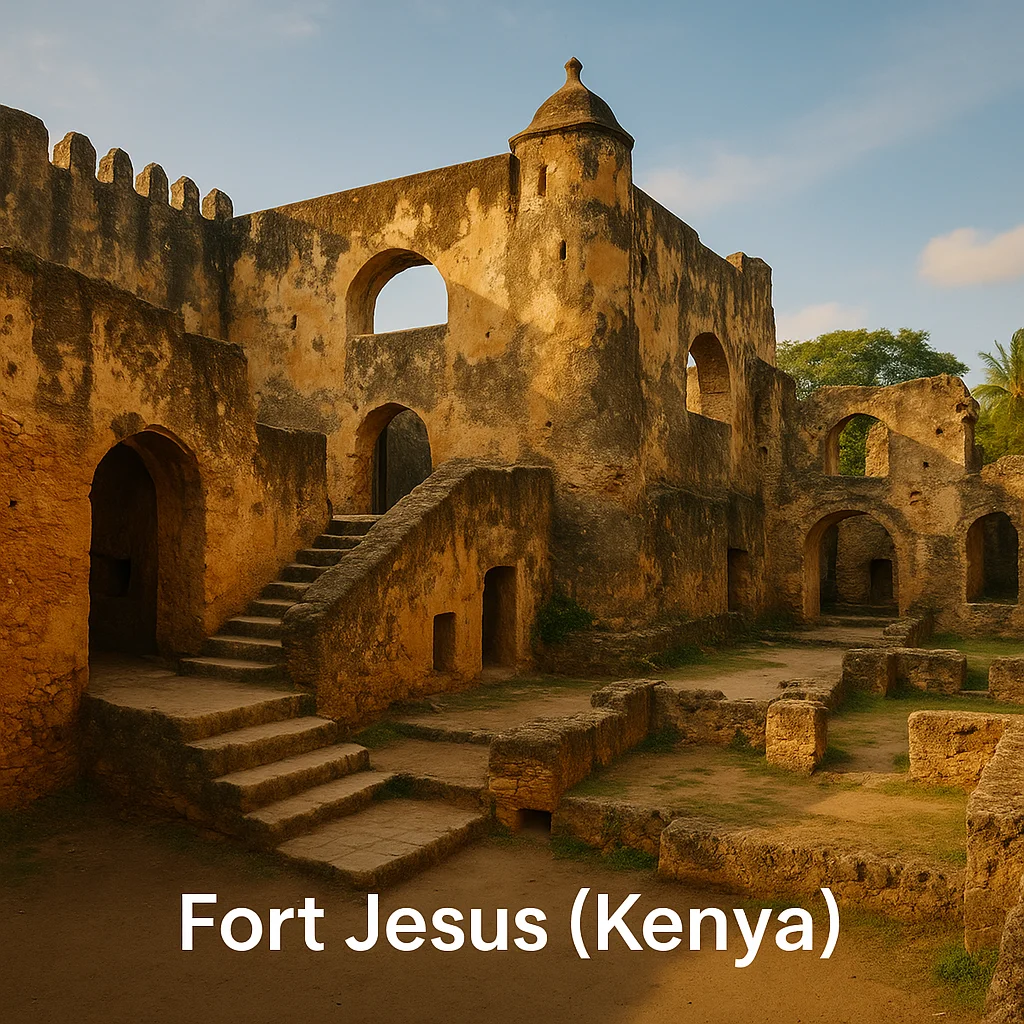
The fort offers visitors a glimpse into its tumultuous past, from its Portuguese origins, through to its role in conflicts between colonial powers, to its current status as a UNESCO World Heritage Site. Its blend of historical significance and well-preserved architecture makes it an immersive educational site.
This guide will help you explore Fort Jesus, highlighting its history, architecture, and the best way to plan your visit. You will learn about the key features to look for, and how to make the most of your time at this fascinating site.
- Located in Mombasa, Kenya
- Built in the late 1500s by the Portuguese
- Typical visit lasts 2-3 hours
- Accessible by foot with varying levels of difficulty
- Best visited in dry seasons
- Highlights include panoramic views and museum exhibits
🗺️ Where It Is and How to Orient Yourself
Fort Jesus is situated in the coastal city of Mombasa, Kenya. The city serves as the essential hub for exploring the fort, with the closest gateway being Moi International Airport. From there, visitors can easily access the fort using local transport options.
The fort is conveniently located for a day trip, but for those who appreciate a slower pace or want to explore further, an overnight stay in Mombasa would be worthwhile. Situated on a small coastal strip, visitors can enjoy views over the Indian Ocean.
Mombasa itself is a vibrant historical city where the fort forms the cultural centerpiece. This area offers a mental map of a city where old meets new, with the fort providing a panoramic viewpoint to understand the locale's geographic and historical layout.
🕰️ History in a Nutshell
Constructed by the Portuguese between 1593 and 1596, Fort Jesus served as a strategic defensive point aimed at protecting the Old Port of Mombasa. Designed by Italian architect Giovanni Battista Cairati, the fort is an embodiment of Renaissance military fortification.
Throughout its history, Fort Jesus has witnessed numerous attacks and changes in control, serving various colonial powers including the Omani Arabs and briefly by the British. Each conquest left a mark on the fort, contributing to its rich mosaic of historical influences.
Despite the wars and sieges, the core structure of Fort Jesus has remarkably stood the test of time. It has been preserved as a symbol of historic resilience, now serving as both a museum and a key historical attraction.
⭐ Top Highlights You Should Not Miss
- The Main Fort Structure
- The Fort Jesus Museum
- The Omani House
- The Bastions
- The Fort Walls and Gateways
The Main Fort Structure: This is the heart of Fort Jesus, showcasing Portuguese military architecture at its finest. From the fort's elevated position, visitors can enjoy a full structure visible against the backdrop of Mombasa's skyline and the Indian Ocean.
The Fort Jesus Museum: Housed within the fort, the museum offers various exhibits that cover the fort's history, showcasing artifacts from the Portuguese and Omani periods. It's an excellent spot for wide-view displays and unique photo opportunities.
The Omani House: A beautifully preserved example of 18th-century Swahili residential architecture, this house gives insight into the lifestyle of the time and features intricate carvings that are best viewed from a wide angle to capture its detailed craftsmanship.
The Bastions: These defensive structures offer some of the best photo spots, revealing panoramic views over the old town and the bustling harbor. It's a perfect place for capturing the essence of the fort's strategic design.
The Fort Walls and Gateways: Walking along these ancient walls provides a tangible sense of history. Looking through the original gateways framed by thick stone and pegged iron doors gives a full sense of the fort's imposing defense mechanisms.
🧱 Architecture, Materials, and Design (Made Simple)
Fort Jesus was constructed primarily from locally sourced coral stones, a material that provides both durability and a distinctive visual aesthetic. The fort's design incorporates elements of Renaissance architecture, characterized by its geometric layout and massive walls.
The fort's architectural style shows Portuguese influences, visible in the well-planned bastions and the symmetrical design. These components are complemented by Swahili, Arabian, and European elements, creating a unique architectural fusion. Notably, the intricate reliefs and carvings on Omani House walls offer a glimpse into ornamental styles of subsequent occupants.
Restoration efforts at Fort Jesus have focused on maintaining its historical integrity, with modern stabilization techniques ensuring that the original parts of the structure remain comprehensible and authentic to visitors today.
🎟️ Visiting Guide (Time, Tickets, and What to Expect)
A visit to Fort Jesus typically lasts between 2 to 3 hours, allowing ample time to explore both the exteriors and museum interiors. Admission patterns usually include a standard entrance fee with options for guided tours, which can enhance the educational experience.
The fort generally operates from early morning to late afternoon, though visiting during the cooler morning hours is advisable. Visitors should check for any seasonal changes to opening schedules and consider arriving early to avoid peak crowds.
For first-time visitors, it is recommended to carry water, wear comfortable shoes for walking on uneven surfaces, and plan for both sunny and shady environments. A sun hat and sunscreen are advisable given the open nature of many areas.
🚆 How to Get There and Move Around
Mombasa offers several transport options to reach Fort Jesus, including public buses, taxis, and ride-sharing services which provide an efficient approach to accessing the site. For those who prefer to walk, the fort is centrally located and well-signposted from the city center.
Accessibility considerations should be noted, as there are areas within Fort Jesus with steep steps or uneven terrain, potentially challenging for those requiring mobility support. A main entrance point is available, providing a straightforward introduction to the fort's layout.
🌤️ Best Season, Weather, and Time of Day
The best time to visit Fort Jesus is during the drier months of July through October, when temperatures are more moderate and rain is less frequent. This ensures a pleasant experience for outdoor exploration.
The optimal times to explore the fort are early morning or late afternoon. These aspects not only help avoid the midday heat but also offer the best lighting conditions for photography enthusiasts.
On rainy days, visitors can explore the indoor museum exhibits, ensuring a fulfilling visit regardless of weather conditions.
⚠️ Safety, Rules, and Respectful Etiquette
Appropriate attire and footwear are essential, especially when navigating the fort's uneven grounds and steps. Visitors are encouraged to respect cultural norms by keeping noise levels low in quieter zones and respecting signage.
Photography is generally permitted, though it's advisable to follow any posted restrictions on flash photography or unmanned aerial vehicles such as drones to preserve the site's ambiance and structure.
In terms of conservation, visitors are urged to remain on designated paths and avoid touching or climbing on delicate structures to preserve the historic site for future generations.
Practical advice includes keeping hydrated, watching for slippery stones during wet periods, and being aware of personal belongings in crowded areas to thwart pickpocketing.
🗺️ Nearby Places and a Simple One-Day Itinerary
In addition to Fort Jesus, the city of Mombasa offers several adjacent attractions suitable for a broadened itinerary. These include visits to the Old Town, Haller Park, Mombasa Marine National Park, and the local spice markets.
- Morning: Start your day at Fort Jesus, exploring its vast history and museum.
- Midday: Truly experience local culture with a stroll through Mombasa's Old Town.
- Afternoon: Relax at Haller Park, taking in the flora and fauna unique to the region.
- Evening: Conclude with dinner by the Indian Ocean coast, sampling local cuisine.
🧩 Stories, Myths, and Common Questions
Q: Is Fort Jesus really haunted? While some local folklore claims ghostly presences, historians attribute these tales more to imaginative storytelling rather than documented evidence.
Q: Who ultimately built Fort Jesus? Though designed by an Italian, the fort's construction was under the directive of the Portuguese Empire during their colonial expansion in Africa.
Q: Is the site suitable for children? Yes, with guided tours providing interactive learning opportunities and wide spaces for walking, children can enjoy a visit, albeit with supervision.
Q: Is Fort Jesus a "lost city"? Contrary to some sensational claims, Fort Jesus was never abandoned in the manner of a "lost city," but rather evolved with changing political dynamics over centuries.
Q: Is a guided tour necessary? While not mandatory, guided tours enhance the visitor experience by offering historical context that broadens comprehension of the site's significance.
📌 Summary and Who This Site Is Best For
- Fort Jesus is a historical fort in Mombasa, Kenya
- Located by the Indian Ocean coast in Mombasa city
- Built by the Portuguese; symbolizes colonial-era power
- Top highlights include the fort structure and museum
- Combines Renaissance architecture with local influences
- Ideal for half-day visits; up to 3 hours recommended
- Best visited during dry seasons, morning or afternoon
- Respectful conduct and attention to safety advised
- Pair with Old Town, Haller Park, and local markets
- Memorable for its historical depth and ocean views
Fort Jesus appeals to a diverse range of visitors, from families seeking educational experiences to history aficionados and photography enthusiasts. It provides an enriching window into Kenya's colonial past and strategic significance.
What makes Fort Jesus stand out is its commanding structure, comprehensive museum exhibits, and the captivating story it tells of the cultural and historical intersections of Mombasa. This fortress provides a robust, educational exploration for all age groups.
Every visit to Fort Jesus serves as a journey through time, emphasizing the importance of preserving historical sites and promoting an appreciation for the stories they tell. We encourage all visitors to engage respectfully with this heritage landmark.