🏛️ Cusco Historic Centre (Peru)
🔎 Quick Facts and Why It Matters
Cusco Historic Centre is renowned as the historical capital of the Inca Empire, located in the heart of Peru. This UNESCO World Heritage Site draws visitors worldwide for its stunning blend of Inca and Spanish colonial architecture.
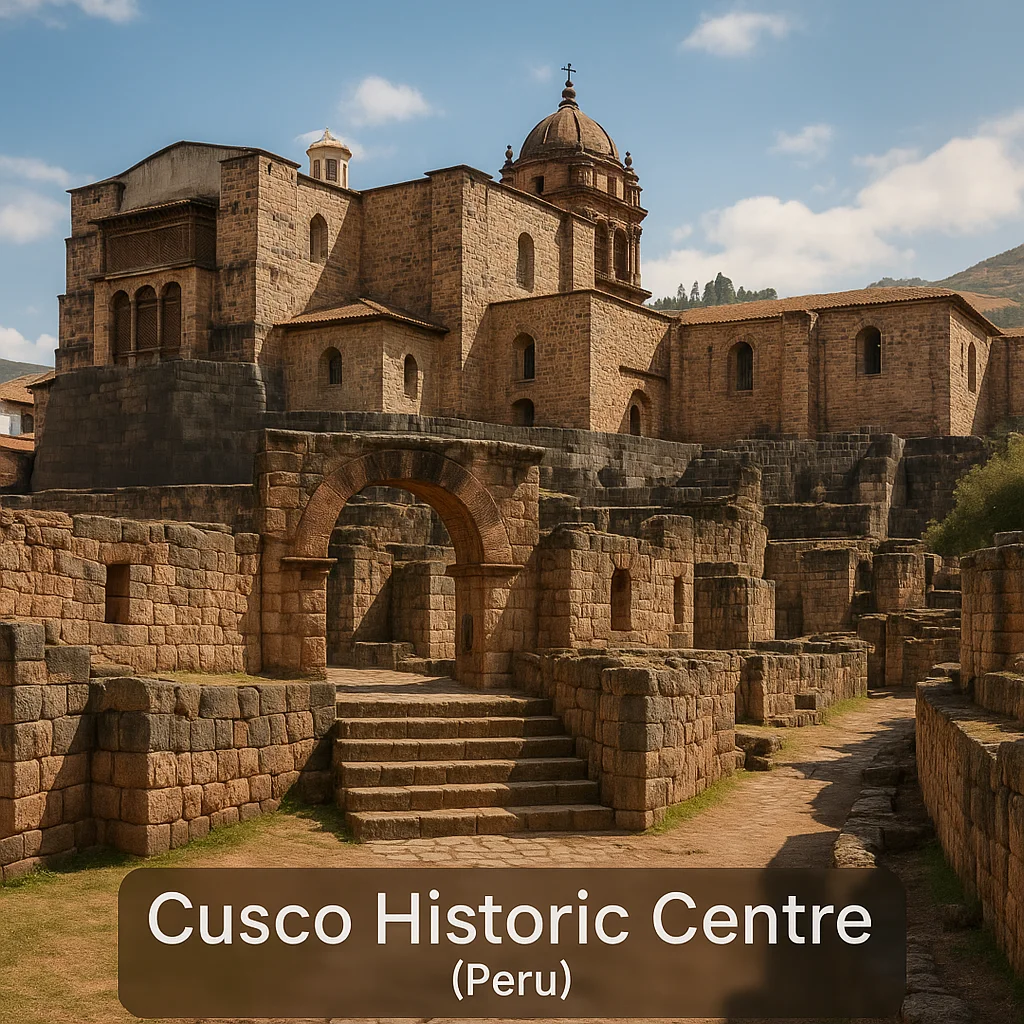
Within its narrow, cobblestone streets, visitors can experience a walkable journey through history. The center offers significant viewpoints of ancient ruins, baroque-style churches, and colonial buildings that vividly tell the story of the city's storied past.
In this guide, you will learn about the key highlights of Cusco, its rich historical significance, architectural marvels, and practical tips for planning your visit. From Incan masonry to majestic cathedrals, this site offers a priceless experience for history enthusiasts and travelers alike.
- Country/Region: Peru, South America
- General Era: Inca period and Spanish colonial era
- Typical Visit Length: 1–2 days
- Difficulty: Moderate (due to altitude)
- Best Season: May to October
- Highlight: Plaza de Armas and Sacsayhuamán
🗺️ Where It Is and How to Orient Yourself
Cusco is located in southeastern Peru, nestled in the Andes mountain range. The historic center is within the city of Cusco, which serves as the gateway to exploring the rich cultural landscape of the region. The nearest major transportation hub is Alejandro Velasco Astete International Airport, located just a few kilometers from the city center.
While it's possible for some to treat it as a day trip, spending at least a night in Cusco allows for a more immersive experience. This ensures time to adapt to the altitude and explore the numerous historical sites at a leisurely pace.
For those envisioning Cusco on a map, think of it as a city perched in a mountain valley. The old town spreads out beneath the towering hills of the Andes, offering stunning views and a unique perspective on its cultural heritage.
🕰️ History in a Nutshell
Cusco was originally built by the Inca Empire around the 12th century. It was the heart of Incan administration, religion, and culture. The city flourished and expanded under the reign of the prolific Inca ruler Pachacuti, who transformed Cusco into the empire's grand capital.
The Conquistadors, led by Francisco Pizarro, captured Cusco in the 16th century, marking the start of Spanish colonial rule. The resulting blend of indigenous and colonial architecture is a testament to its complex historical evolution.
Earthquakes and changes in political power over the centuries contributed to both the ruin and preservation of Cusco. The physical remains survive today as a symbol of the region's resilience and historical significance, attracting historians and tourists alike.
⭐ Top Highlights You Should Not Miss
- Plaza de Armas
- Sacsayhuamán
- The Qorikancha (Temple of the Sun)
- Cusco Cathedral
- San Blas Neighborhood
The Plaza de Armas serves as the core of Cusco, offering a central location surrounded by historical landmarks. A full structure view from any corner of the plaza showcases elaborate cathedrals and quaint colonial buildings, encapsulating the city's unique blend of cultural influences.
The formidable stone walls of Sacsayhuamán lie just outside the city center. Known for the precision masonry of its vast stones, this site provides an entire facade in frame, with expansive views of Cusco and the surrounding mountains.
The Qorikancha, once the most sacred site in the Inca Empire, was a breathtaking temple dedicated to the sun god. It’s a perfect showcase of Inca architecture with clear stone lines and intricate details, transitioning seamlessly into the colonial Church of Santo Domingo.
The Cusco Cathedral, located in the Plaza de Armas, is a magnificent example of Spanish colonial architecture. Its entire façade can be viewed from the plaza, making it a popular spot for photos, especially at sunset when the stone glows in the fading light.
San Blas, an artisans' neighborhood, boasts narrow winding streets and quaint houses. This area offers a wide view with surrounding context at Plazoleta San Blas, where the famous San Blas church stands, known for its intricate pulpit.
🧱 Architecture, Materials, and Design (Made Simple)
Cusco's architecture reflects a harmonious blend between its ancient Incan heritage and the intricate details of Spanish colonial design. The Incas predominantly used large stone blocks, fitted together so precisely that no mortar was necessary.
This Incan influence is characterized by its simplicity, symmetry, and functionality. You’ll notice trapezoidal doors and windows, which demonstrate their advanced engineering techniques. Spanish invaders later infused baroque and Renaissance styles, adding arches and religious symbols.
Notably, the Cusco Cathedral was constructed from blocks taken from nearby Sacsayhuamán, a symbol of the colonial transformation. Some parts of the city, such as these foundational walls, remain original, while others saw restorations aimed at preserving their historical integrity.
🎟️ Visiting Guide (Time, Tickets, and What to Expect)
To fully appreciate Cusco's historic center, a visit of one to two days is recommended. For a quick glimpse, half a day may suffice. Entry into some key locations like the Qorikancha and museums may require a ticket, while many outdoor areas around the Plaza de Armas are freely accessible.
Most attractions operate from the morning into the late afternoon, with potential variation during holidays or special occasions. It's wise to check locally for changes. Consider starting early to avoid crowds and bring essentials like water, a hat, and sun protection, especially due to the high altitude and strong sunlight.
🚆 How to Get There and Move Around
Travelers can reach Cusco by air, bus, or train, with Alejandro Velasco Astete International Airport being the most common entry point. Within the city, walking is the best way to explore the historic center, where many streets are pedestrian-friendly.
Options for getting to Sacsayhuamán include taxi or a scenic uphill walk. The latter offers an experience through cobblestone streets with rewarding vistas. Be mindful of accessibility issues, as some paths can be steep or uneven, requiring suitable footwear and cautious navigation.
🌤️ Best Season, Weather, and Time of Day
The ideal time to visit Cusco is during the dry season from May to October, when rainfall is minimal, and the skies are clear. This period ensures the best light for photography and outdoor excursions. Early mornings and late afternoons offer cooler temperatures and fewer crowds.
If visiting during the rainy season, museums and indoor attractions provide alternative activities during heavy showers. Have a flexible plan and consider exploring covered markets, which showcase local crafts and goods.
⚠️ Safety, Rules, and Respectful Etiquette
Walking on uneven cobblestones requires sturdy footwear and care, especially around ancient stones. Respect cultural norms by maintaining silence in sacred areas and honoring any posted rules, especially regarding photography, as flash and drones may be restricted.
Contribute to conservation efforts by staying on clearly marked paths, avoiding touching fragile structures, and not climbing on ruins. Be cautious of the altitude's effects, stay hydrated, and be mindful of pickpockets in crowded areas without being alarmist.
🗺️ Nearby Places and a Simple One-Day Itinerary
While in Cusco, you can explore the rich cultural environments of the San Pedro Market or visit the neighborhood of San Blas for artisanal goods. Consider additional sites like the Inka Museum or the vibrant archways of Pukamuqu. The nearby archaeological site of Qenko also offers a peaceful natural setting combined with historic intrigue.
- Morning: Visit Plaza de Armas and tour the Cusco Cathedral.
- Midday: Explore Sacsayhuamán and enjoy a picnic with city views.
- Afternoon: Visit the Qorikancha and stroll through San Blas.
- Evening: Dine at a local restaurant, enjoying Peruvian cuisine.
🧩 Stories, Myths, and Common Questions
Q: Is Cusco truly the "Lost City of the Incas"?
A: No, that title commonly refers to Machu Picchu. Cusco was a bustling center, known among its contemporaries and not considered lost.
Q: How challenging is it to walk around Cusco's historic center?
A: While the center is generally walkable, the altitude can be a challenge for some. Taking it slow and acclimating is advised.
Q: Was Cusco entirely destroyed by the Spanish?
A: While the Spanish conquest significantly altered Cusco, many Inca architectural foundations remain, notably under colonial buildings.
Q: Is visiting Cusco suitable for children?
A: Yes, but be mindful of the altitude and ensure children stay hydrated. Many attractions are family-friendly.
Q: Are guides helpful, or can I explore independently?
A: Guides offer valuable insights into the history and stories behind each site but exploring independently with a good guidebook can also be enjoyable.
📌 Summary and Who This Site Is Best For
- Cusco Historic Centre is a blend of Inca and Spanish colonial architecture.
- Located in Cusco, Peru, nestled in the Andes.
- Once the capital of the Inca Empire, conquered by the Spanish.
- Highlights include Plaza de Armas, Sacsayhuamán, and the Qorikancha.
- Constructed with Inca stonework and Spanish colonial features.
- Suggested visit: 1–2 days.
- Best visited May to October for favorable weather.
- Stay on paths, respect sacred spaces, and avoid climbing ruins.
- Nearby sites to explore include San Blas and the Inka Museum.
- Cusco is known for its resilience and historical significance.
Cusco Historic Centre is an exceptional destination for families, history buffs, and photographers, offering a rich canvas of cultural stories and stunning architecture. From exploring layered histories to thrilling at panoramic vistas, it stands as a captivating chapter of human heritage.
It’s an opportunity to immerse yourself in the interconnectedness of past and present, feeling the pulse of history in every stone. Visiting Cusco Historic Centre is not just seeing a place; it's experiencing the legacy of a vibrant culture that continues to inspire.
Embrace the profound experience but do so mindfully, respecting the traditions and stewardship of this remarkable site. May your journey be enlightening and enriching.