🏛️ Dubrovnik Old Town (Croatia)
🔎 Quick Facts and Why It Matters
Dubrovnik Old Town, located in Croatia, is a well-preserved medieval walled city renowned for its historical architecture and breathtaking views of the Adriatic Sea. It is famous for its remarkable city walls and its status as a UNESCO World Heritage Site.
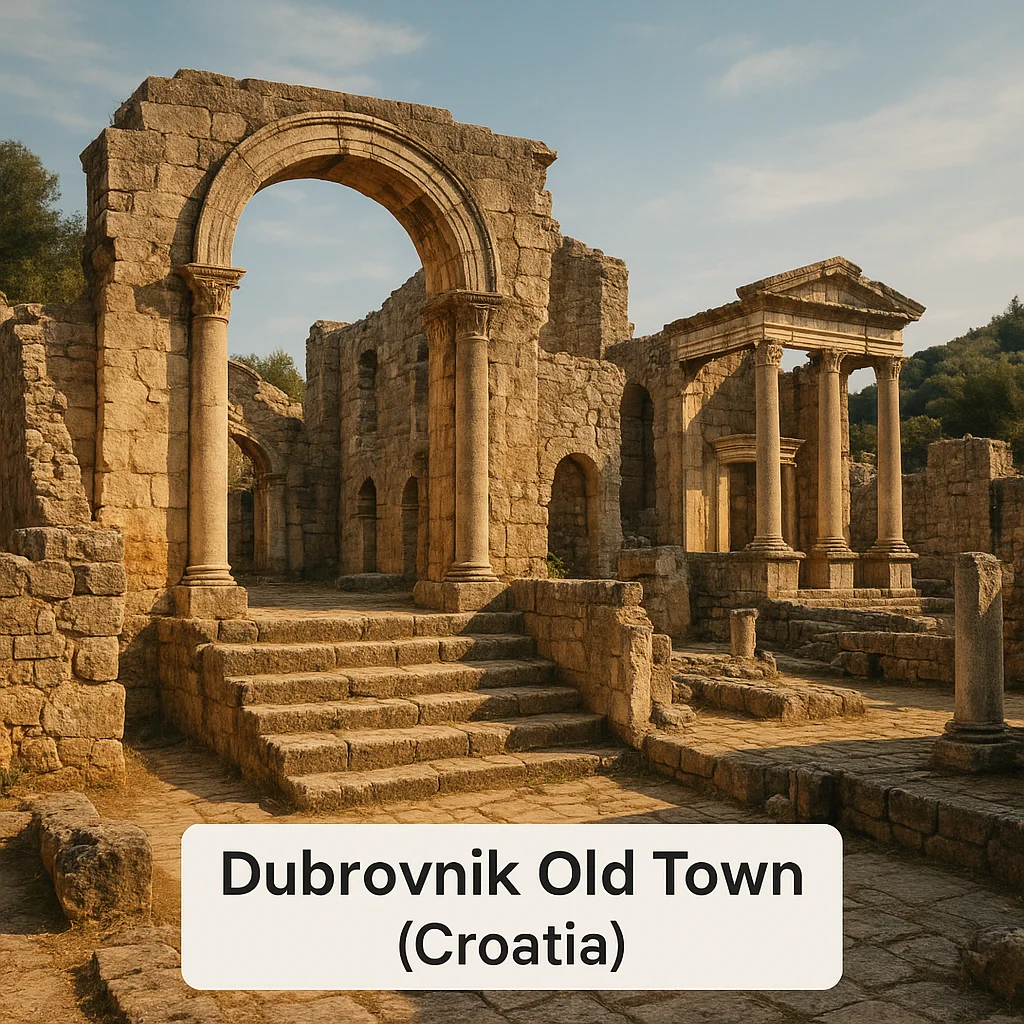
This heritage site offers an immersive experience, allowing you to explore cobblestone streets, historic monuments, and vibrant squares. Visitors can enjoy walking along the ancient city walls or browsing various shops and cafes that dot the charming streets.
In this guide, you'll learn about Dubrovnik's unique history, key highlights not to miss, and practical tips for visiting. This information aims to make your journey through this magical city both enjoyable and informative.
- Country: Croatia
- Era: Medieval
- Typical visit length: 2-3 hours
- Visit difficulty: Moderate
- Best season: Spring and autumn
- Highlight: City Walls
🗺️ Where It Is and How to Orient Yourself
Dubrovnik Old Town is nestled in the southern part of Croatia, on the Adriatic coast. It is part of the Dalmatia region, known for its stunning coastline and picturesque landscapes.
The nearest major city is Split, with Dubrovnik accessible by plane, bus, or ferry. The city's airport connects it with several European destinations, making it a convenient starting point for exploring this historic area.
For most visitors, an overnight stay in Dubrovnik is recommended to fully appreciate its rich offerings and avoid rushed visits. The town's layout makes it easy to get around on foot, providing a clear mental map with the sea on one side and hills on the other.
🕰️ History in a Nutshell
Dubrovnik was founded in the 7th century as a settlement for refugees fleeing the nearby city of Epidaurum. Over time, it developed into a thriving city-state, known as the Republic of Ragusa, which reached its peak in the 15th and 16th centuries.
The city's strategic coastal location made it an important maritime trading center in the Mediterranean. Its well-preserved walls and fortresses were constructed to protect against invaders, showcasing its historical military significance.
Despite suffering damage from an earthquake in 1667 and conflicts in the 1990s, Dubrovnik's Old Town remains remarkably preserved. Its restoration efforts have ensured its survival as a vibrant symbol of Croatia's cultural and historical heritage.
⭐ Top Highlights You Should Not Miss
- City Walls
- Rector's Palace
- Sponza Palace
- Stradun
- Luža Square
The City Walls are a must-see feature that surrounds Dubrovnik Old Town. These impressive fortifications offer panoramic views of the city and the sea, especially from the Pile Gate. The entire structure is visible, providing a sweeping view of the old city below.
The Rector's Palace, a blend of Gothic and Renaissance architecture, was once the seat of the Rector of the Republic. Visitors should note the unique carved facades and the arched entrance, fully visible and framed by its historical context.
Sponza Palace, with its elegant courtyard and columns, houses the state archives. Its full façade, alongside its charming Renaissance influences, can be best appreciated in the morning light.
Stradun, the main street of Dubrovnik, stretches through the heart of the old town. It provides an excellent guide to the city's pulse, with its shops and cafes lining either side.
Luža Square, often bustling with activity, is a central point where many historic streets converge. Its watchtower and nearby bell tower create a picturesque setting.
🧱 Architecture, Materials, and Design (Made Simple)
Dubrovnik Old Town is primarily constructed using sturdy limestone blocks, which give its structures a distinct old-world charm. The use of stone, coupled with wooden supports and terra cotta tiles, characterizes its architectural resilience.
The city's design features a mix of Gothic, Renaissance, and Baroque styles, reflecting Dubrovnik's adaptation over centuries. Key recognizable features include its iconic arches and ornate relief decorations that adorn many buildings.
Recent restoration efforts have carefully balanced the integrity of original structures with modern techniques to preserve the town's historical essence. Most restoration work focuses on maintaining visual continuity with minimal alterations.
🎟️ Visiting Guide (Time, Tickets, and What to Expect)
A standard visit to Dubrovnik Old Town can range from a quick 1-hour walk-through to a deep 3-hour exploration. Entry to the city walls usually requires a paid ticket, while many streets and squares remain open and free to wander.
Typical visiting hours extend from morning until the late afternoon, though these can vary by season and day of the week. To optimize your visit, consider arriving early in the day to avoid peak crowds.
First-time visitors are advised to carry water, wear comfortable shoes, and bring sun protection. The location's cobblestone streets and steps require practical attire for ease of movement.
🚆 How to Get There and Move Around
Visitors can reach Dubrovnik by plane via Dubrovnik Airport, with options for taxis or buses into the city. For those traveling by car, be mindful of parking limitations near the old town.
The main entrance for beginners is the Pile Gate, conveniently leading into Stradun and offering straightforward navigation. Most areas in the old town are pedestrian-friendly, though some routes include steep steps and uneven pavement.
Accessibility can be challenging for those with mobility limitations. However, the old town's condensed nature allows for short distanced explorations typically on foot.
🌤️ Best Season, Weather, and Time of Day
The best times to visit Dubrovnik are spring and autumn when the weather is pleasant and crowds are lighter. Summer can be hot, with many tourists, while winter is cooler and quieter.
For the best lighting and fewer crowds, early mornings or late afternoons are recommended. These times offer a peaceful atmosphere with views unhindered by the midday rush.
During rainy weather or less favorable conditions, indoor attractions like museums or cafes in the old town offer a sheltered experience without missing out on the local atmosphere.
⚠️ Safety, Rules, and Respectful Etiquette
Visitors should wear appropriate footwear to manage the old town’s uneven surfaces and numerous steps. Lightweight, breathable clothing is advised during warmer months.
Respecting the town's cultural heritage includes remaining quiet in certain areas, observing posted rules, and refraining from climbing on walls or monuments.
Photography is usually permitted, but drone use and flash photography may be restricted, depending on the location and event.
It is important to stay on marked paths, not only for one's safety but also to aid conservation efforts. Be wary of slippery stones and crowded areas, especially in high tourist seasons.
🗺️ Nearby Places and a Simple One-Day Itinerary
For those wanting to extend their visit beyond the old town, several attractions await nearby. Consider exploring Lokrum Island or the Fort Lovrijenac for a mix of nature and history.
- Morning: Walk the City Walls
- Midday: Visit Rector's Palace and have lunch at a local café
- Afternoon: Explore Luža Square and Sponza Palace
- Evening: Stroll along Stradun and enjoy a sunset view from Fort Lovrijenac
🧩 Stories, Myths, and Common Questions
Is Dubrovnik Old Town a “lost city”? Some myths romanticize Dubrovnik as a lost city due to its walls, but it has been continuously inhabited and never completely abandoned.
Was Dubrovnik part of any empire? Yes, Dubrovnik was part of various empires, including the Byzantine and Ottoman, before becoming a free republic.
Are the city walls difficult to walk for kids? While children can walk the city walls, adults should supervise as the route involves many stairs and narrow passages.
Should you hire a guide? A guide can enhance your visit by providing historical insights and answering questions, but self-guided tours are also satisfying with comprehensive maps and context.
Do you need more than one day? Although you can see the highlights in one day, many choose a longer stay to delve deeper into Dubrovnik's ambiance and surroundings.
📌 Summary and Who This Site Is Best For
- A medieval walled city in Croatia
- Located in Dubrovnik, on the Adriatic coast
- Known for its role as the Republic of Ragusa
- City Walls, Rector's Palace among top highlights
- Mix of Gothic, Renaissance, Baroque in architecture
- Visit length varies from quick to deep exploration
- Best visited in spring or autumn
- Follow safety and respect rules for a pleasant visit
- Nearby sites include Lokrum Island, Fort Lovrijenac
- Its historical walls offer panoramic Adriatic views
Dubrovnik Old Town is perfect for history enthusiasts, photographers, and families seeking a blend of culture and leisure. Its unique architectural beauty and rich past make it a worthwhile destination.
What sets Dubrovnik apart is its ability to transport visitors back in time, through well-preserved streets and storied history. Its picturesque scenery and cultural richness continue to captivate travelers from around the world.
As you plan your visit, remember to explore responsibly, ensuring this timeless city can be enjoyed for generations to come.