🏛️ Mtskheta (Georgia)
🔎 Quick Facts and Why It Matters
Mtskheta is one of Georgia's oldest cities, renowned for its historical significance and stunning architectural monuments. It is a UNESCO World Heritage Site, attracting visitors interested in ancient history and religious heritage.
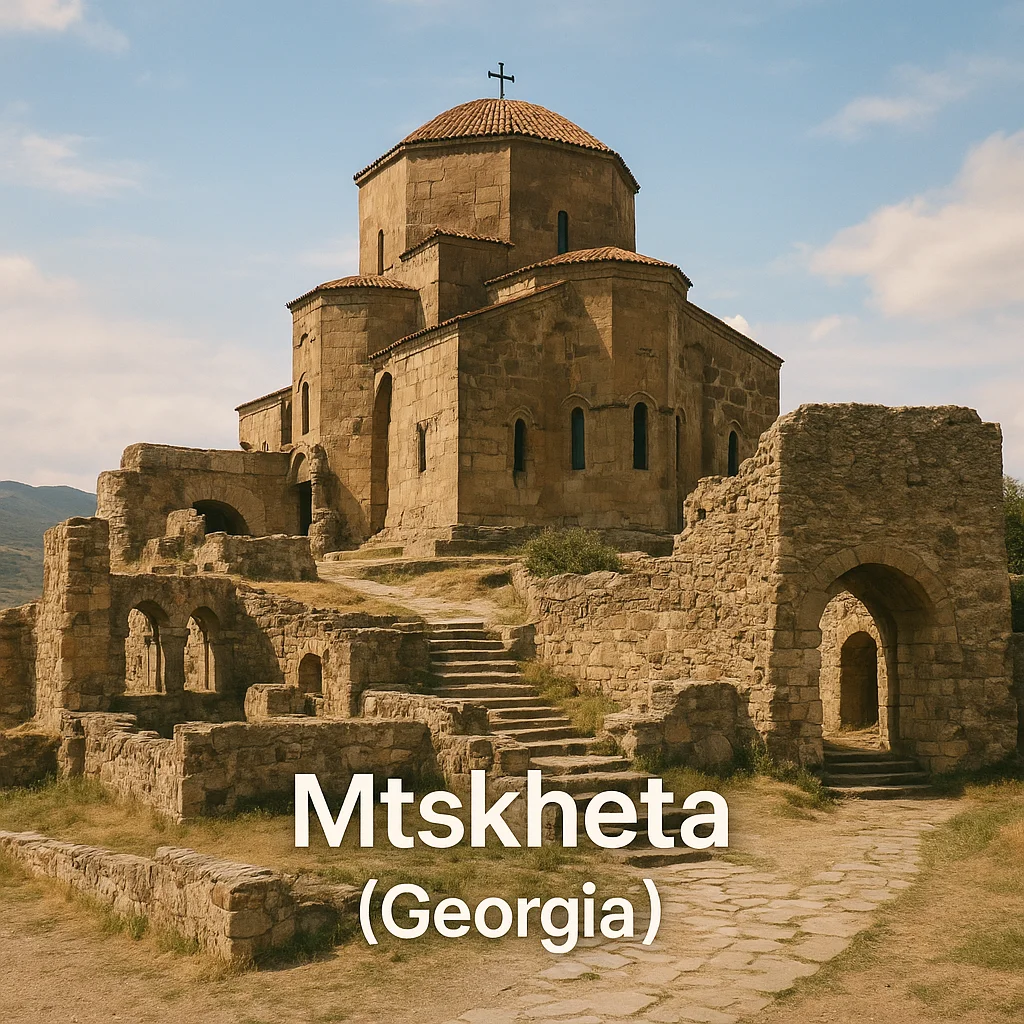
Mtskheta offers a deeply enriching experience for history enthusiasts and casual visitors alike. The city is replete with walkable ruins, iconic churches, and sweeping viewpoints that provide a picturesque insight into Georgia's cultural and spiritual past.
In this guide, you will learn about Mtskheta's historical relevance, explore its architectural wonders, and find practical tips for planning your visit. Whether you're a seasoned traveler or new to heritage sites, this guide aims to enhance your appreciation of Mtskheta.
- Location: Georgia, near Tbilisi
- Era: Established in the 5th century BC
- Typical visit length: 2-4 hours
- Difficulty: Easy to moderate
- Best season: Spring and autumn
- Highlights: Svetitskhoveli Cathedral, Jvari Monastery
🗺️ Where It Is and How to Orient Yourself
Located in the country of Georgia, Mtskheta lies at the confluence of the Aragvi and Mtkvari rivers. It is approximately 20 kilometers north of Tbilisi, making it easily accessible from the capital.
The nearest major transportation hub is Tbilisi International Airport, with the city serving as an ideal base for exploring Mtskheta. A day trip is practical for those staying in Tbilisi, but an overnight stay will provide a more relaxed experience.
Mtskheta is situated in a verdant mountain valley, offering visitors both historical intrigue and natural beauty. Imagine approaching from a gentle rise, where you'll first glimpse the domed wonders against a backdrop of lush hills and clear skies.
🕰️ History in a Nutshell
Mtskheta has been an essential cultural and religious center since it was founded by the ancient Kingdom of Iberia. Its origins date back to the 5th century BC when it served as a capital and a key trading hub.
During its peak, Mtskheta flourished as the spiritual heart of the region, heavily influencing the spread of Christianity. Many of its significant structures, like the Svetitskhoveli Cathedral, were built during this prosperous period.
Though its political influence waned over time, Mtskheta maintained its religious significance. Today, it is a revered site with preserved ruins that tell the tale of its ancient past, surviving as a result of collective preservation efforts and its UNESCO designation.
⭐ Top Highlights You Should Not Miss
- Svetitskhoveli Cathedral
- Jvari Monastery
- Samtavro Monastery
- Archaeological Museum
- Shio-Mgvime Monastery
- Armazi Fortress
The Svetitskhoveli Cathedral is a masterpiece of medieval Georgian architecture, renowned for its religious significance and historical narratives. From its courtyard, the entire façade is in frame, surrounded by lush green context, perfect for capturing its grandeur.
Jvari Monastery, perched atop a hill with the full structure visible, offers breathtaking panoramic views over Mtskheta and the river confluence. Its cross-shaped design is an iconic symbol of early Georgian Christianity.
Samtavro Monastery combines impressive religious buildings with peaceful grounds. This monastery is where one can explore while appreciating the surrounding serenity.
🧱 Architecture, Materials, and Design (Made Simple)
Mtskheta's significant structures are primarily constructed from stone and brick, showcasing traditional Georgian architectural elements. Carved blocks and natural mortars highlight their resilience and aesthetic appeal.
Georgian architecture is distinct, with clear Roman and Byzantine influences visible in its arches and column designs. The use of natural light in church interiors is also a notable feature.
Look for the unique cross-dome style prevalent in the churches, as well as the intricately carved facades and inscriptions that depict religious stories and historical events. Many parts were carefully restored to preserve these original elements for future generations.
🎟️ Visiting Guide (Time, Tickets, and What to Expect)
Most visitors spend between 2 to 4 hours exploring Mtskheta's historical sites. Admission patterns vary, with some attractions requiring separate entry fees or guided tours.
Generally, sites are open from morning till late afternoon, though timings can change seasonally. It's advisable to confirm specifics closer to your visit, especially during holidays.
First-timers should aim to arrive early to avoid crowds, carry water bottles, and wear comfortable clothing and footwear suitable for different terrains, including shaded areas for comfort.
🚆 How to Get There and Move Around
Visitors can reach Mtskheta via a reliable network of public transport, including buses and minibusses from Tbilisi. Taxis and ride-sharing services offer a more personalized journey.
Driving is another option, with convenient routes leading directly to Mtskheta. Once there, most locations are pedestrian-friendly, but some sites may require short uphill walks.
Accessibility varies, with some areas featuring steep steps and uneven surfaces. It's advisable for those with mobility concerns to plan accordingly and consider using guided tours that cater to accessibility needs.
🌤️ Best Season, Weather, and Time of Day
Spring and autumn are the best seasons to visit Mtskheta, offering mild temperatures and fewer tourists. The landscape is lush, and the light is ideal for photography during these times.
Early mornings and late afternoons provide the best light and cooler temperatures, enhancing the visiting experience. In contrast, summer can be hot and crowded, so plan visits to coincide with cooler times of the day.
On rainy days, consider visiting the nearby Archaeological Museum to explore Mtskheta's history from an indoor perspective.
⚠️ Safety, Rules, and Respectful Etiquette
Appropriate clothing and sturdy shoes are recommended to navigate uneven ground and ancient steps comfortably. Respect for cultural and religious customs is essential, particularly in sacred sites.
Photography is allowed in many areas, but restrictions may apply; be sure to follow posted guidelines. Refrain from using flash or drones unless explicitly permitted.
Help preserve the site for future generations by not climbing on structures, touching fragile carvings, or venturing off designated paths. Awareness of your surroundings will also help you avoid slips or injury from rough stone surfaces, especially when they are wet.
🗺️ Nearby Places and a Simple One-Day Itinerary
For those with additional time, Mtskheta offers nearby destinations that complement its ancient allure. Consider visiting Stalin Museum in Gori, the ancient cave city of Uplistsikhe, or the stunning Georgian Military Road leading to Kazbegi National Park.
- Morning: Explore Svetitskhoveli Cathedral and Jvari Monastery
- Midday: Lunch in a local restaurant followed by a visit to Samtavro Monastery
- Afternoon: Discover the Armazi Fortress and tour the Archaeological Museum
- Evening: Return to Tbilisi or relax in a local café
🧩 Stories, Myths, and Common Questions
One popular myth claims Mtskheta was founded by the ancient Greek prophet Mtskh, although historians believe its origins are tied to local tribes and as the capital of the early Iberian kingdom.
Some visitors mistakenly think Mtskheta was completely abandoned. In reality, while its political role diminished, it continuously served as a cultural and religious hub.
Navigating Mtskheta is generally manageable for most visitors, with gentle slopes and maintained paths, making it welcome for families and casual walkers.
A common question is whether a guide enhances the visit. Many find that knowledgeable guides enrich the experience by providing cultural insights and historical context.
📌 Summary and Who This Site Is Best For
- Mtskheta is an ancient city in Georgia
- Located near the capital, Tbilisi
- Known for its religious and historical significance
- Key highlights include Svetitskhoveli Cathedral and Jvari Monastery
- Features distinct Georgian architecture
- Typical visits last between 2 to 4 hours
- Best seasons to visit are spring and autumn
- Follow safety and etiquette guidelines while exploring
- Nearby attractions make for a rich itinerary
- A memorable fact: It’s one of Georgia's sacred religious sites
Mtskheta is an ideal destination for history enthusiasts, families seeking educational travel, and photographers in pursuit of stunning landscapes. Its unique blend of history and beauty makes it a worthwhile stop for anyone exploring Georgia.
Whether you're drawn by its spiritual heritage, architectural marvels, or picturesque setting, Mtskheta promises a rewarding experience for all who visit.
Keep an open mind, respect the site's cultural significance, and enjoy your journey through this captivating piece of Georgian history.