🏛️ Old Havana (Cuba)
🔎 Quick Facts and Why It Matters
Old Havana, or "La Habana Vieja," is the historic heart of Cuba's capital city and one of the most well-preserved colonial cities in the Americas. Recognized for its colorful streets, lively plazas, and rich history, it's a UNESCO World Heritage Site famed for its architectural diversity and vibrant cultural scene.
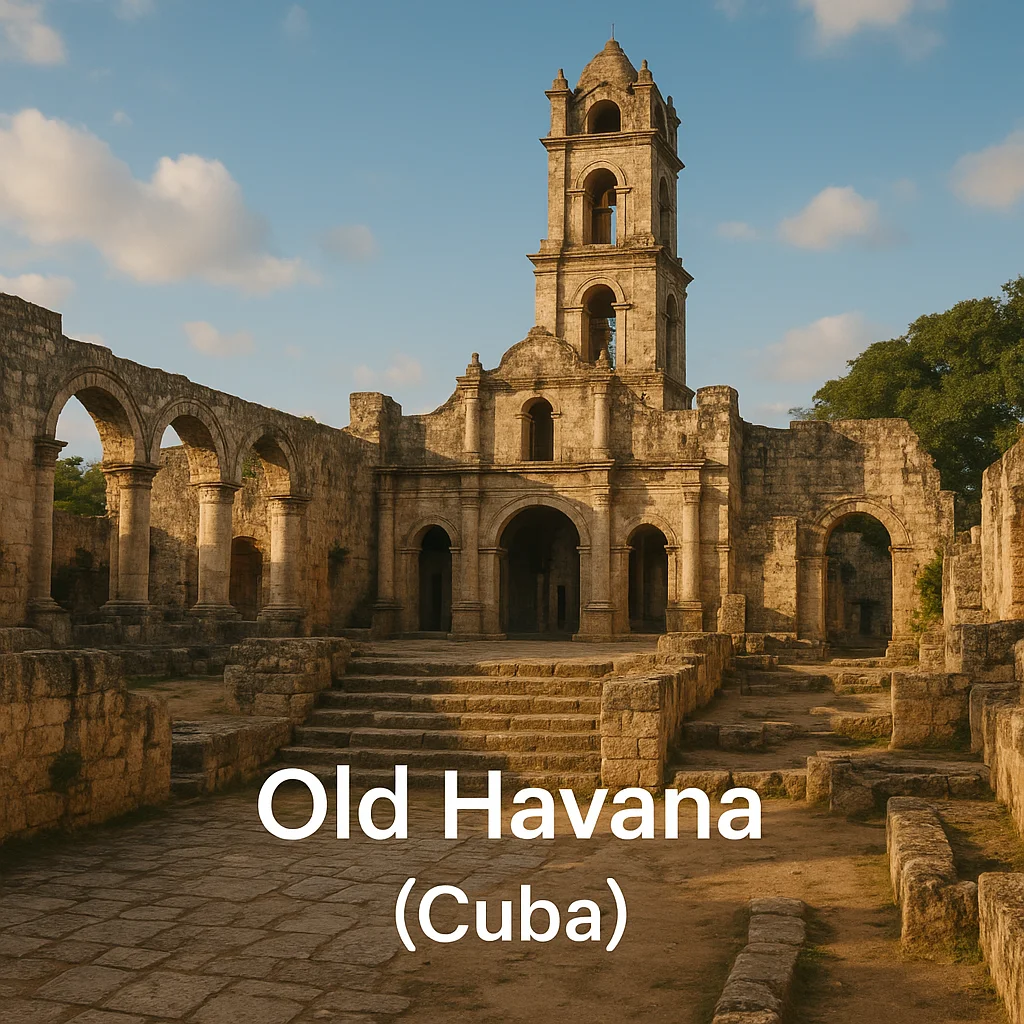
What makes Old Havana special is its dense concentration of architectural landmarks dating back to the 16th century. These structures, woven together by cobblestone streets, offer visitors a chance to wander through history while enjoying the lively atmosphere of a modern Cuban city.
Visiting Old Havana is like stepping back in time. The experience is akin to walking through a living museum, with each corner offering new insights into Cuba's colonial past and more recent history.
- Country/Region: Cuba, Caribbean
- General Era: 16th to 18th century
- Typical Visit Length: 3–5 hours
- Difficulty: Easy with some cobblestone streets
- Best Season: Winter (December to February)
- Highlight: Havana Cathedral, Plaza Vieja, El Capitolio
🗺️ Where It Is and How to Orient Yourself
Old Havana is located at the western edge of Cuba, in the country's capital city of Havana. It forms the historical core of the city, positioned along the northern coast where the Gulf of Mexico and Atlantic Ocean meet.
Havana's José Martí International Airport serves as the primary gateway for international visitors, making the city easily accessible by air. While Old Havana can be explored in a day, many choose to stay overnight to fully immerse themselves in the local ambiance and culture.
The area is set on the coast, with the Malecón (a famous seaside promenade) stretching along the northern edge. Visitors can picture Old Havana as a compact hub of winding streets and lively plazas, nestled between the water and the bustling modern city beyond.
🕰️ History in a Nutshell
Old Havana was founded by the Spanish in the early 16th century, quickly becoming a crucial port for ships sailing between the Old and New Worlds. It served as a vital trade center and fortress against pirates and foreign invaders.
The city flourished under Spanish rule, reaching its peak during the colonial era. The wealth generated led to the construction of grand buildings, churches, and fortresses, which remain as historical relics today.
Despite periods of neglect and the impacts of natural disasters, conservation efforts in recent decades have helped preserve Old Havana's unique character, transforming it into a celebrated testament to colonial architecture and urban planning.
⭐ Top Highlights You Should Not Miss
- Havana Cathedral: A stunning example of Baroque architecture, the cathedral's full structure is visible from the surrounding Plaza de la Catedral, offering a complete view of its ornate façade.
- El Capitolio: Once the seat of the Cuban government, this building's entire dome is in frame from the southern entrance, allowing visitors a full context amidst stately surroundings.
- Plaza Vieja: Known for its diverse architectural styles, the plaza's wide view shows various colonial buildings complete with an exquisite fountain at the center.
- Castillo de la Real Fuerza: The oldest stone fort in the Americas, its complete exterior can be viewed from across Plaza de Armas, offering perspective on its defensive layout.
- La Bodeguita del Medio: An iconic bar known for its mojitos, best photographed in full context with adjoining vibrant streetscapes.
The Havana Cathedral is not just an architectural gem; it's a place of cultural and historical significance. Its grand façade and meticulous stonework are reminders of the city's religious heritage.
El Capitolio was modeled after the U.S. Capitol Building and stands as a symbol of Old Havana's political past. The building’s dome is a prominent feature in the city's skyline.
Plaza Vieja offers visitors a glimpse into the social life of colonial Havana. Its restored buildings showcase stunning arcades and stained glass, reflecting the area's historical affluence.
Castillo de la Real Fuerza, with its thick walls and formidable design, provides insight into the strategic military importance of Havana during the colonial era.
La Bodeguita del Medio is as famed for its literary and artistic connections as it is for its cocktails, having welcomed numerous iconic figures over the decades.
🧱 Architecture, Materials, and Design (Made Simple)
The buildings of Old Havana are primarily constructed from local limestone, brick, and mortar, with some wooden features in balconies and interior details. The architecture predominantly reflects Baroque and Neoclassical influences, with distinct Spanish touches seen in wrought ironwork and decorative tiling.
Visitors will note the striking arched doorways and windows that characterize many structures. The Havana Cathedral's twin bell towers and El Capitolio's towering dome are among the most distinguished architectural features.
Old Havana's preservation efforts have included careful restoration to maintain its historical integrity, with ongoing projects that blend old with new, ensuring the area remains a dynamic living space while respecting its past.
🎟️ Visiting Guide (Time, Tickets, and What to Expect)
A standard visit to Old Havana might last anywhere from three to five hours, though those interested in a more in-depth exploration might spend a full day or more. Most of the area is open for free exploration, though some sites like museums or specific buildings require a paid entry.
The area is generally accessible from early morning until late afternoon, subject to change, particularly with the seasons. It's advisable to arrive early to avoid crowds, and carrying water, wearing comfortable shoes, and bringing a hat are recommended.
Guided tours are available for those seeking deeper insight into the history and stories of Old Havana, with local guides providing valuable context and anecdotes about the area's past and present.
🚆 How to Get There and Move Around
Visitors can easily access Old Havana by taxi or via local public transportation options from other parts of Havana. While self-driving is possible, the area's narrow, cobblestone streets and limited parking make walking a more practical choice.
The main entrance is through Calle Obispo, a lively pedestrian street that forks through shops, cafes, and street musicians, presenting a welcoming introduction to the area. Navigating by foot allows for spontaneous stops at charming side streets and picturesque sites.
Accessibility for individuals with mobility issues may be challenging due to uneven ground and old cobblestones. However, the main thoroughfares are generally navigable, with plenty of resting spots along the way.
🌤️ Best Season, Weather, and Time of Day
The optimal time to visit Old Havana is during the winter months of December through February, when temperatures are cooler and humidity is lower. It's also outside the hurricane season, reducing the chance of rain.
Early morning or late afternoon visits offer the best light for photography and a more pleasant temperature for walking tours. These times also help you avoid peak pedestrian traffic, allowing for a more relaxed experience.
In case of rain, visitors can explore indoor alternatives like the Museo del Ron (Rum Museum) or spend time in one of the numerous cafes lining the streets, savoring Cuban coffee and watching the city life unfold.
⚠️ Safety, Rules, and Respectful Etiquette
To comfortably navigate Old Havana's historic streets, lightweight and comfortable footwear is recommended, especially since the cobblestones can be uneven and slippery at times.
Visitors should dress modestly when entering religious sites such as the Havana Cathedral, remaining silent and respectful in areas marked as sacred or quiet zones.
Photography is generally allowed, but flash and drone usage might be restricted; it's essential to adhere to posted rules to protect the site's integrity.
To help with conservation, avoid climbing on structures or touching the delicate carvings that adorn many of the buildings. Staying on designated paths is crucial to preserve the environment.
While Old Havana is generally safe, be vigilant about your belongings in crowded areas to avoid pickpocketing. It's also wise to stay hydrated and take breaks to avoid heat exhaustion.
🗺️ Nearby Places and a Simple One-Day Itinerary
Around Old Havana, there are several other attractions to enjoy, such as the renowned Malecón, the lush gardens of Parque Central, and the fascinating Museo Nacional de Bellas Artes.
For a day immersing in the rich culture and history, consider the following itinerary:
- Morning: Begin with a walk through Plaza de Armas, visiting Castillo de la Real Fuerza.
- Midday: Enjoy a leisurely lunch at La Bodeguita del Medio.
- Afternoon: Explore Plaza Vieja and nearby galleries; check out local crafts and street performances.
- Evening: Stroll along the Malecón, ending with a seafood dinner by the water.
🧩 Stories, Myths, and Common Questions
One popular myth suggests that Old Havana was a "lost city" rediscovered after decades of abandonment. In reality, it has remained continually inhabited, though its preservation has surged in recent history.
Some visitors mistakenly believe the city's cobblestone streets date back to the original settlement. While historically accurate in style, many have been reconstructed over time.
A common question is whether the area is suitable for children. The answer is yes; many families enjoy exploring the plazas and attending family-friendly events. However, supervision is needed around busy streets and public squares.
Visitors often debate the value of hiring a guide. While self-guided tours are satisfying, a knowledgeable guide can illuminate hidden stories and details, enriching the experience.
📌 Summary and Who This Site Is Best For
- Historical core of Havana, Cuba
- Located along Cuba's northern coast in the capital
- Founded in the 16th century as a Spanish colonial outpost
- Highlights include Havana Cathedral, El Capitolio, Plaza Vieja
- Baroque and Neoclassical architecture with colonial influence
- Visit can last from 3 hours to a full day
- Best visited between December and February
- Respect rules on photography and conservation
- Nearby attractions: Malecón, Parque Central, Museo Nacional de Bellas Artes
- Old Havana is a living testament to Cuba's rich history
Old Havana is ideal for history enthusiasts, architecture buffs, and anyone captivated by vibrant cultures. Families will find the plazas and cultural activities engaging, while photographers will enjoy the city's timeless beauty.
What makes Old Havana worth visiting is its ability to transport you to another era while letting you experience the colorful warmth of Cuban life today.
Whether you're a first-time explorer or a repeat visitor, Old Havana promises an experience rich with discovery and cultural reflections, encouraging respect and appreciation from all its guests.