🏛️ Wieliczka Salt Mine (Poland)
🔎 Quick Facts and Why It Matters
The Wieliczka Salt Mine is a historic site in Poland, renowned for its labyrinthine underground passages and intricate salt carvings. It is famous for being one of the oldest salt mines in the world, and a testament to human ingenuity and artistry.
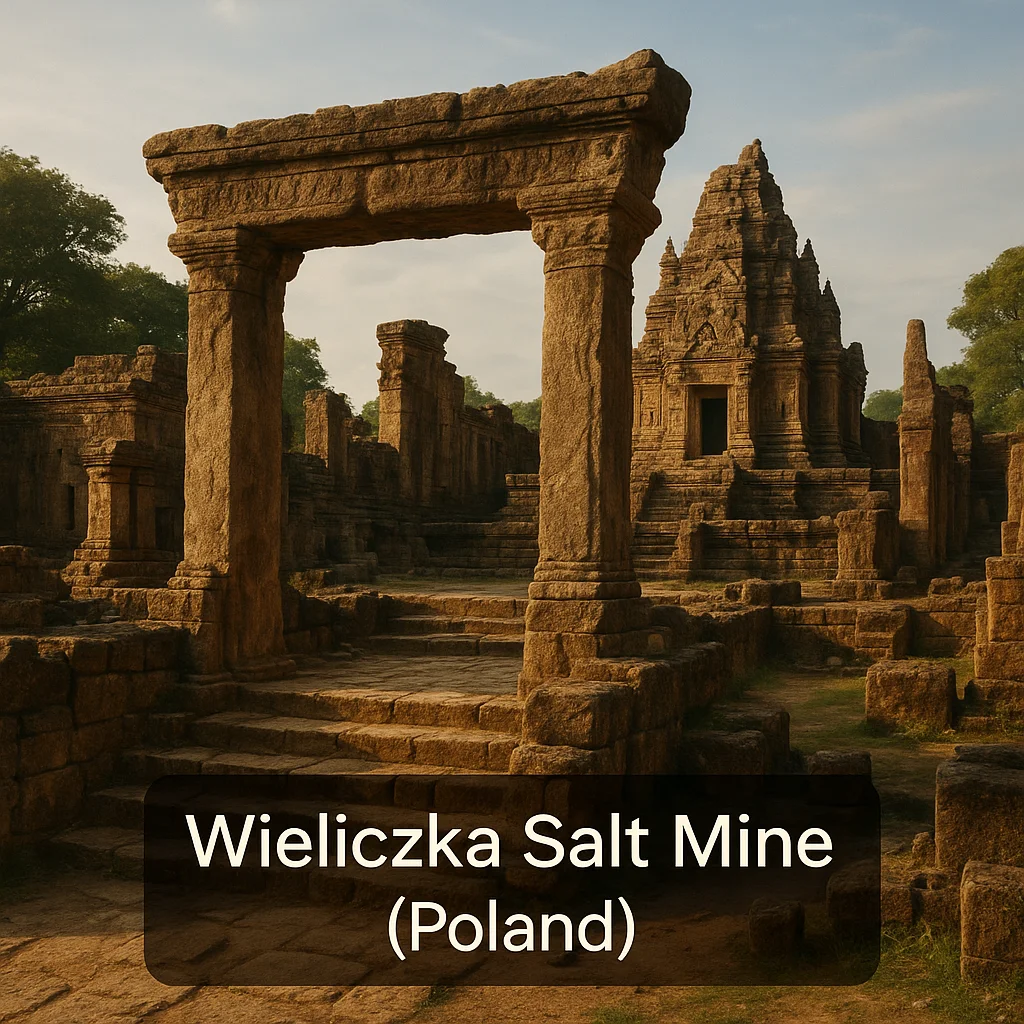
What makes Wieliczka special is its unique blend of natural beauty and historical architecture. Walking through its chambers, visitors experience a surreal blend of salt sculptures and ancient mining technology. It's essentially a museum deep beneath the surface showcasing both nature’s wonders and man’s craftsmanship.
This guide will take you through the highlights of Wieliczka Salt Mine, offering insights into its history, architecture, and practical advice for visiting. You will learn about the mine's significance, explore its must-see attractions, and understand how to best navigate this underground marvel.
- Country/Region: Poland, Lesser Poland Voivodeship
- Era: Active since the 13th century
- Typical Visit Length: 2–3 hours
- Difficulty: Moderate, involves walking and steps
- Best Season: Spring and early autumn for pleasant weather
- Highlight: The Chapel of St. Kinga
🗺️ Where It Is and How to Orient Yourself
Wieliczka Salt Mine is located near the town of Wieliczka in the southern part of Poland. It is situated within the Lesser Poland Voivodeship, an area known for its rich cultural heritage and picturesque landscapes.
The nearest major city is Kraków, which serves as the primary gateway for most visitors. Kraków is well connected by rail and air, making it an accessible destination for international travelers. It is realistic to visit the mine as a day trip from Kraków, given its proximity, just about 15 kilometers from the city center.
To mentally map its location, imagine the mine nestled in a rolling landscape just outside a vibrant historic city, making it a perfect juxtaposition of urban life and subterranean history. The area is easily navigated by highways and local transportation.
🕰️ History in a Nutshell
The Wieliczka Salt Mine was constructed in the 13th century by local miners who discovered the immense salt deposits underground. Over time, it developed into a center of salt production, crucial for the economy of the region.
The peak period of the mine was during the Renaissance, when salt was a highly valued commodity. However, advancements in mining technology and changing economic demands led to its decline in industrial use.
Today, the mine remains an operational museum and a UNESCO World Heritage Site, preserved in its historic state because of its cultural significance and the local efforts to maintain its structure against natural groundwater challenges.
⭐ Top Highlights You Should Not Miss
- The Chapel of St. Kinga
- The Salt Lake
- The Miners’ Route
- The Museum of Salt Mining
- King Casimir III the Great’s Chamber
The Chapel of St. Kinga: Carved entirely from salt, this subterranean chapel offers an otherworldly experience with its detailed altarpieces and chandeliers. The best photo spot is from the entrance, where the entire chapel is visible, capturing the scale and intricate details against the salt walls.
The Salt Lake: A serene underground lake that reflects the ceiling in a surreal manner. A wide view from the designated platforms offers a full structure glimpse with the lake and ceiling in harmonious reflection.
The Miners’ Route: Offers a hands-on experience of the miners' life, where visitors can try age-old tools. A wide corridor in this section allows visitors to see the complete framing of the wooden supports and tools in context.
The Museum of Salt Mining: Provides an educational view of the mine's history and technology, with models and dioramas depicting the evolution of mining in the region. Best seen in a panoramic view where the chronological displays setup gives context to visitors.
King Casimir III the Great’s Chamber: Named after Poland's medieval king, this chamber is adorned with carved reliefs and artworks. Visitors will appreciate stepping back to capture the entire room in frame to see the historical carvings.
🧱 Architecture, Materials, and Design (Made Simple)
The Wieliczka Salt Mine is primarily carved from solid rock salt, a testament to the natural resources in the area. The architectural style is a blend of Gothic design, evident in the arches and sculptures, and Polish folk art, found in carvings and reliefs throughout.
Unique details include the salt chandeliers in the Chapel of St. Kinga, made from purified salt crystals, and the diverse reliefs depicting religious and historical scenes. The mine’s original tunnels and chambers combine with restored areas where stabilization was necessary to preserve the structure.
🎟️ Visiting Guide (Time, Tickets, and What to Expect)
Visits to the Wieliczka Salt Mine typically range from 2 to 3 hours, depending on the tour chosen. There are both standard tourist trails and more specialized, longer tours that delve deeper into the mine's history and less commonly visited areas.
Entry is generally through paid guided tours, as going solo is not permitted for safety and preservation reasons. Tickets can be purchased on-site or online, and it is advisable to book in advance during the peak season.
The mine operates seven days a week but note that hours might vary with seasons, typically opening from morning until late afternoon. First-timers should arrive early to avoid crowds, carry water for the underground tour, and dress in layers as the temperature is consistently cool.
🚆 How to Get There and Move Around
Visitors can reach Wieliczka Salt Mine by train from Kraków, with frequent services making it a convenient journey. Buses and taxis are also available for a direct route, taking approximately 30 minutes from Kraków.
The main entrance is visitor-friendly, offering a simple route highly suitable for newcomers. However, due to the nature of the site, accessibility for those with reduced mobility might be limited, with steep steps and uneven ground being part of the experience.
🌤️ Best Season, Weather, and Time of Day
The best time to visit is during spring and early autumn when the weather is mild and the tourist crowds are thinner. This period offers the optimal conditions for both above and below-ground exploration.
Visiting early in the day allows visitors to enjoy the quieter, cooler atmosphere underground. An alternative for rainy days includes staying indoors at nearby attractions in Kraków, such as museums or historical sites.
⚠️ Safety, Rules, and Respectful Etiquette
Trail-appropriate footwear with good grip is recommended due to the slippery surfaces and uneven steps. Comfortable clothing, considering the cool temperatures underground, is advisable.
Visitors should respect designated quiet areas within the site and adhere to posted signage regarding photography—flash and drones may be restricted. Conservation rules emphasize staying on marked paths and refraining from touching carvings.
While the site is generally safe, it is wise to be cautious around slippery stones and anticipate crowds, particularly during peak seasons. Staying within guided tour groups ensures safety and access to the best information and insights.
🗺️ Nearby Places and a Simple One-Day Itinerary
Nearby attractions include the city of Kraków, with its historic Old Town and the Wawel Castle. The nearby countryside offers a glimpse into rural Polish life, particularly in the Tatra Mountains and the small traditional villages along the outskirts.
- Morning: Begin with the Wieliczka Salt Mine tour to enjoy a less crowded experience.
- Midday: Visit the Saltworks Castle and Museum of the Kraków Saltworks located nearby.
- Afternoon: Head into Kraków, exploring the historic Old Town.
- Evening: Dine along the Vistula River, enjoying views of the illuminated Wawel Castle.
🧩 Stories, Myths, and Common Questions
Is the Salt Mine Kid-Friendly? Yes, the mine offers guided tours suitable for children, with certain educational highlights tailored to younger audiences.
Is It True Dragons Inhabited the Mine? Local myths suggest dragons once roamed the tunnels, a story often told to intrigue visitors, though historians attribute it to the imaginative folklore of the region.
Do I Need a Guide to Visit? Yes, tours are conducted with experienced guides who provide valuable insights and enhance the visiting experience.
How Difficult Is the Walk? The tour requires a moderate level of fitness, involving staircases and walking for extended periods. Accommodations are minimal for those with mobility issues.
📌 Summary and Who This Site Is Best For
- What it is: A historic and cultural salt mine.
- Where it is: Near Kraków, Poland.
- Key history takeaway: Centuries-old site of salt production.
- Top highlights: Chapel of St. Kinga, Salt Lake.
- Architecture/materials: Gothic style carved from rock salt.
- Visit length guidance: Typical visit lasts 2–3 hours.
- Best season/time: Spring and early autumn, early morning visits.
- Safety/etiquette: Wear suitable footwear, follow tour guides.
- Nearby add-ons: Explore Kraków’s historic Old Town.
- One memorable fact: Home to intricately carved salt sculptures.
Wieliczka Salt Mine is an ideal destination for families, history enthusiasts, and those with a keen interest in art and architecture. Photographers will appreciate the unique opportunities to capture the blend of natural and human-made wonders.
The site is a remarkable example of human ingenuity and artistic expression in the depths of the earth, making it worth the effort to explore. For those seeking a deep dive into a hidden world of history and art, Wieliczka Salt Mine offers an experience like no other.
Visitors are encouraged to explore responsibly, respecting both the natural and historical elements of this awe-inspiring site. Plan your visit with care, and take in the remarkable blend of culture, history, and unparalleled underground beauty.