🏛️ Banteay Srei (Cambodia)
🔎 Quick Facts and Why It Matters
Banteay Srei is a 10th-century Cambodian temple dedicated to the Hindu god Shiva. It is renowned for its intricate carvings made of pink sandstone, often regarded as some of the finest examples of Angkorian art.
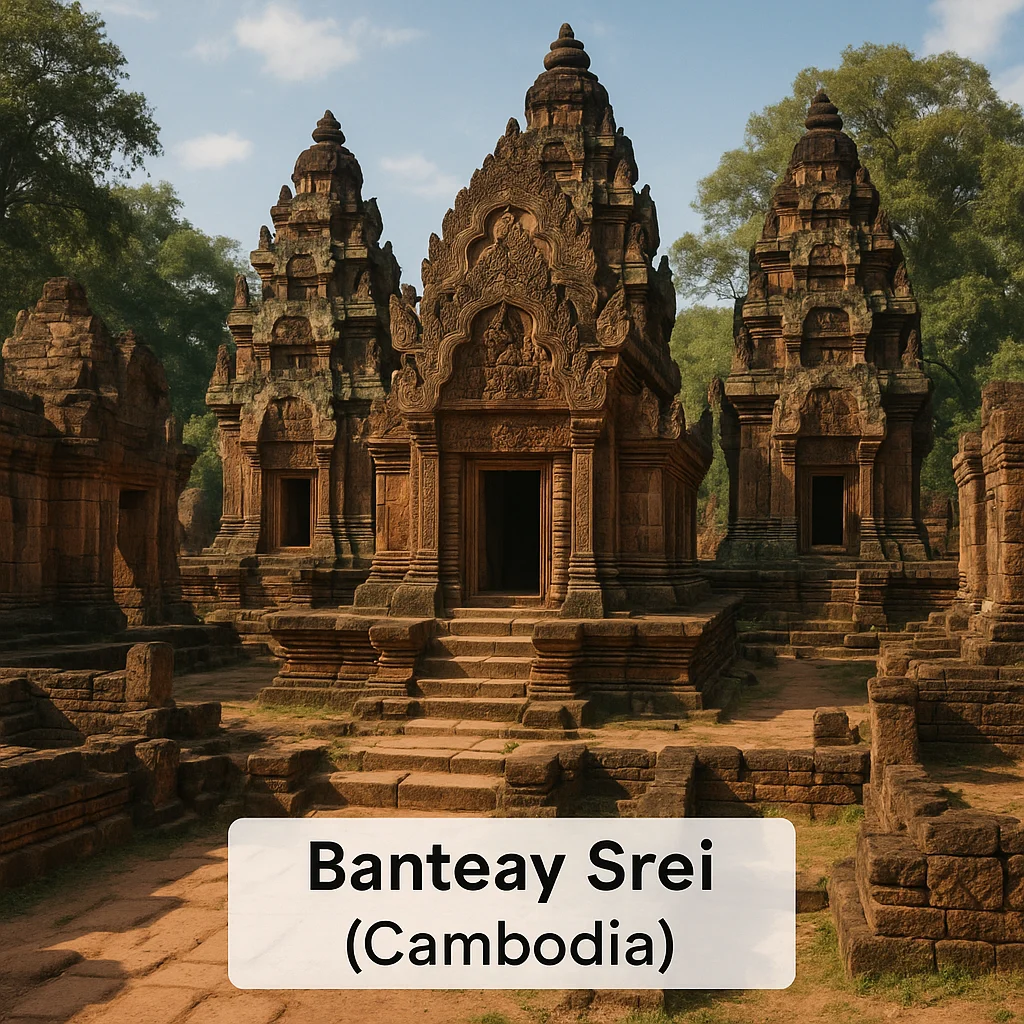
This temple stands out because of its relatively small scale and the exquisite detailing that covers its surfaces. It offers a unique experience, allowing visitors to walk through beautifully carved doorways and pavilions.
In this guide, you will learn about the temple's significance, its history, and what you can expect when visiting, ensuring a fulfilling journey of discovery.
- Country: Cambodia
- Era: 10th century AD
- Typical visit length: 1–2 hours
- Walkability: Easy, compact site
- Best season: Dry season, from November to March
- Highlights: Intricate carvings, pink sandstone
🗺️ Where It Is and How to Orient Yourself
Banteay Srei is located in Cambodia, approximately 25 kilometers northeast of the main Angkor temple complex near Siem Reap. The easiest way to reach it is via Siem Reap, a city well-connected by air and road.
From Siem Reap, the temple is a feasible day trip. While you can visit it in a morning or afternoon, allocating more time allows you to enjoy the journey through the Cambodian countryside.
The site is located in a tranquil rural setting, surrounded by the lush greenery typical of Cambodia's lowlands. It's an incredibly picturesque location where modern infrastructure slowly gives way to the enchanting remnants of the Khmer Empire.
🕰️ History in a Nutshell
Banteay Srei was built in the late 10th century under the reign of King Rajendravarman. However, it was not constructed by a king but by one of his counselors, underscoring its unique status among Angkor temples.
The temple was used primarily as a religious sanctuary dedicated to the Hindu god Shiva. During its peak, it was part of the thriving Angkor civilization, a period known for its temple-building fervor and artistic ingenuity.
Over the centuries, the temple fell into obscurity, largely due to changes in religious focus and regional power shifts. However, many of its intricate carvings have survived due to the durability of its materials and the relative isolation of the site.
⭐ Top Highlights You Should Not Miss
- The central sanctuary
- Plinth carvings
- Eastern gopura
- Detailed lintels
The central sanctuary is the heart of Banteay Srei, best known for its beautifully carved pink sandstone that gives the temple its nickname, "The Citadel of Women." It is a must-see for all visitors.
The plinth carvings at the temple base are a testament to the artisan's skill, featuring stories from Hindu mythology. These are incredibly detailed and require a closer look to fully appreciate.
The eastern gopura, or entranceway, offers the best spot for photography. Here, you capture the entire façade with the surrounding landscape, showcasing the intricate artistry against the lush greenery.
Finally, the detailed lintels above the doorways depict various scenes and motifs. They highlight the exceptional craftsman skills of the period and are among the temple's finest examples of Khmer art.
🧱 Architecture, Materials, and Design (Made Simple)
Banteay Srei is primarily constructed from pink sandstone, a material chosen for its durability and workability, allowing for the temple's renowned detailed carvings. These carvings are prominent on almost every surface.
The temple is built in the typical Khmer architectural style, characterized by pointed towers and ornate reliefs. It's more intricate than other nearby temples due to its use of fine materials and detailed craftsmanship.
Unique features include its impressive three-dimensional carvings and the elaborate narratives depicted on pediments and lintels. Both restorations and original remains are visible at the site, providing insights into its lengthy history.
🎟️ Visiting Guide (Time, Tickets, and What to Expect)
A visit to Banteay Srei can take from a brief hour-long walk to a more in-depth exploration of about two hours. The temple is a paid-entry site, with tickets typically included as part of the Angkor Archaeological Park pass.
Visiting hours generally span from the early morning to late afternoon. It's advisable to arrive early to avoid crowds and enjoy the cool morning air. Conditions and requirements can change, so always check for the latest information.
First-time visitors should plan for a comfortable visit by bringing water, a hat, and sunscreen. Walking shoes with good grip are recommended due to uneven surfaces and steps.
🚆 How to Get There and Move Around
Most visitors reach Banteay Srei from Siem Reap via taxi, tuk-tuk, or organized tours. Hiring a tuk-tuk provides flexibility and a chance to experience local scenery.
Upon arrival, the site is compact and easy to navigate on foot, with clear paths guiding you through the temple. Accessibility may be challenging for those with mobility issues due to steps and some uneven sections.
🌤️ Best Season, Weather, and Time of Day
The best time to visit Banteay Srei is during the dry season, from November to March, when temperatures are comfortable, and rain is scarce. This period also offers clear skies for photography.
Early morning or late afternoon visits are recommended for softer lighting, enhancing the pink sandstone's color and avoiding midday heat. In the event of rain, consider exploring covered areas or nearby museums in Siem Reap.
⚠️ Safety, Rules, and Respectful Etiquette
Wear comfortable shoes to navigate uneven ground and steps safely. Respectfully adhere to dress codes, covering shoulders and knees, particularly in sacred spaces.
Photography is generally allowed, but always heed signages regarding restricted areas. Avoid using flash or drones where prohibited and stay on designated paths to protect the temple and yourself.
Be mindful of slippery stones, especially after rain. While generally safe, always remain aware of personal belongings in crowded areas to avoid pickpockets.
🗺️ Nearby Places and a Simple One-Day Itinerary
Nearby attractions include the Angkor Wat temple complex, Phnom Kulen National Park, and the Landmine Museum. Each offers unique experiences and contributes to a fuller understanding of the area's history and culture.
- Morning: Visit Banteay Srei
- Midday: Explore the Landmine Museum
- Afternoon: Visit Angkor Wat
- Evening: Relax with a traditional Khmer meal in Siem Reap
These destinations provide a well-rounded glimpse into Cambodia's rich heritage, nature, and ongoing recovery efforts, making for an enlightening day trip from Siem Reap.
🧩 Stories, Myths, and Common Questions
Is Banteay Srei really called "The Citadel of Women" because women built it? No, the name comes from the temple's intricate and delicate carvings, suggesting "feminine" quality rather than being constructed by women.
Why is the temple made from pink sandstone? Pink sandstone is more manageable to carve and provides an attractive hue that becomes prominent during sunrise and sunset.
Is Banteay Srei suitable for kids? Yes, children can enjoy exploring the temple grounds, although supervision is recommended due to steps and uneven surfaces.
Are guides necessary for visiting Banteay Srei? While not essential, a guide can provide valuable insights into the temple's history and architecture, enriching your visit.
Was Banteay Srei part of the main Angkor complex? It was constructed separately but is often included in discussions about Angkor due to its historical and cultural connections.
📌 Summary and Who This Site Is Best For
- A 10th-century temple dedicated to Shiva
- Located near Siem Reap, Cambodia
- Built during the Angkorian period
- Known for intricate pink sandstone carvings
- Features include detailed lintels and plinth carvings
- Typical visit: 1–2 hours
- Best time: November to March
- Follow rules for respectful visitation
- Nearby: Angkor Wat, Landmine Museum
- Remarkably well-preserved carvings
- Great for history buffs and photographers
Banteay Srei is ideal for those interested in history, architecture, and photography. Families, casual tourists, and seasoned travelers will find the temple's serene beauty a rewarding experience.
The temple's detailed craftsmanship and unique pink sandstone make it a captivating site, offering a glimpse into the grandeur of the Khmer Empire. It is a must-visit for anyone exploring Cambodia's rich cultural heritage.
By respecting its rules and appreciating its intricate artistry, visitors ensure the preservation of this remarkable temple for many generations to come.