🏛️ Brihadeeswarar Temple (India)
🔎 Quick Facts and Why It Matters
Brihadeeswarar Temple, also known as Peruvudaiyar Kovil, is one of the largest Hindu temples dedicated to Lord Shiva. It stands as a testament to the architectural brilliance of the Chola dynasty.
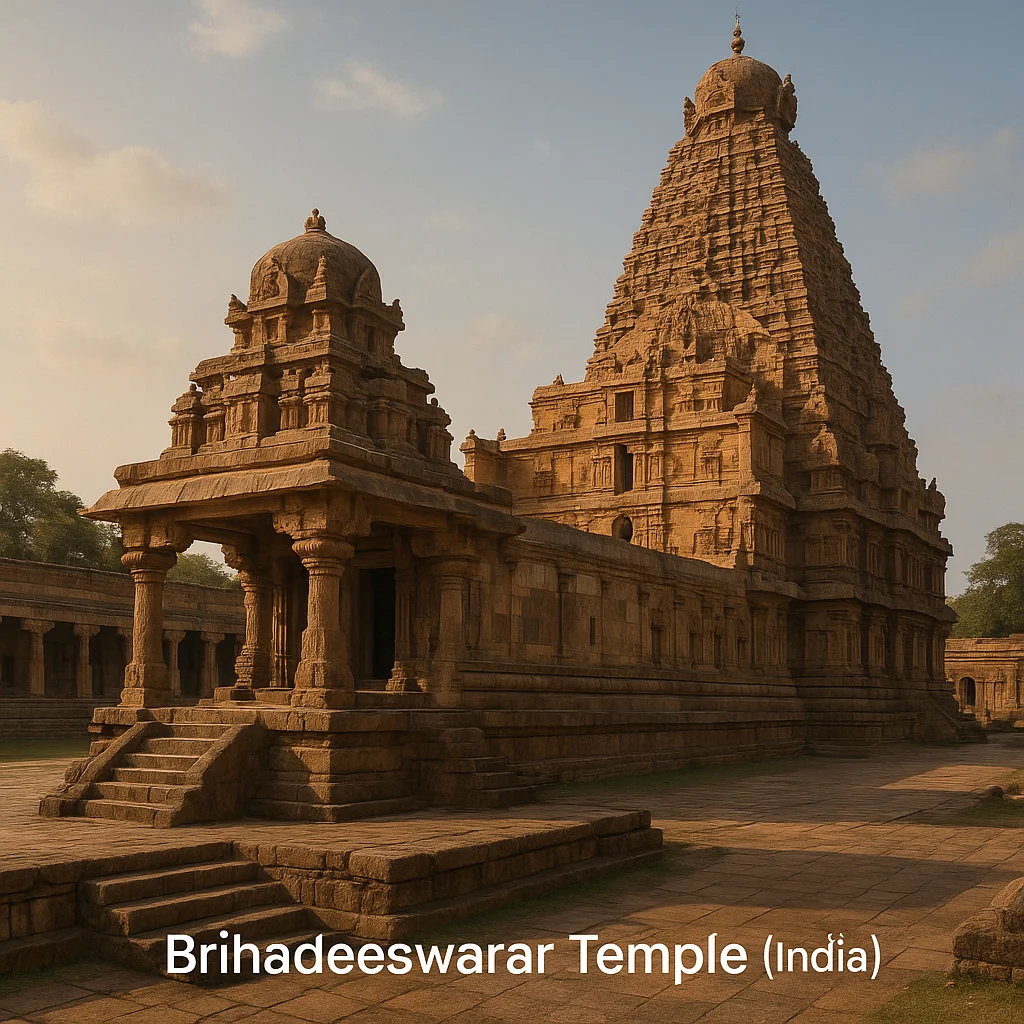
This UNESCO World Heritage site is celebrated for its grand scale and intricate design, making it an essential destination for those interested in ancient architecture and history. Visitors are greeted by a sprawling complex with towering structures and beautiful sculptures.
In this guide, you will learn about the temple's unique architecture, historical significance, and practical tips for visiting. Whether you are a history enthusiast or a curious traveler, Brihadeeswarar Temple offers an enriching experience.
- Country: India
- Region: Tamil Nadu
- Era: Built in the 11th century
- Typical Visit Length: 2-3 hours
- Accessibility: Moderate; some steps involved
- Best Season: November to February
- Highlight: Vimana (tower over the sanctum)
🗺️ Where It Is and How to Orient Yourself
The Brihadeeswarar Temple is located in the city of Thanjavur in the southern Indian state of Tamil Nadu. It lies about 350 kilometers southwest of Chennai, a major urban hub and typical entry point for international travelers.
The closest city with an airport is Trichy (Tiruchirappalli), which is approximately 60 kilometers from Thanjavur. From Trichy, visitors can reach Thanjavur by road or train, making the temple accessible within a few hours' drive.
As the temple is located inland, travelers should picture an area surrounded by lush rice paddies and coconut groves, typical of the Tamil Nadu landscape. An overnight stay in Thanjavur is recommended to fully explore the temple and its surroundings.
🕰️ History in a Nutshell
Brihadeeswarar Temple was commissioned by the great Chola emperor Raja Raja Chola I in the early 11th century. It served as a center of spirituality and devotion throughout the Chola reign and beyond.
The temple's main purpose was to be a royal temple dedicated to Lord Shiva, embodying the Chola's wealth, power, and devotion. Its construction marked the height of Chola architecture and engineering.
Though the passage of time and shifts in political power led to less use, the temple's religious and architectural importance ensured its preservation. Today, it stands as a remarkable piece of India's cultural heritage.
⭐ Top Highlights You Should Not Miss
- The Great Vimana
- The Nandi Statue
- The Main Sanctum
- The Frescoes in the Inner Walls
- The Temple Courtyard
The Great Vimana, standing at about 66 meters, is one of the tallest structures of its kind. It remains an engineering marvel with its massive dome, best admired from the entrance with the entire façade in view.
The Nandi Statue, carved out of a single block of granite, weighs about 25 tons. Placed at the entrance, this enormous bull provides an arresting sight in front of the temple’s gateway.
The Main Sanctum, housing the enormous Shiva lingam, serves as the spiritual heart of the temple. Its vertical symmetry and ornate carvings highlight Chola craftsmanship.
The Frescoes adorning the inner walls of the temple narrate scenes from Hindu mythology. A wide view allows visitors to appreciate the stories and vibrant colors which survive to this day.
The Temple Courtyard, spacious and lined with colonnades, offers a peaceful area for reflection. From here, one gets a complete view of the temple's scale and design against the open sky.
🧱 Architecture, Materials, and Design (Made Simple)
The Brihadeeswarar Temple was constructed primarily using granite, a material not locally found in the region. This required an immense effort to transport and set the stones.
The architectural style is Dravidian, named after a region in southern India, characterized by pyramid-shaped towers and intricately carved granite elements. The temple's symmetry and scale set it apart as a pinnacle of Chola architecture.
Some unique features include the majestic vimana, the long corridors, and intricately carved relief panels. Though parts of the temple have been restored, historians attest that much of the original structure remains intact.
🎟️ Visiting Guide (Time, Tickets, and What to Expect)
Visitors can expect to spend 2–3 hours exploring the temple complex, taking in its detailed carvings and serene atmosphere. Check current entrance fee requirements as they can vary, especially for international tourists.
The temple operates from early morning to late afternoon, generally pausing around midday. Seasonal changes might affect visiting hours, so it's wise to plan accordingly.
Arriving early is recommended to avoid crowds, especially during weekends and holidays. Carrying water, wearing comfortable footwear, and bringing sun protection are practical tips for an enjoyable visit.
🚆 How to Get There and Move Around
Brihadeeswarar Temple can be accessed via private car, taxi, or local buses from Thanjavur city center. Auto-rickshaws are also a popular means of transport for short distances.
The main entrance is straightforward, allowing an easy flow from the grand entrance gopuram (tower) to the central courtyard area. Expect some mild walking across uneven stone paths.
Note that the temple involves several steps and stone pathways, which might present challenges for visitors with mobility issues.
🌤️ Best Season, Weather, and Time of Day
The best time to visit this site is during the cooler months from November to February when temperatures are mild, offering optimal weather for exploring.
Mornings are particularly pleasant for a visit as the gentle light enhances photography, and the heat is minimal. Afternoons can be quite warm, particularly in the summer, but the golden hour before sunset is beautiful.
In case of rain, consider visiting the small, nearby museums or spending additional time in the covered corridors of the temple complex.
⚠️ Safety, Rules, and Respectful Etiquette
Wear comfortable shoes with good grip as stone surfaces can be slippery, and the temple involves some walking. Modest attire is recommended to respect local customs and religious views.
Photography is generally allowed, but check signage for any restricted areas where flash or drones might not be permitted. Always follow posted regulations regarding photos.
Avoid touching or climbing on the ancient structures to preserve their integrity. Stick to designated paths and be mindful of crowded spots or potential pickpockets.
🗺️ Nearby Places and a Simple One-Day Itinerary
- Morning: Explore Brihadeeswarar Temple, take a guided tour
- Midday: Visit Saraswathi Mahal Library, enjoy a local lunch
- Afternoon: Discover the Maratha Palace
- Evening: Relax at Sivaganga Park, savor local cuisine
Nearby, the Saraswathi Mahal Library presents an opportunity to view ancient manuscripts, while Thanjavur's Maratha Palace offers insight into regional history. Sivaganga Park provides a relaxing respite with its pretty gardens and water features.
🧩 Stories, Myths, and Common Questions
Did aliens build the temple? Despite mythical claims, historians attribute its construction to skilled Chola craftsmen, reflecting the advanced engineering of the era.
Is Brihadeeswarar Temple a 'lost city'? No, it has been a continuous place of worship and was never abandoned or 'lost' to history.
How difficult is navigating the temple? While there are some steps and uneven surfaces, most visitors find it comfortably walkable.
Is it child-friendly? Yes, with family-friendly areas and interesting sights, the temple is suitable for children with watchful supervision.
Is a guide necessary? Guides provide valuable insights into history and significance, enriching the experience, but self-guided visits are also enjoyable.
📌 Summary and Who This Site Is Best For
- An ancient Hindu temple in India
- Located in Thanjavur, Tamil Nadu
- Commissioned by Raja Raja Chola I in the 11th century
- Highlights include its towering vimana and Nandi statue
- Dravidian architecture with detailed sculptures
- Plan for 2-3 hour visits
- Best visited during November to February
- Observe cultural and safety guidelines
- Nearby attractions include the Maratha Palace
- Renowned for its scale and precision engineering
- Ideal for photographers, history buffs, culture seekers
- Valuable insight into Chola dynasty and religious architecture
Brihadeeswarar Temple will appeal most to history enthusiasts, culture lovers, and architecture admirers. Its colossal structures and rich heritage provide an immersive experience into India’s past.
Whether viewing its awe-inspiring vimana or marveling at the detailed frescoes and sculptures, the temple offers an educational journey worth the visit. Its enduring beauty and cultural significance continue to inspire awe worldwide.
As you explore, remember to appreciate the efforts of those who designed and built this masterful site, encouraging a responsible approach to heritage touring.