🏛️ Haeinsa Temple (South Korea)
🔎 Quick Facts and Why It Matters
Haeinsa Temple, located in South Korea, is one of the most important Buddhist monasteries in the world. It is particularly renowned for housing the Tripitaka Koreana, the most complete collection of Buddhist texts, which is impressively carved onto over 80,000 wooden printing blocks.
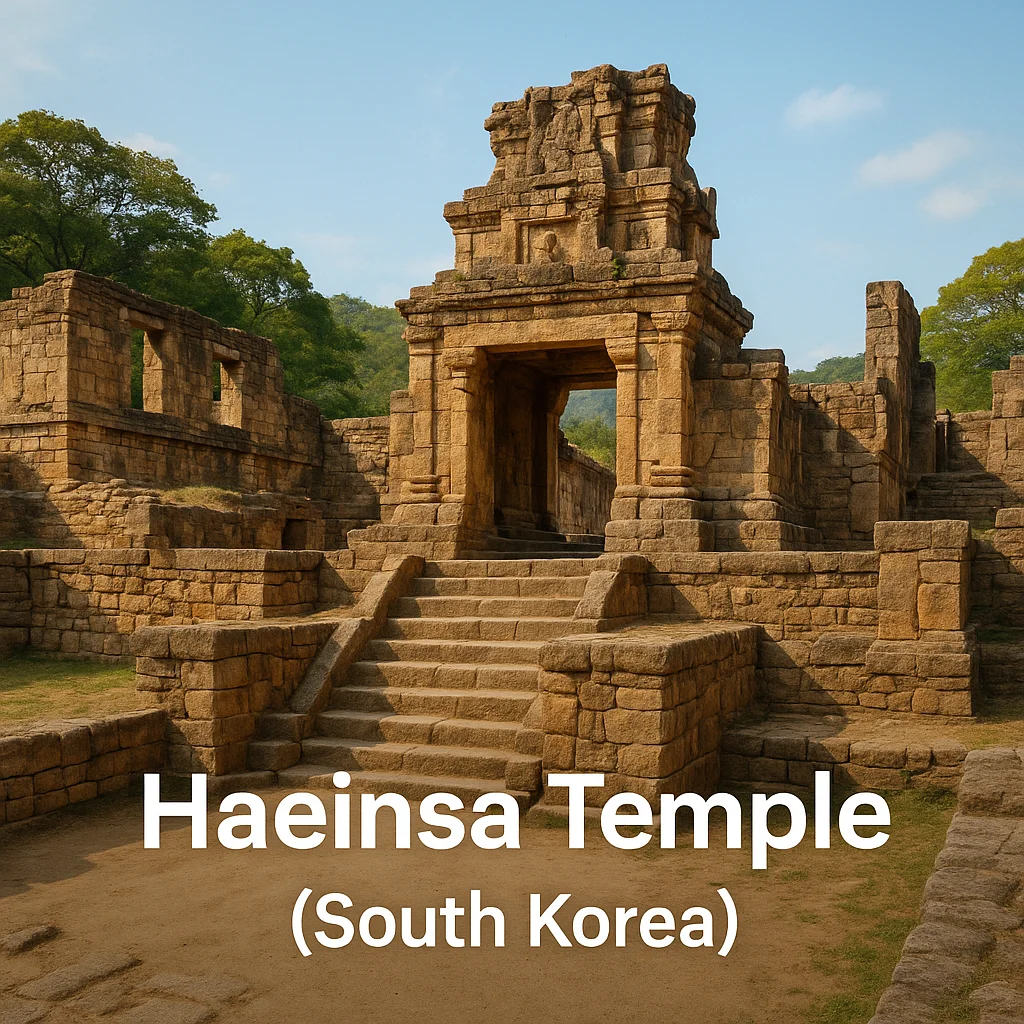
This temple offers visitors a serene and reflective experience amidst its peaceful natural surroundings in the Gaya Mountains. Visitors can enjoy walkable paths and stunning viewpoints, making it an ideal spot for those interested in spirituality, history, and nature.
In this guide, you'll discover the rich history of Haeinsa, the unique architectural features of the temple, and practical tips for making the most of your visit. Whether you're interested in the spiritual significance or the impressive woodwork of the Tripitaka Koreana, there's something for everyone to learn and appreciate.
- Country/Region: South Gyeongsang Province, South Korea
- General Era: Founded in 802 AD
- Typical Visit Length: 2 to 3 hours
- Ease of Access: Moderate hikes on temple grounds
- Best Season: Spring and autumn
- Main Highlight: Tripitaka Koreana
🗺️ Where It Is and How to Orient Yourself
Haeinsa Temple is nestled in the Gaya Mountains of South Gyeongsang Province in South Korea. The nearest major city is Daegu, which serves as a convenient gateway for visitors flying into the region.
Traveling to Haeinsa is realistic as a day trip from Daegu, though staying overnight allows a more relaxing exploration. The surrounding landscape is mountainous, offering a verdant backdrop that enhances the spiritual ambiance of the temple.
When picturing its location, imagine a lush green valley surrounded by rolling hills, providing a natural sanctuary away from the bustling cities. It's an ideal escape for those looking to immerse themselves in nature and spirituality.
🕰️ History in a Nutshell
Haeinsa Temple was built in the early 9th century by two monks, Suneung and Ijung, upon their return from studying Buddhism in China. It was established as a Buddhist temple and has since become a prominent religious site.
The temple reached its peak during the Goryeo Dynasty when it was chosen to house the Tripitaka Koreana, a comprehensive collection of Buddhist scriptures. This monumental task was undertaken to invoke divine protection during times of national crisis.
Unlike many ancient sites, Haeinsa survived numerous wars and conflicts, including the Korean War, due to its remote location and the efforts of preservationists. Consequently, it stands today as a testament to Korean spirituality and cultural heritage.
⭐ Top Highlights You Should Not Miss
- Tripitaka Koreana
- Janggyeong Panjeon (Storage Hall for Tripitaka)
- Main Buddha Hall
- Gaya Mountains Views
The Tripitaka Koreana is a must-see due to its historical and religious significance. Visitors can admire the intricate wooden blocks used to print scriptures, showcasing both artistry and scholarly dedication.
Janggyeong Panjeon, the storage hall of the Tripitaka, is a marvel of ancient engineering designed to naturally preserve the wooden blocks. A walk around the hall reveals innovative climate control systems, predating modern technology.
The Main Buddha Hall is an architectural delight with detailed carvings and vibrant interiors, offering a place for meditation and religious devotion. Its full structure can be viewed from just outside the temple courtyard, framing it against the mountain backdrop.
The views of the Gaya Mountains from various points in the temple provide a serene backdrop that enhances the spiritual experience. The wide panoramic vistas available from several spots around the temple are perfect for photography enthusiasts.
🧱 Architecture, Materials, and Design (Made Simple)
Haeinsa Temple showcases traditional Korean architecture, primarily made from wood and stone. These materials were chosen for their availability and suitability to the mountainous environment.
The temple’s style is influenced by the principles of Seon Buddhism, akin to Zen, emphasizing simplicity and nature. Attention to detail is evident in the intricate wooden carvings and the beautifully tiled roofs.
One unique feature is the Janggyeong Panjeon, designed with a highly effective natural climate control system. Its strategic orientation allows natural air flow, ensuring the preservation of the wooden blocks over centuries. This blend of spiritual and practical architecture makes Haeinsa stand out.
While some parts of the temple have been restored due to damage and aging, much of the original structure remains, allowing visitors to step back in time and experience the temple as it once stood.
🎟️ Visiting Guide (Time, Tickets, and What to Expect)
A standard visit to Haeinsa Temple typically lasts 2 to 3 hours, allowing enough time to appreciate the major highlights without rushing. For those deeply interested, spending half a day or more gives ample time to explore at a leisurely pace.
Entry to the temple complex is usually for a general fee, separate from any guided tours that may provide additional context to the exhibits. Operational hours generally extend from morning to late afternoon but can vary with seasons.
First-time visitors are advised to arrive early, wear comfortable shoes for walking, and carry water. The temple's elevated setting means shade can be scarce, so hats and sunscreen are recommended.
🚆 How to Get There and Move Around
Visitors can reach Haeinsa by public buses from Daegu or by car for more flexibility. Upon arrival, a short path leads up to the temple grounds, offering stunning introductory scenes of the surrounding landscape.
The main entrance provides the most direct access for beginners, ensuring they experience the full scope of what the temple offers. For those with mobility issues, be aware that some paths are uneven and may require caution.
Vehicles are not allowed within the temple's precincts, maintaining the tranquility and historical integrity of the site. Therefore, once there, all exploration is on foot.
🌤️ Best Season, Weather, and Time of Day
The best seasons to visit Haeinsa are spring (April to June) and autumn (September to November), when the weather is mild, and the natural surroundings are at their most picturesque, with colorful blooms or autumn foliage.
Early morning visits are recommended for experiencing the temple in a serene atmosphere before it gets busy, while late afternoon can offer softer lighting for photography.
During rainy days, explore the indoor exhibits or covered sections that showcase historical artifacts and temple relics to avoid the wet conditions outside.
⚠️ Safety, Rules, and Respectful Etiquette
Visitors should wear sturdy shoes as the grounds can be uneven and have steps. Respectful attire is required as the temple is a spiritual site — covering shoulders and knees is advised.
Photography is generally allowed, but flash and drones may be restricted; always adhere to posted guidelines. Preservation of the site is critical, so touching carvings or veering off designated paths should be avoided.
General cautions include slippery stones after rain and the potential for large crowds during peak seasons. Being mindful and considerate of both the site and fellow visitors enhances everyone's experience.
🗺️ Nearby Places and a Simple One-Day Itinerary
There are several noteworthy places near Haeinsa Temple, making it easy to plan a full day of exploration. Nearby attractions include Gayasan National Park, the Haeinsa Conservation Center, and the local town of Hapcheon.
- Morning: Arrive at Haeinsa, explore the main temple complex and Janggyeong Panjeon.
- Midday: Have lunch at a nearby restaurant offering traditional Korean cuisine.
- Afternoon: Walk in Gayasan National Park, taking in the natural beauty of the mountains.
- Evening: Visit a local market in Hapcheon to enjoy a leisurely stroll and perhaps pick up some souvenirs.
🧩 Stories, Myths, and Common Questions
Q: Is Haeinsa considered a "lost" historical site?
A: No, Haeinsa is an active Buddhist temple and not a lost city. It has been continuously occupied since its founding.
Q: Can children visit Haeinsa?
A: Yes, the temple is kid-friendly but parents should supervise their children, especially around steep areas and when respecting sacred spaces.
Q: Is a guide necessary?
A: While not necessary, a guided tour can provide significant insights into the temple's history, architecture, and religious significance.
📌 Summary and Who This Site Is Best For
- An iconic Buddhist temple in South Korea
- Located in the scenic Gaya Mountains
- Preserved history of the Tripitaka Koreana
- Must-see: Janggyeong Panjeon
- Traditional Korean architecture with smart design
- Typical visit: 2 to 3 hours
- Best time: Spring or autumn
- Respect sacred spaces and follow preservation rules
- Nearby: Gayasan National Park, Hapcheon town
- Remarkable for its unique natural air preservation system
Haeinsa Temple is ideal for families, history enthusiasts, and spiritual seekers. Its scenic beauty and profound historical context make it a rewarding visit for anyone interested in cultural heritage.
The effort to reach this remote location is well worth it for the peaceful sanctuary it offers and the invaluable insights into Korea's religious and cultural legacy.
Whether you're a casual visitor or a dedicated history buff, Haeinsa provides a fulfilling experience that encourages thoughtful exploration and a deeper appreciation for world heritage.