🏛️ Karnak Temple Complex (Egypt)
🔎 Quick Facts and Why It Matters
The Karnak Temple Complex is one of the most remarkable historical sites in Egypt. Known for its impressive size and its significance as a religious center, it offers a captivating glimpse into the grandeur of ancient Egyptian civilization.
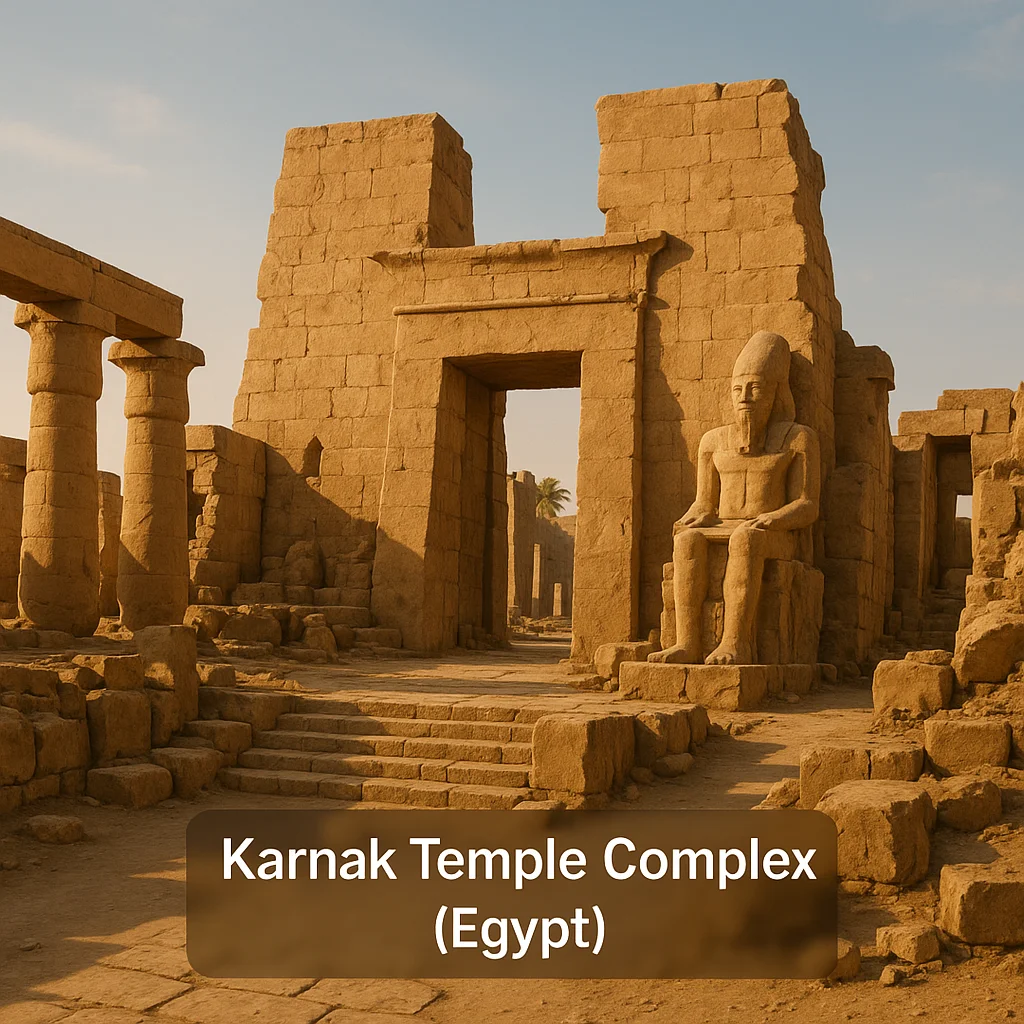
What makes Karnak special is its role as a central religious hub for the worship of the god Amun, along with other deities. Visitors can enjoy a self-guided exploration through its walkable ruins, taking in vast open spaces and intricate hieroglyphics that narrate stories from ancient times.
This guide will walk you through understanding the key features of the Karnak Temple, helping you appreciate its historical significance, architectural wonders, and tips for an enriching visit.
- Location: Luxor, Egypt
- Era: Middle Kingdom through Late Period (around 2000 BCE to 30 BCE)
- Typical Visit Length: 2 to 4 hours
- Visit Difficulty: Moderate (some uneven surfaces and walking involved)
- Best Season: Late fall to early spring (cooler weather, less heat)
- Highlights: Hypostyle Hall, Sacred Lake, Avenue of Sphinxes
🗺️ Where It Is and How to Orient Yourself
The Karnak Temple Complex is located in Luxor, Egypt, on the east bank of the Nile River. Luxor can be easily reached by airplane via Cairo or by train from other major Egyptian cities, making it a popular gateway for tourists.
A visit to Karnak is feasible as a day trip, especially if you're based in Luxor, which is home to numerous other historical sites. However, given its vastness and the richness of nearby attractions, spending the night in Luxor allows for a more relaxed exploration.
To mentally picture its location, visualize Karnak on a vast desert plateau bordered by the Nile to the west, with a landscape punctuated by palm trees and the distant foothills of the desert mountains.
🕰️ History in a Nutshell
Karnak was primarily developed during the Middle Kingdom and expanded by successive pharaohs, most notably during the New Kingdom era, from around 1550 to 1070 BCE. It served as a central place of worship where Pharaohs performed rituals to honor Amun-Ra and other gods.
At its height, the temple complex was a linchpin in Egyptian religious life, hosting festivals and ceremonies. Over time, factors like the shifting of religious centers and the practical decline of Egyptian authority contributed to its conversion from a bustling religious hub to a ruin.
The structural remains have endured due to the durability of their materials and the reverence for these sites, as well as the arid climate which has helped preserve the stone carvings and monumental structures.
⭐ Top Highlights You Should Not Miss
- Hypostyle Hall
- Sacred Lake
- The Great Court
- Obelisks of Thutmose I and Hatshepsut
- Avenue of Sphinxes
The Hypostyle Hall is one of the most breathtaking sections of the complex, featuring a forest of giant columns arranged in rows that give a glimpse into the architectural prowess of ancient Egyptians. The best photo spot would be from the northern entrance, where the full extent and height of the columns can be appreciated with natural lighting filtering through.
The Sacred Lake offers a tranquil view, once used for ceremonial purposes. Stand at the south end for a wide view that captures the water body with the temple structures silhouetted against the azure sky.
The Great Court, with its open plaza lined with statues and storied carvings, opens up a vista of grandeur and ancient artistry. Capture this from the western entrance for a panoramic view that encompasses the expanse of pharaonic splendor.
The Obelisks stand as pillars of accomplishment and are engraved with hieroglyphs. The obelisks are best viewed from their eastern foot, where the sunlight can cast shadows that enhance their engravings’ depth.
The Avenue of Sphinxes, leading toward Luxor Temple, can be seen in full glory from its entrance, allowing you to witness a row of mythical lion-bodied statues stretching into the distance.
🧱 Architecture, Materials, and Design (Made Simple)
The construction of Karnak employs sandstone blocks as the main building material, a choice that enabled extensive and towering structures. These blocks were expertly carved to fit snugly without requiring mortar.
The design is distinctly Egyptian, with massive pylons (gateway structures), towering columns styled in papyrus and lotus shapes, and obelisks that rise towards the sky. The style reflects influences that revered the grandeur and divinity associated with their gods.
The site is notable for its elaborate hieroglyphic inscriptions and bas-reliefs that narrate scenes from religious and political life, offering insight into the civilization’s operations. Restoration efforts focus on preserving these details, differentiating between ancient carvings and newer reinforcements.
🎟️ Visiting Guide (Time, Tickets, and What to Expect)
Visitors can choose a quick visit lasting 1–2 hours to see the main highlights or take a more comprehensive tour of 3–4 hours by exploring off-the-beaten-path spots within the complex. Tickets are typically required for entry, with the possibility of hiring guides, who can enrich the experience with historical narratives.
The temple usually opens in the early morning and closes in the late afternoon, but visitors should verify current schedules, as they can change seasonally. Arriving early is recommended to avoid crowds and harsh sun.
First-timers are advised to carry water, wear comfortable walking shoes, and have a hat for sun protection. Areas of shade are limited in the vast open spaces.
🚆 How to Get There and Move Around
Travelers to Karnak can make use of Luxor’s public transport or opt for taxis. Taking a taxi is often the most convenient option, providing a direct route to the entrance. For those wishing to drive, parking facilities are generally available nearby.
The main entrance caters well to beginners, offering a straightforward route into the heart of the complex, with accessible pathways laid out to view key highlights. Be prepared for some walking on uneven stones and steps, which requires practical footwear.
🌤️ Best Season, Weather, and Time of Day
The ideal time to visit Karnak is from late fall to early spring, when temperatures are milder compared to the scorching summer months. Cooler weather creates a more pleasant experience, allowing for leisurely exploration without overheating.
Photographers and early birds should aim to visit during early morning hours for soft, natural lighting and to beat the visitor rush. Late afternoon also offers a serene atmosphere, with cooler temperatures and evocative sunset hues illuminating the stones.
In case of rare rainy weather, seek refuge in Luxor Museum, which provides an indoor view into the region’s history with artifacts from the temple.
⚠️ Safety, Rules, and Respectful Etiquette
Wear sturdy shoes for navigating uneven ground and climbing steps. Dress modestly, as this remains a site of cultural and historical significance.
Show respect within sacred areas by speaking quietly and adhering to designated routes. Photography is generally permitted, but drones and other intensive flash equipment are often restricted.
Help conserve this heritage site by refraining from touching carvings or climbing structures. Stay vigilant for slippery stones and manage personal belongings in crowded areas to prevent any issues.
🗺️ Nearby Places and a Simple One-Day Itinerary
Complement your visit by exploring nearby sites like Luxor Temple, the Luxor Museum, and the Valley of the Kings. Nature enthusiasts might enjoy a felucca ride on the Nile, while the city’s Old Town offers a taste of local life.
- Morning: Begin at Karnak Temple Complex
- Midday: Explore Luxor Temple
- Afternoon: Tour the Luxor Museum or take a felucca ride
- Evening: Stroll through Luxor's Old Town for dinner and shopping
🧩 Stories, Myths, and Common Questions
Some myths suggest Karnak was a "lost city." However, it was always a temple complex with continuous renovations by many pharaohs across centuries.
It's a common misconception that Karnak was a singular construction, when in fact, it grew over nearly two millennia with each dynasty contributing.
Visitors curious about the difficulty of the walk can rest assured that while some areas are uneven, many parts are laid out for ease of access, making it reasonably kid-friendly.
Is hiring a guide worth it? Absolutely, for those interested in gaining deeper insights into the intricate symbols, stories, and history embedded in the carvings.
📌 Summary and Who This Site Is Best For
- Karnak Temple Complex in Luxor, Egypt
- Central religious hub for ancient Egyptian civilization
- Constructed over many centuries by various pharaohs
- Must-see highlights: Hypostyle Hall, Sacred Lake, Avenue of Sphinxes
- Architecture features sandstone, obelisks, and hieroglyphs
- Recommended visit length: 2-4 hours
- Best season for visit: Fall to spring
- Be aware of sun, heat, and festival crowds
- Nearby sites: Luxor Temple, Luxor Museum, Valley of the Kings
- Memorable fact: It covers about 200 acres with many temples
History enthusiasts, photographers, and families will find a visit to Karnak worthwhile, with its impressive scale and stories etched in stone. The opportunity to walk through colonnades that have stood for millennia makes it an unforgettable experience.
Whether you come for the captivating architecture or an educational jaunt through ancient history, Karnak Temple offers a rewarding journey back in time. Plan your visit thoughtfully and embrace the timeless beauty of this awe-inspiring heritage site.