🏛️ Göbekli Tepe (Turkey)
🔎 Quick Facts and Why It Matters
Göbekli Tepe is a prehistoric archaeological site in southeastern Turkey, often considered the world's oldest known temple complex. It is famed for its large circular structures supported by massive stone pillars adorned with intricate carvings.
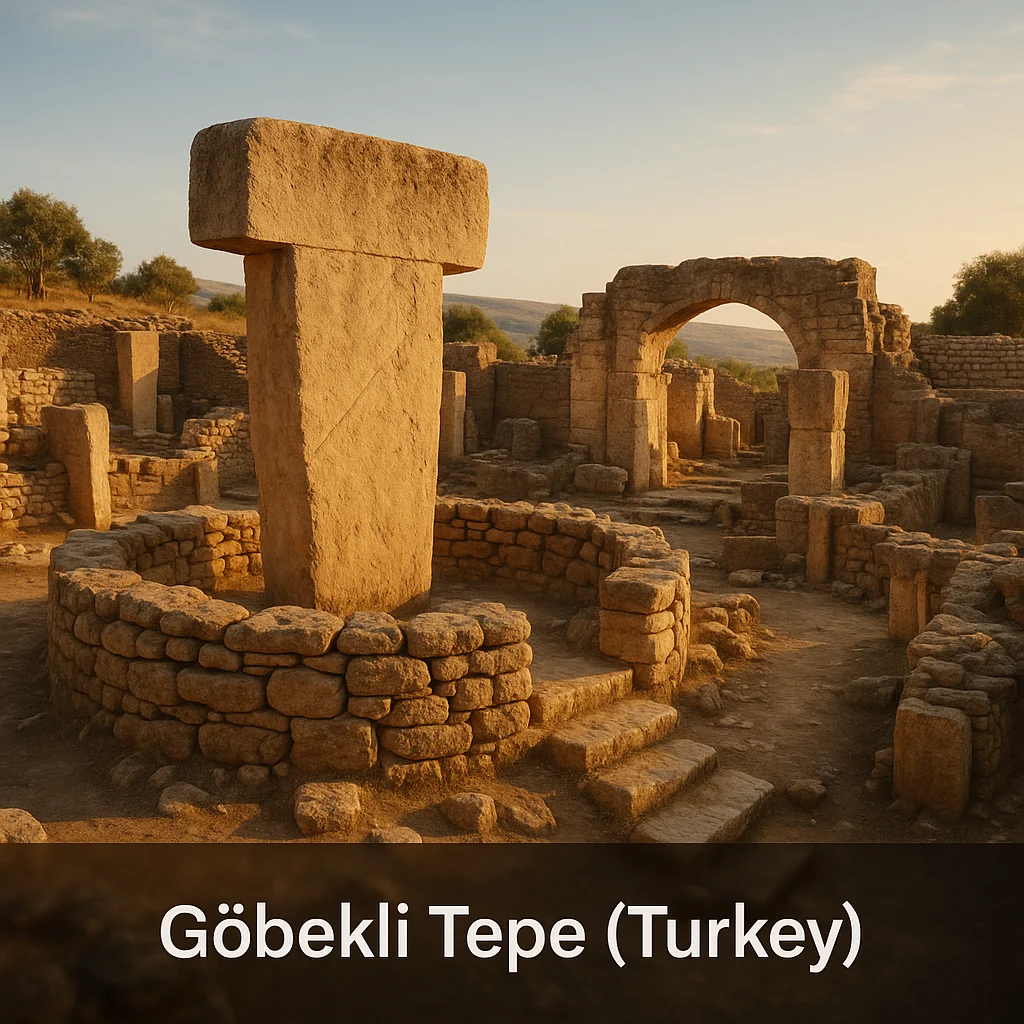
This remarkable site offers visitors a chance to walk among ancient ruins that predate Stonehenge by thousands of years. Its significance lies in the insight it provides into the lives and beliefs of early human societies.
In this guide, you'll learn about the history of Göbekli Tepe, key highlights to see during your visit, and practical tips for experiencing one of the most enigmatic archaeological sites in the world.
- Location: Southeastern Turkey, near the city of Şanlıurfa
- Era: Estimated to be around 11,000 years old (Neolithic period)
- Typical Visit Length: 1 to 3 hours
- Difficulty: Easy to moderate; some uneven terrain
- Best Season to Visit: Spring and autumn for mild weather
- Highlight: Enigmatic stone pillars with animal carvings
🗺️ Where It Is and How to Orient Yourself
Göbekli Tepe is located in southeastern Turkey, close to the ancient city of Şanlıurfa. Situated on a hill, the site offers a sprawling view of the surrounding landscape, giving visitors a sense of the vastness of history at their feet.
The nearest major city is Şanlıurfa, which serves as a typical gateway for visitors. Those traveling internationally can fly into Istanbul and then catch a domestic flight to Şanlıurfa, from where Göbekli Tepe is accessible via a short drive.
While it is possible to visit Göbekli Tepe as a day trip from Şanlıurfa, many choose to stay overnight to fully explore both the site and the cultural richness of Şanlıurfa itself.
🕰️ History in a Nutshell
Göbekli Tepe was built by prehistoric peoples around 9600 BCE, during the Neolithic era. It is believed to have served as a ceremonial site rather than a settlement, evidenced by the lack of domestic buildings and tools for everyday living.
The structures consist of large T-shaped stone pillars arranged in circles, decorated with reliefs of animals and abstract symbols. Historians believe these pillars were part of religious rituals or communal gatherings.
The site was deliberately buried about a thousand years after its construction, which inadvertently preserved it for millennia until rediscovery in the 20th century, allowing its mysteries to endure.
⭐ Top Highlights You Should Not Miss
- Stone Pillars: Enigmatic carvings and towering architecture
- Main Enclosure: Grand circle that captures the essence of its creators
- Interpretative Center: Offers educational insights about the site
The stone pillars are a must-see highlight, each featuring unique carvings of animals such as lions, snakes, and birds, offering a glimpse into the symbolic language of its creators. From a vantage point near the entrance, you can capture the full layout of these mysterious structures, setting the perfect stage for photography.
The main enclosure, a stunning circular arrangement of the pillars, encapsulates the architectural ingenuity of the ancient builders. Standing here, you can take in the entire scene, allowing for reflection on the cultural significance within its seamless environment.
Visit the on-site interpretative center to enhance your understanding of Göbekli Tepe's history, where informational displays provide valuable context complementing the ancient ruins.
🧱 Architecture, Materials, and Design (Made Simple)
The structures at Göbekli Tepe are primarily made from limestone, a material locally available and easily worked with the tools of that era. Each limestone pillar is intricately carved and set into the ground, forming a stable base for the massive structures.
The design reflects a simple yet sophisticated understanding of construction, with T-shaped pillars that hint at rudimentary human representations and symbolic meaning. These pillars are decorated with high-relief carvings of animals and geometric patterns.
Some elements of the site have been stabilized through careful restoration efforts to ensure preservation; however, the majority of the architecture remains in its original form, providing a genuine look into prehistory.
🎟️ Visiting Guide (Time, Tickets, and What to Expect)
A standard visit to Göbekli Tepe typically lasts between one to two hours, though history enthusiasts might spend longer exploring the site and its surroundings. Visitors can purchase entry tickets upon arrival, with options for guided tours available.
The site generally opens in the morning and closes by late afternoon, with variations depending on the season. It's best to verify these details before planning your visit as they may change over time.
For a comfortable visit, it is advisable to arrive early, wear sturdy walking shoes, and bring essentials like water and sunscreen. The open nature of the site means limited shade, so a hat is recommended for sunny days.
🚆 How to Get There and Move Around
Visitors have several options to reach Göbekli Tepe, including renting a car, taking a taxi from Şanlıurfa, or joining an organized tour that includes transport. Public transportation is limited, so private options are more convenient.
There is a single main entrance to the site, providing a straightforward route that leads visitors through the key sections of Göbekli Tepe. This pathway is suitable for beginners and offers a complete walk-through of the site.
While much of Göbekli Tepe is accessible, some areas have uneven terrain which may pose challenges for those with mobility issues. Visitors should be prepared for some gentle inclines and gravel paths.
🌤️ Best Season, Weather, and Time of Day
The best times to visit Göbekli Tepe are during the mild seasons of spring (April to June) and autumn (September to November) when the weather is pleasant. Summers can be very hot, making midday visits uncomfortable.
Early morning or late afternoon visits offer cooler temperatures and softer lighting, ideal for photography and a more comfortable experience. During these times, the site is often less crowded, allowing for a more contemplative atmosphere.
On rainy days, visitors might consider exploring the interpretative center or nearby museums in Şanlıurfa, which provide informative indoor alternatives.
⚠️ Safety, Rules, and Respectful Etiquette
When visiting Göbekli Tepe, wear comfortable and sturdy shoes as you'll be walking on uneven surfaces. Lightweight clothing is recommended for hot days, and sunscreen is essential.
Respect the cultural and sacred significance of the site by maintaining quiet in certain areas and following posted signs. Photography is generally allowed, though drones and flash may be restricted.
To aid in conservation efforts, do not climb on the structures, avoid touching fragile carvings, and stay on marked paths. Be mindful of natural hazards like slippery stones and be cautious of heat and altitude effects when exploring.
🗺️ Nearby Places and a Simple One-Day Itinerary
- Morning: Visit Göbekli Tepe and explore the main site
- Midday: Return to Şanlıurfa for lunch and a visit to the local bazaar
- Afternoon: Explore the Şanlıurfa Archaeology Museum
- Evening: Relax at a traditional Turkish tea house in the city center
Nearby places worth visiting include the Şanlıurfa Archaeology Museum, which houses impressive artifacts from the region, and the lively local bazaar for a taste of local culture. A short drive from the city also leads to the Lake of Abraham and its surrounding gardens, perfect for a stroll.
🧩 Stories, Myths, and Common Questions
Is Göbekli Tepe a part of a lost civilization? Many myths suggest mysterious origins, but most historians agree it was built by local Neolithic communities experienced in stoneworking and social organization.
How old is Göbekli Tepe really? While some claim divergent ages, evidence supports that construction began around 9600 BCE, making it one of the oldest monumental constructions known.
Is it suitable for children? Göbekli Tepe is family-friendly with paths manageable for children, but adult supervision is crucial around fragile or dangerous areas.
Is a guide necessary? While not essential, hiring a guide can enrich your visit by providing detailed histories and cultural contexts that may not be apparent from signs alone.
📌 Summary and Who This Site Is Best For
- Prehistoric archaeological site in southeastern Turkey
- Located near the city of Şanlıurfa
- Built approximately 11,000 years ago as a ceremonial site
- Key highlights include stone pillars with intricate carvings
- Made from limestone with Neolithic design structures
- Visit length: 1-3 hours
- Best seasons: spring and autumn
- Respectful behavior and proper clothing are advised
- Nearby add-ons: Şanlıurfa Archaeology Museum, local bazaar
- Notable fact: Predates Stonehenge by thousands of years
Göbekli Tepe is an ideal destination for history enthusiasts, archaeologists, and photographers. It offers a perfect blend of mystery and cultural insights that will captivate curious visitors eager to explore human history.
The site is worth visiting for those interested in the origins of civilization and religious practices, providing a unique look into the past. Its remote beauty and historical significance make it a rewarding journey into ancient human achievement.
Whether you're a seasoned traveler or a local visitor, Göbekli Tepe presents a unique opportunity to delve into the past and reflect on the birth of organized human society, leaving an indelible impression on all who explore its enduring mystery.