🏛️ Great Pyramid of Cholula (Mexico)
🔎 Quick Facts and Why It Matters
The Great Pyramid of Cholula, located in Mexico, is renowned as the largest pyramid by volume in the world. This historical marvel is not just significant because of its size but also for its rich cultural heritage, showcasing layers of history from various civilizations.
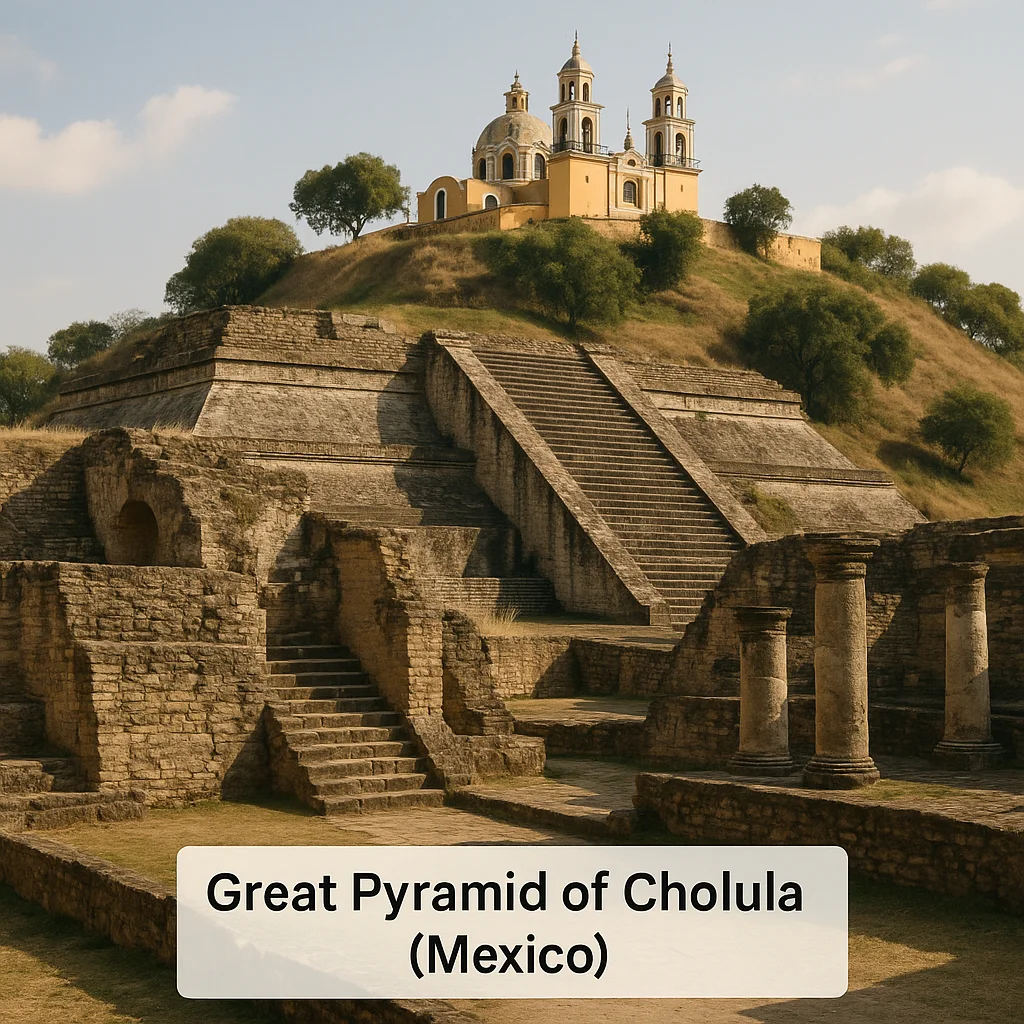
What makes the pyramid truly special is its composition and historical relevance. While its size grabs attention, the pyramid also offers an intriguing labyrinth of tunnels for exploration and a church sitting atop its summit, providing an unparalleled experience that blends history and present-day culture.
Visitors to the site can look forward to an immersive experience, featuring walkable ruins and stunning viewpoints of the surrounding landscape. Inside, it houses a museum-style collection that presents artifacts and insights across different periods of its storied past.
In this guide, you'll discover the pyramid's historical significance, what to expect during your visit, and tips for exploring this iconic archaeological site responsibly. From architectural insights to visiting guidelines, this guide will prepare you for a memorable exploration.
- Country/Region: Mexico, Puebla
- General Era: Pre-Columbian, from around 3rd century BC
- Typical Visit Length: 2–4 hours
- Difficulty: Moderate, with some uphill walking
- Best Season: Dry months, usually November to April
- Highlight: Panoramic view from the church atop the pyramid
🗺️ Where It Is and How to Orient Yourself
The Great Pyramid of Cholula is situated in the town of Cholula, within the state of Puebla in Mexico. It's located near Puebla City, which serves as the nearest major city and travel hub. The closest major airport is in Puebla, making it an accessible journey for travelers entering from domestic or international locations.
This site is feasible as a day trip from Puebla City, taking about 30 to 40 minutes by car or bus. Alternatively, it can be part of a longer stay to fully explore the area and its surroundings. The pyramid is nestled in a valley, with views of the nearby Popocatepetl Volcano, providing a picturesque backdrop.
To mentally map your journey, picture yourself heading from Puebla City towards the western landscapes, moving through a series of townships and eventually arriving at the ancient site perched in a serene locale amidst the bustling modernity of nearby settlements.
🕰️ History in a Nutshell
The Great Pyramid of Cholula was built by the indigenous people of the region, believed to have started around the 3rd century BC. The pyramid served as an important religious and ceremonial center where various rituals and gatherings were held.
During its peak period under the Toltecs and later the Aztecs, the site witnessed expansions and modifications, transforming into a significant pilgrimage destination. Various cultural changes over the centuries contributed to its layered architectural design, making it a palimpsest of different historical periods.
The site gradually fell into obscurity after the Spanish conquest, with the construction of a Spanish church at its summit marking a shift in its historical narrative. Today, remnants of its past are preserved through careful archaeological efforts, allowing visitors to grasp its historical prominence.
⭐ Top Highlights You Should Not Miss
- The Pyramid Itself
- The Church of Our Lady of Remedies
- Archaeological Museum of Cholula
- Underground Tunnel Tours
The Pyramid Itself is the core highlight, with its full structure visible against a backdrop of lush greenery and the distant mountains. Its massive scale and unique design approach are captivating for visitors exploring the exposed areas and traversing through the historically significant tunnels.
The Church of Our Lady of Remedies sits at the pyramid’s apex, offering a fascinating juxtaposition between pre-Hispanic and colonial influences. This vantage point provides the best spot for panoramic photos, with the entire countryside unfolding beneath your feet.
The Archaeological Museum of Cholula is conveniently located on-site and provides context for the finds around the pyramid. Artifacts and detailed dioramas help narrate the complex history and significance of the site.
Underground Tunnel Tours offer visitors an intriguing journey through the pyramid's internal passageways. These guided walks reveal insights into the pyramid's construction and cultural practices, with the full hierarchy of layers laid out amidst dim, atmospheric lighting.
🧱 Architecture, Materials, and Design (Made Simple)
The Great Pyramid of Cholula is primarily constructed from adobe bricks—a mixture of earth, water, and organic materials—which has contributed to its massive volume. Dating back to pre-Columbian times, the structure reflects indigenous architectural traditions interspersed with later influences.
Unlike the more famous stone pyramids of Egypt, Cholula's design is rooted in the use of locally-sourced materials and traditional methods. The pyramid’s staggered terraces and multilevel platforms make it a unique feature within Mesoamerican architecture.
Notable details include the intricate murals and carvings found in various sections, as well as restored portions that pay homage to the original designs while ensuring visitor safety. Restoration projects over the years have aimed to preserve these artifacts while maintaining the authenticity of the original structure.
🎟️ Visiting Guide (Time, Tickets, and What to Expect)
Visitors typically spend between 2 to 4 hours exploring the site, allowing for both a quick overview or a more in-depth visit with time to enjoy each area thoroughly. There is a paid entry for access to the tunnels and museum, but the pyramid's exterior and the church are usually open access.
The site generally operates from morning till late afternoon, with some variations depending on local events or special circumstances. It’s always a good idea to check in advance as these details can change.
For first-time visitors, arriving early is recommended to beat the crowds and for cooler temperatures. It's wise to carry water, wear comfortable shoes suitable for uneven ground, and consider a hat for sun protection, as much of the site is exposed.
🚆 How to Get There and Move Around
You can reach Cholula using public transport from Puebla City, which includes buses and shared taxis. Renting a car for more flexible travel is another option. Upon arrival, the site is mostly pedestrian, save for restricted access areas meant to preserve archaeological integrity.
For those new to the area, the main entrance to the pyramid is easily accessible from the town square of Cholula, making it a beginner-friendly starting point. Be prepared for moderate walking distances and occasional steep pathways as you explore.
Accessibility considerations include the uneven staircases leading up to the church and natural walking trails around the pyramid, which might be challenging for visitors with mobility limitations.
🌤️ Best Season, Weather, and Time of Day
The best time to visit the Great Pyramid of Cholula is during the dry season, typically from November to April. This period offers the most favorable weather conditions, allowing for comfortable exploration and clearer skies for photography.
Early mornings or late afternoons are ideal for visits to enjoy the cool air and softer lighting. These times are also less crowded, providing a more intimate setting to take in the views and architecture.
On days of inclement weather, consider exploring the museum or nearby historical sites that are indoor-friendly, providing educational alternatives until outdoor conditions improve.
⚠️ Safety, Rules, and Respectful Etiquette
Visitors should wear sturdy shoes suitable for uneven surfaces and steps, and dress comfortably to account for weather conditions. Respecting the cultural and historical significance of the site is vital, including observing quiet in sacred spaces and following all posted signage.
Photography is generally allowed, but be aware of restrictions, such as no flash or drone photography, as these can disrupt the experience for others and potentially damage sensitive areas. Always stay on marked paths and avoid touching or climbing on ancient structures to aid in preserving the site.
Practical safety tips include watching for slippery stones if it rains, staying hydrated, and being mindful of altitude and heat. Pickpockets can be an issue in crowded areas, so be discreet with personal belongings and remain aware of your surroundings.
🗺️ Nearby Places and a Simple One-Day Itinerary
While visiting Cholula, consider exploring these nearby attractions:
- Puebla City’s Historic Center
- Popocatepetl and Iztaccihuatl National Park
- Tonantzintla Church
- Local Cholula Markets
- San Gabriel Convent
Consider this simple itinerary for a full day in the region:
- Morning: Start with a visit to the Great Pyramid of Cholula for stunning views and church exploration.
- Midday: Stop for a local meal in the Cholula town square.
- Afternoon: Explore the Archaeological Museum and nearby markets for souvenirs.
- Evening: Return to Puebla City to explore its vibrant historic center.
🧩 Stories, Myths, and Common Questions
Is the pyramid the biggest in the world?
Yes, in terms of volume, it exceeds that of the Great Pyramid of Giza, though it may not appear as massive due to its tiered design and vegetated surface.
Who originally built it?
The original builders are believed to be part of the indigenous population that inhabited the region before evolving through various cultural influences including the Toltecs and Aztecs.
Is it a difficult walk to the top?
The climb to the church at the pyramid's summit involves some effort, with steep pathways but it is manageable for most visitors in good health.
Is it suitable for children?
Yes, with supervision. The site offers many fascinating elements for young explorers, though care should be taken with the more challenging terrains.
Is hiring a guide worth it?
Many find a guide beneficial for deeper historical context and insightful commentary on the pyramid's features and history.
📌 Summary and Who This Site Is Best For
- Site: Great Pyramid of Cholula
- Location: Cholula, Puebla, Mexico
- History: Largest pyramid by volume with deep cultural layers
- Top Highlights: Pyramid, church, tunnels, museum
- Architecture/Materials: Adobe, traditional Mesoamerican
- Visit Length: 2–4 hours
- Best Season: November to April
- Safety/Etiquette: Respect signs, stay on paths, hydrate
- Nearby Add-ons: Puebla’s historic center, national parks
- Memorable Fact: Largest pyramid in the world by volume
The Great Pyramid of Cholula is an enriching destination for families, photographers, history fans, and hikers alike. Its vast historical layers and architectural wonders make it a must-visit site for those interested in understanding the profound legacy of ancient Mesoamerican civilizations.
The site’s blend of history, culture, and stunning views rewards those willing to explore beyond the usual tourist paths. It is a testament to the enduring narratives of the past, waiting to be experienced by all who visit.
We encourage all visitors to explore responsibly and appreciate the depth of heritage present here, ensuring its preservation for generations to come.