🏛️ Korean Dolmen Sites (South Korea)
🔎 Quick Facts and Why It Matters
The Korean Dolmen Sites are one of South Korea's most renowned heritage locations, known for their concentration of prehistoric stone funerary monuments. These dolmens hold vital clues to ancient societies and their ways of life.
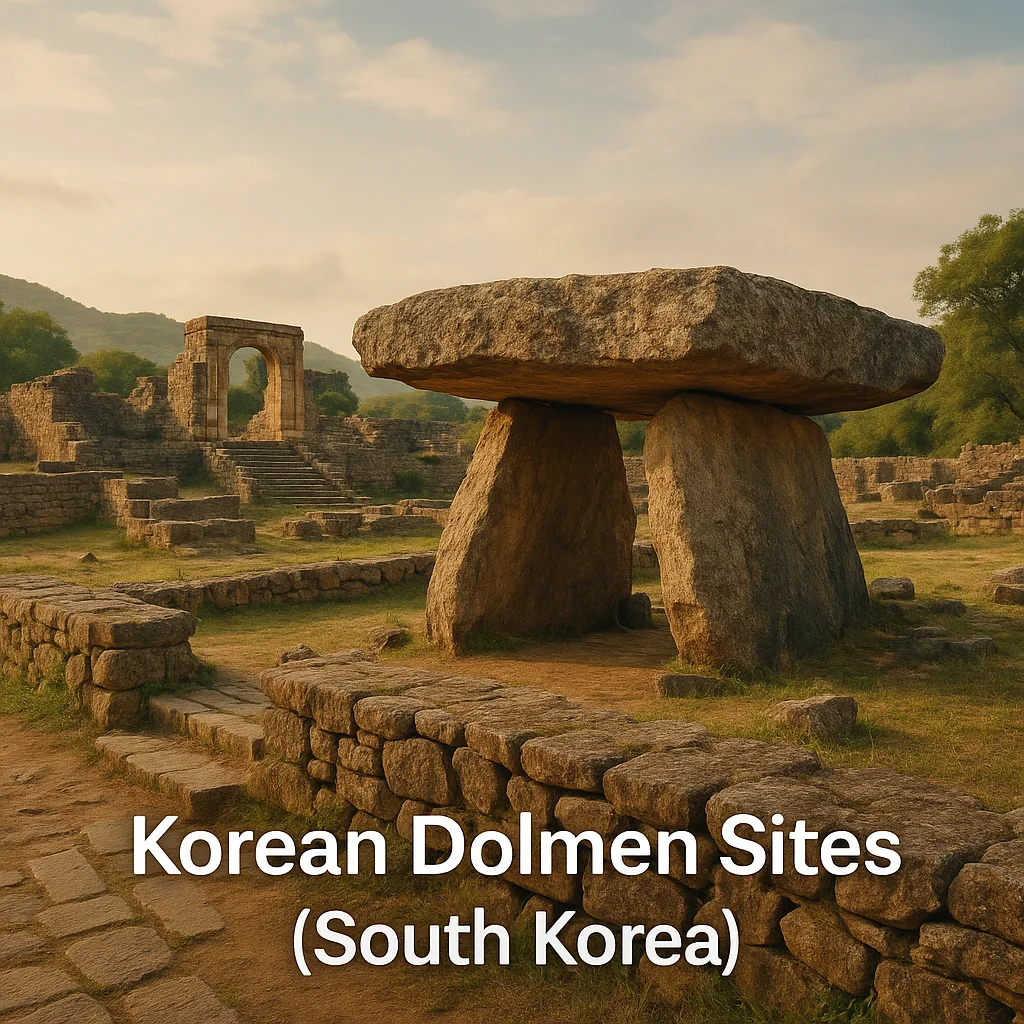
These structures are a testament to the ingenuity and social organization of their creators. Found throughout Korea, the dolmens serve as relics of the ancient cultures that once inhabited the peninsula. Visitors to these sites can walk among the structures, gaining insight into the burial practices of early Korean societies.
Throughout this guide, you'll learn about the significance of these dolmens, their history, and tips for visiting these important cultural landmarks. Expect to discover the essence of Korea's prehistoric past.
- Country/Region: South Korea, primarily in the southwest
- General Era: Approx. 1st millennium BCE
- Typical Visit Length: 1–3 hours
- Difficulty: Easy to moderate walk
- Best Season: Spring and fall
- Highlight: Chunghando Dolmen group
🗺️ Where It Is and How to Orient Yourself
The Korean Dolmen Sites are primarily located in the southwestern region of South Korea, with concentrations in areas like Hwasun, Gochang, and Ganghwa. These are rural locations offering a glimpse into scenic landscapes dotted with these ancient structures.
The nearest major city for most visitors is Mokpo, with travel options including domestic flights or trains from larger hubs like Seoul. Many travelers make their journey a weekend trip, as the location's remoteness and cultural richness justify ample exploration time.
Mentally, picture a coastal and slightly mountainous region, inviting for both history lovers and nature enthusiasts. Rolling hills, cultivated fields, and coastal views often accompany these neolithic sites, providing a tranquil yet inspiring backdrop.
🕰️ History in a Nutshell
The Korean Dolmen Sites were built during the Bronze Age and reflect the burial practices of early societies in the Korean peninsula. They served as megalithic tombs, with larger capstones indicative of high societal status or significant community roles for the interred.
The peak period of dolmen construction is generally set between the 7th and 3rd centuries BCE. Many dolmens have survived due to the sturdy nature of their stone construction and the cultural reverence in which they are held as ancestral monuments.
The preservation of these sites has significantly contributed to our understanding of Korea's ancient societies. Despite changes over centuries, many dolmens remain due to consistent stewardship and modern efforts to protect them as World Heritage sites.
⭐ Top Highlights You Should Not Miss
- Chunghando Dolmen
- Ganghwa Dolmen
- Hwasun Dolmen Group
- Gochang Dolmen Museum
The Chunghando Dolmen stands out for its large table-style capstone, balanced gracefully on stone supports. It's a perfect spot for classic wide-angle photographs that capture the full structure against the horizon.
The Ganghwa Dolmen, considered the largest in South Korea, is noted for its massive capstone, weighing nearly 300 tons. A suitable photo spot allows for the full view of the dolmen amid its serene countryside setting.
Visit the Hwasun Dolmen Group to see a varied collection of different dolmen styles, providing valuable insights into the evolution of these structures. A fitting viewing spot captures multiple dolmens within a single frame, set against lush greenery.
The Gochang Dolmen Museum offers a comprehensive look at the artifacts found in dolmens, paired with informative exhibits that enhance the experience. Its location near the dolmen cluster provides a full frame visual experience of history and nature.
🧱 Architecture, Materials, and Design (Made Simple)
The dolmens are primarily constructed from locally sourced stone, with larger capstones carefully placed atop upright stones to create the tomb structure. This construction showcases impressive engineering skills, considering the era.
The design style is simple yet substantial, reflecting the societal and cultural prowess of Korea's early inhabitants. The use of stone aligns with other megalithic structures worldwide, such as those in Europe, though Korean dolmens show unique regional characteristics.
Some dolmens display unique features like petroglyphs and tool markings from construction. While some sections have been restored to preserve their integrity, many elements remain original, particularly where natural stone weathered gracefully over time.
🎟️ Visiting Guide (Time, Tickets, and What to Expect)
For a brief overview, a 1-2 hour visit can cover key dolmens, while a deeper exploration with museum visits may take 3-4 hours. Most sites are open daily, but seasonal timing may adjust accessibility, so checking local schedules is advised.
There are typically no entrance fees to wander among the outdoor dolmen sites, although some museums nearby might charge a modest fee. Guided tours often provide richer context and can be arranged through local tourist centers.
First-time visitors should plan to arrive early and bring essentials such as water and sun protection. While shaded areas may offer brief respite, comfortable footwear is essential to navigate the sometimes uneven terrain comfortably.
🚆 How to Get There and Move Around
Visitors can utilize public buses or rented vehicles from nearby cities to reach the dolmen sites. For a simpler navigation, especially for beginners or non-Korean speakers, taxis or guided tours might provide a more straightforward experience.
Most sites feature clearly marked paths, making sightseeing straightforward, though some may have uneven stones or moderate inclines, so accommodating footwear is advisable. While most areas are not wheelchair accessible, plans can be made for those with limited mobility to enjoy some vantage points near parking areas.
🌤️ Best Season, Weather, and Time of Day
The best times to visit the Korean Dolmen Sites are spring and autumn when the weather is mild and landscapes are ablaze with vibrant foliage or blooming flowers. This offers both comfort and prime photographic conditions.
Early morning visits can be particularly poignant, with cooler temperatures and softer light creating enchanting atmospheres. Alternatively, late afternoons provide similar conditions, tapering into breathtaking sunsets that frame the dolmens beautifully.
On rainy days, seeking indoor options like local museums can still offer insightful explorations, noting that some exhibit areas provide educational respite from inclement weather.
⚠️ Safety, Rules, and Respectful Etiquette
Visitors should wear sturdy shoes suitable for uneven ground and moderate inclines, focusing on stable footing while exploring the pathways around the dolmens. Light, breathable clothing is recommended for seasonal weather variations.
Respect for the cultural significance of these sites is paramount. This includes maintaining quiet in sacred areas and adhering to signage instructions. Photography is generally allowed, but taking care with equipment and flash usage is advised as per posted guidelines.
Conservation efforts stress the importance of staying on designated paths and refraining from physically interacting with the dolmens or their surfaces, to preserve their integrity for future generations to appreciate.
🗺️ Nearby Places and a Simple One-Day Itinerary
Nearby attractions include:
- Gochang Folk Village
- Ganghwa Peace Observatory
- Mudeungsan National Park
- Jeonju Hanok Village
A possible one-day itinerary:
- Morning: Explore the Gochang Dolmen Museum and adjacent dolmen fields
- Midday: Visit the traditional Gochang Folk Village for local culture insights
- Afternoon: Head to Mudeungsan National Park for nature hikes or scenic relaxation
- Evening: Conclude with leisure at Jeonju Hanok Village, experiencing local cuisine
🧩 Stories, Myths, and Common Questions
Q: Are these dolmens related to Stonehenge?
A: While both are megalithic structures, Korean dolmens served primarily as burial sites, unlike Stonehenge, considered a ceremonial site. Scholars believe they developed independently.
Q: Can children visit these sites?
A: Yes, the sites are generally child-friendly, offering educational experiences, although supervision is recommended due to uneven terrain.
Q: Is a guide necessary for visiting?
A: While not necessary, guides can enhance understanding of historical and cultural contexts, making the visit more enriching.
📌 Summary and Who This Site Is Best For
- What it is: Prehistoric stone burial monuments
- Where it is: Southwestern South Korea
- Key history takeaway: Reflects ancient Korean burial practices
- Top highlights: Chunghando Dolmen, Ganghwa Dolmen
- Architecture/materials: Stone megaliths with carved features
- Visit length guidance: 1–3 hours depending on interests
- Best season/time: Spring and fall for mild weather
- Safety/etiquette: Wear proper shoes; respect cultural significance
- Nearby add-ons: Gochang Folk Village, Mudeungsan National Park
- One memorable fact: Some dolmens are among the largest in the world
The Korean Dolmen Sites offer a unique journey into the distant past, ideal for families, history buffs, and photography enthusiasts alike. Their serene landscapes and historical significance make them a rewarding destination.
For those interested in ancient cultures, these sites provide an evocative connection to early human societies and their lifeways. Against a backdrop of South Korea's natural beauty, visiting these dolmens is both an educational and a truly memorable experience.
Whatever your interests, the Korean Dolmen Sites encourage visitors to pause and reflect on the stories carved in stone by our distant ancestors.