🏛️ Pyramids of Giza (Egypt)
🔎 Quick Facts and Why It Matters
The Pyramids of Giza, located in Egypt, are among the most famous ancient structures in the world. Known for their monumental scale and ancient origins, they are testament to the engineering marvels of ancient Egypt.
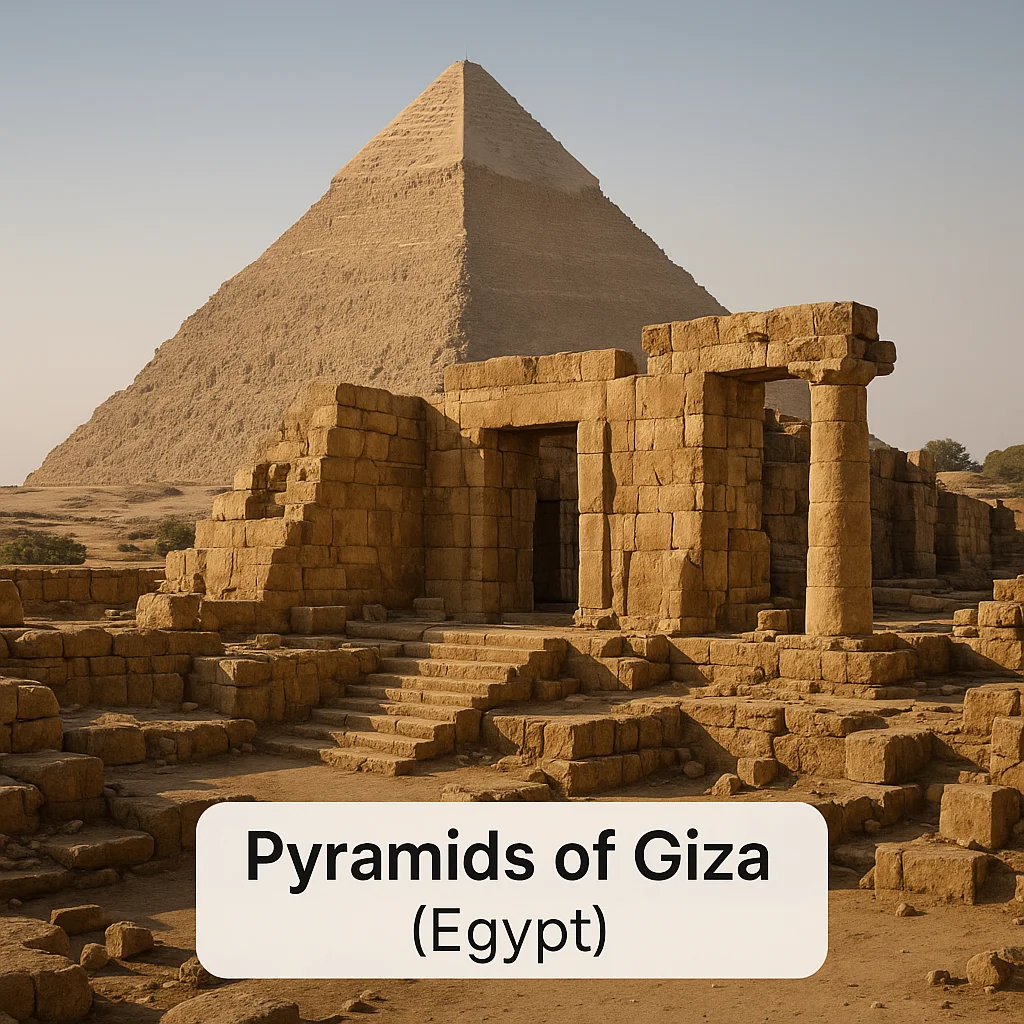
These iconic structures include the Great Pyramid of Khufu, the Pyramid of Khafre, and the Pyramid of Menkaure, each serving as tombs for pharaohs. They offer a journey through time, inviting visitors to imagine life thousands of years ago.
Visitors often find themselves in awe of the sheer size and precision of these constructions. Wandering the site offers a mix of walking, exploration, and panoramic viewpoints that provide both learning and visual experiences.
This guide will cover what you can expect when visiting the Pyramids of Giza, from their historical significance to practical tips for making the most of your visit.
- Country/Region: Egypt, Giza
- General Era: Approximately 2550 to 2490 BCE
- Typical Visit Length: 2 to 4 hours
- Difficulty: Moderate walking required
- Best Season: Autumn and Spring for mild weather
- Highlight: The Great Pyramid of Khufu
🗺️ Where It Is and How to Orient Yourself
The Pyramids of Giza are located on the Giza Plateau, on the outskirts of Cairo, Egypt's bustling capital city. They are situated in the desert, just a short drive from the heart of Cairo.
Visitors typically fly into Cairo International Airport, which serves as the main gateway to the pyramids. While it's feasible as a day trip from Cairo, an overnight stay is recommended for a more relaxed experience.
The site is positioned on a plateau extending into the Sahara Desert, offering vast desert vistas. This geographical context gives a sense of isolation and timelessness, setting the stage for exploration.
🕰️ History in a Nutshell
The Pyramids of Giza were constructed during the Fourth Dynasty of the Old Kingdom of Egypt, around 2550 to 2490 BCE. Commissioned by rulers such as Pharaoh Khufu, they served primarily as monumental tombs.
The Great Pyramid of Khufu, the largest, was originally encased in smooth, white limestone, which would have given it a shiny appearance visible from miles away. These pyramids marked the peak of pyramid construction.
Over time, the pyramids fell into disuse as burial sites moved to the Valley of the Kings. Despite centuries passing, they remain largely intact, primarily due to their robust construction and Egypt's dry climate.
⭐ Top Highlights You Should Not Miss
- The Great Pyramid of Khufu
- The Sphinx
- The Pyramid of Khafre and the Valley Temple
- The Boat Pits
The Great Pyramid of Khufu is the largest and most famous pyramid. Standing at an impressive height, it offers a panoramic view from its plateau, making it the perfect photo spot with the entire structure and surrounding desert landscapes in view.
The Sphinx, with its lion's body and human head, is another iconic symbol. It's easily visible in its entirety, providing a direct, unobstructed view that captures the backdrop of the pyramids.
Adjacent to the Pyramid of Khafre, the Valley Temple is known for its preservation and role in the mummification process. With its distinctive limestone and its proximity to the Sphinx, it's a notable highlight.
The Boat Pits, used to house the pharaoh's solar barques, are fascinating vestiges of ancient religious customs. These pits can be fully viewed beside the pyramids, allowing visitors to imagine their original purposes.
🧱 Architecture, Materials, and Design (Made Simple)
The pyramids were primarily built using limestone and granite. The Great Pyramid consists of millions of blocks expertly arranged to form its striking triangular shape.
The style of the pyramids reflects ancient Egyptian architectural evolution. Their design influenced future constructions, blending religious significance with architectural prowess.
Unique features include the alignment to the cardinal points, the internal chambers, and the grand gallery within the Great Pyramid, distinguishing them from other ancient structures.
Restorations have been minimal, focusing on preservation rather than reconstruction, ensuring that visitors experience the site authentically.
🎟️ Visiting Guide (Time, Tickets, and What to Expect)
Visitors can choose between a quick 1- to 2-hour visit, a standard 2- to 4-hour exploration, or a deep dive that lasts a full day. The main pyramids require a ticket, with separate fees for entering the Great Pyramid and the museum.
The pyramids are generally open from morning until late afternoon, but specific hours may vary, and it's recommended to check for updates regularly.
First-time visitors should aim to arrive early to beat the heat and crowds. Bringing water, wearing a hat, and planning for shade breaks are wise practices in the desert environment.
🚆 How to Get There and Move Around
Public transport, taxis, or organized tours offer ways to get there. A taxi or bus from Cairo is straightforward and convenient for beginners.
The main entrance near the Great Pyramid is the recommended starting point, offering an easier orientation and prevalent facilities.
Paths can be sandy and uneven, so comfortable walking shoes are advised. Steep steps may present a challenge in some areas, as well as the large distances between points.
🌤️ Best Season, Weather, and Time of Day
The best seasons to visit are Autumn and Spring, when temperatures are moderate, ranging from cool to warm, making it comfortable for exploring.
For photography, early morning provides soft light and fewer crowds, enhancing the experience of the pyramids' exteriors.
If rain dampens plans—which is rare but possible—visiting the nearby National Museum of Egyptian Civilization can be a worthwhile backup.
⚠️ Safety, Rules, and Respectful Etiquette
Visitors should wear sturdy shoes suitable for uneven terrain and dress modestly. Cultural sensitivity is important, especially in quiet areas.
Photography may come with some restrictions; drone use is generally banned and flash photography can be limited in certain areas.
To help preserve the site, it's crucial to stay on marked paths, avoid climbing on the pyramids, and be cautious around fragile carvings.
Staying aware of the potential for heat exhaustion or dehydration is wise, as temperatures can soar, especially in the summer months.
🗺️ Nearby Places and a Simple One-Day Itinerary
Other attractions near the Pyramids of Giza include:
- The Egyptian Museum of Cairo
- Memphis and Sakkara
- The Sound and Light Show at the Pyramids
- Cairo Citadel
- Khan El Khalili Bazaar
- Morning: Visit the Pyramids of Giza and the Sphinx
- Midday: Explore the Egyptian Museum in Cairo
- Afternoon: Wander through Khan El Khalili Bazaar
- Evening: Enjoy the Sound and Light Show at the Pyramids
🧩 Stories, Myths, and Common Questions
- Myth: Aliens built the pyramids. Fact: Historians credit skilled ancient Egyptian laborers.
- Misunderstanding: The pyramids are part of a "lost civilization." Clarification: Built by the well-documented Old Kingdom society of Egypt.
- Visitor Query: Is the walk challenging? Answer: The grounds are expansive but generally manageable with moderate fitness.
- Visitor Query: Is it kid-friendly? Answer: Children enjoy the scale and stories associated but monitor for heat and fatigue.
- Visitor Query: Is a guide worth it? Answer: A guide can enrich the visit by providing historical context and pointing out details you might miss.
📌 Summary and Who This Site Is Best For
- The Pyramids of Giza are renowned ancient structures offering a glimpse into Egypt's past.
- Located near Cairo, Egypt, they are easily accessible for travelers.
- The pyramids served as elaborate tombs for pharaohs during the Old Kingdom.
- Notable highlights include the Great Pyramid and the Sphinx.
- Constructed mainly of limestone and granite, showing remarkable architectural skill.
- A typical visit ranges from 2 to 4 hours, depending on interest.
- Autumn and Spring offer the most comfortable weather for visits.
- Visitors should adhere to safety and etiquette guidelines to protect the site.
- Nearby sites add to the cultural exploration, such as the Egyptian Museum and Sakkara.
- The Great Pyramid's former white limestone casing is a memorable historical fact.
This site captivates a wide range of visitors, from history enthusiasts fascinated by ancient civilizations to photographers seeking dramatic landscapes.
The pyramids are worth visiting for their historical significance and the opportunity to stand in the shadow of ancient marvels. They reflect humanity's enduring drive to reach for the stars.
When visiting, consider how to respect and protect these treasures, ensuring they continue to inspire for generations to come.