🏛️ Rapa Nui Moai & Ahu (Chile)
🔎 Quick Facts and Why It Matters
The Rapa Nui Moai & Ahu on Easter Island, in Chile, consist of enormous stone statues and platforms, historically significant for their mysterious origins and cultural importance.
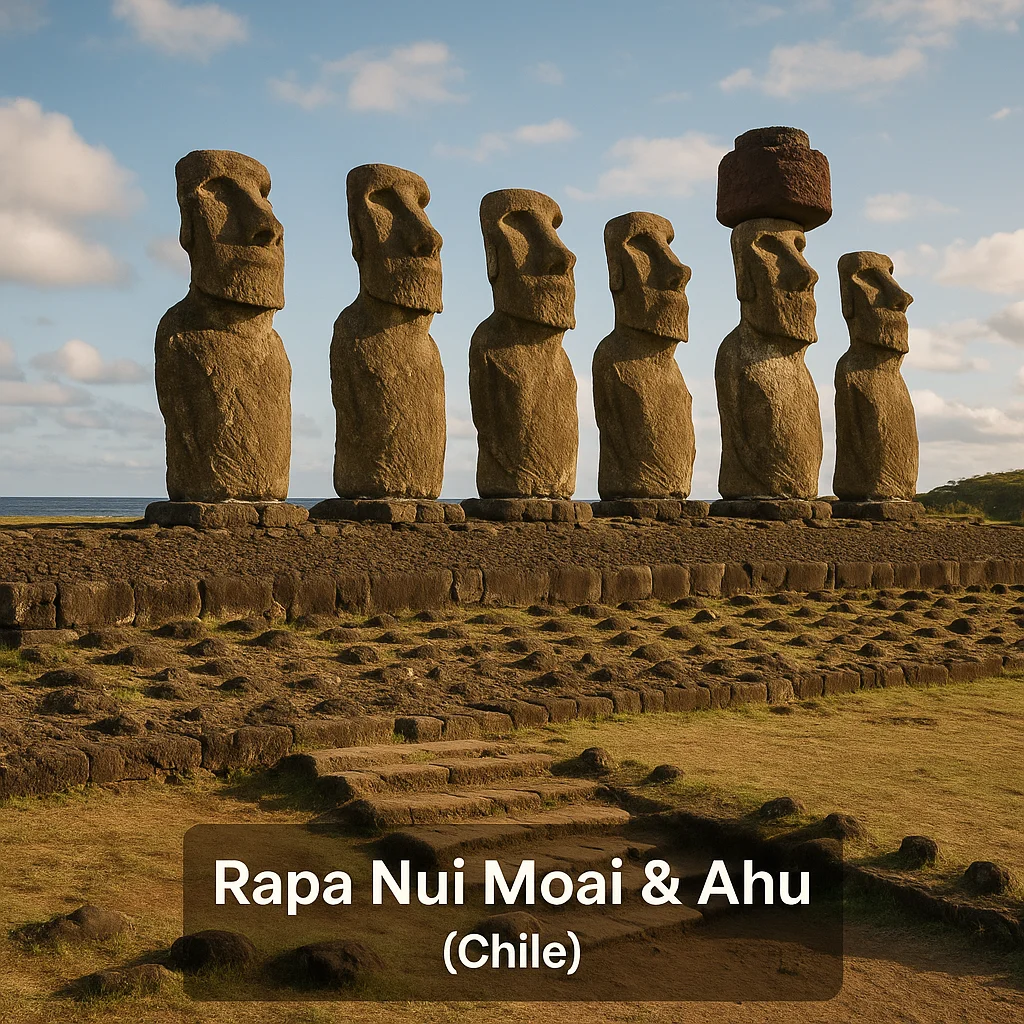
These renowned monuments are symbolic of the island's rich past and the engineering skills of the ancient Rapa Nui people. The sites offer a walkable experience, with open-air views of the Pacific Ocean, allowing visitors to feel part of history.
This guide aims to introduce the remarkable history of these statues, explain how and why they were erected, and offer practical information for an enriching visit.
- Country/Region: Chile, Easter Island
- General Era: 13th–16th centuries AD
- Typical Visit Length: 1-2 days
- Difficulty: Moderate, mostly walking on uneven surfaces
- Best Season: November to April (summer months)
- Highlight: Ahu Tongariki & its 15 Moai statues
🗺️ Where It Is and How to Orient Yourself
Easter Island, known as Rapa Nui, is located in the southeastern Pacific Ocean and is one of the most isolated islands in the world. Officially annexed by Chile, it is politically a part of the Valparaíso Region.
The nearest major city is Santiago, Chile, often serving as the gateway via air travel to Easter Island. Flights to the island are generally few, so overnights are typical for visitors.
A mental map places Rapa Nui as sitting alone in the wide Pacific, making it a coastal and somewhat remote location. Despite its isolation, the island's relatively small size makes exploration manageable once arrived.
🕰️ History in a Nutshell
The ancient Polynesians are believed to have settled Rapa Nui between the 12th and 13th centuries, with the Moai statues constructed primarily during the 13th to 16th centuries.
The Moai served a religious and cultural purpose, many used to honor ancestral chiefs or important figures, sited strategically near villages on massive stone platforms known as ahu.
Rapa Nui society faced dramatic changes from the 17th century due to resource depletion, internal conflicts, and later European contact. These factors led to societal declines and left many of the Moai toppled over time.
⭐ Top Highlights You Should Not Miss
- Ahu Tongariki: The largest platform with 15 standing Moai
- Rano Raraku: The volcanic crater quarry where Moai were carved
- Ahu Akivi: Unique inland Moai platform facing the ocean
Ahu Tongariki offers a breathtaking wide view with its 15 Moai perfectly aligned. It stands near the coast, providing sweeping views that are perfect for photographs, especially at sunrise or sunset.
The Rano Raraku quarry, a short distance away, gives a deeper insight into the Moai creation process, with numerous unfinished statues visible in situ, set against the imposing backdrop of the crater.
Ahu Akivi is distinct as it’s one of the few sites where the Moai face the setting sun, blending beautifully with the horizon. It's an idyllic spot for capturing the drama of light and shadow.
🧱 Architecture, Materials, and Design (Made Simple)
The Moai are primarily carved from compressed volcanic ash or tuff, a material easy enough to carve yet resilient once set. Other stones like basalt were also used selectively for certain features.
These statues follow a unique Polynesian style, indistinct via their large heads, and minimalistic elongated figures. The ornate designs such as coral eyes and red stone topknots distinguish some Moai.
While many Moai were toppled in earlier centuries, several have been recently restored by archaeologists. Key restoration efforts ensure that significant statues like those at Ahu Tongariki remain proudly upright.
🎟️ Visiting Guide (Time, Tickets, and What to Expect)
Visits to Rapa Nui can typically vary from quick half-day visits focusing on key sites to extensive 1-2 day explorations. Given its UNESCO status, certain entry fees apply for national park access.
Rapa Nui typically operates under natural daylight hours, from morning until evening. Summertime from November to April sees the park at its most accessible, but visiting schedules can shift.
New visitors should plan to arrive early for the best light and cooler temperatures. Packing water, wearing hats, and bringing sunscreen is advisable due to little shade.
🚆 How to Get There and Move Around
Main access to Easter Island is by plane, typically from Santiago. Upon arrival, getting around involves rental vehicles, taxis, or guided tours as public transport is limited.
There is a primary road circuit that connects most major sites, making navigation easier for first-time drivers. The terrain can be uneven with steep paths in places, like at Rano Raraku.
Visitors with mobility concerns should note some sites are accessible via shorter paths, albeit with rocky footing. Care should be taken, especially if rains have made the ground slippery.
🌤️ Best Season, Weather, and Time of Day
The recommended time to visit is during the island's summer, between November and April, offering warm, sunny weather. This period sees fewer rainstorms and is more accommodating for outdoor activities.
Early morning and late afternoon provide the best light for photography and generally cooler temperatures, reducing the risk of sunburn while allowing the Moai to cast dramatic shadows.
Rainy days can be spent enjoying indoor activities or museums in the nearby town of Hanga Roa, offering shelter and continuing your educational exploration.
⚠️ Safety, Rules, and Respectful Etiquette
Visitors should wear sturdy footwear for the uneven terrain and prepare for the climate, which can shift unexpectedly. Lightweight, layered clothing is advisable.
Respect is paramount, especially at sites considered sacred. Adhering to posted signs and keeping conversations quiet ensures cultural etiquette is maintained.
Photography is generally welcomed but follow rules regarding flash and drones. Many areas require you to stay on paths to protect delicate carvings from damage.
Practical considerations include watching for slippery stones, handling sun exposure, and being mindful of crowds, especially during peak seasons or near popular sites like Ahu Tongariki.
🗺️ Nearby Places and a Simple One-Day Itinerary
While on Easter Island, complement your visit with nearby attractions such as the Museo Antropológico Sebastián Englert in Hanga Roa, which provides cultural context.
- Morning: Start at Ahu Tongariki for sunrise views
- Midday: Explore Rano Raraku quarry and take a lunch break
- Afternoon: Visit Ahu Akivi and nearby caves
- Evening: Relax in Hanga Roa with a local meal
🧩 Stories, Myths, and Common Questions
Q: Are the Moai statues heads or full figures?
Many assume the Moai are only heads from media images, but they are full-bodied, human-like figures with much of their torsos often buried by time and soil.
Q: Did aliens help build the Moai?
While popular in fringe theories, scholars maintain that the transportation of Moai was achieved through human ingenuity and resources available to the Rapa Nui.
Q: How difficult is the hiking?
The terrain is generally gentle but includes uneven paths and slight inclines, suitable for most visitors but may require caution for some.
Q: Is it family-friendly?
Yes, Rapa Nui is accessible for children, although parents should monitor safety near steep paths and offer historical context for understanding.
Q: Is a guide necessary or beneficial?
Guided tours can enhance the visit, translating ancient customs and providing historical narratives that bring the Moai to life.
📌 Summary and Who This Site Is Best For
- Famous site of Moai statues
- Located on Easter Island, Chile
- Built by the Rapa Nui people
- Highlights include Ahu Tongariki
- Primarily tuff and some basalt
- Visit typically 1-2 days
- Best season: November to April
- Shoes for uneven, rocky ground recommended
- Nearby: Museums and scenic views
- Rapa Nui society’s engineering marvel
The Rapa Nui Moai & Ahu are ideal for history enthusiasts, photographers, and families interested in exploring notable archaeological sites. It offers educational insight and breathtaking vistas.
While remote, the effort to visit Rapa Nui rewards travelers with an unparalleled glimpse into the past, marked by its unique culture and engineering achievements.
Engage respectfully and thoughtfully with this extraordinary cultural heritage, ensuring its preservation for future generations to experience and cherish.