🏛️ Terracotta Army (China)
🔎 Quick Facts and Why It Matters
The Terracotta Army is a colossal assembly of life-sized clay soldiers located in Xi'an, China, and is renowned for providing insight into ancient Chinese funerary art and the legacy of the first Emperor of China.
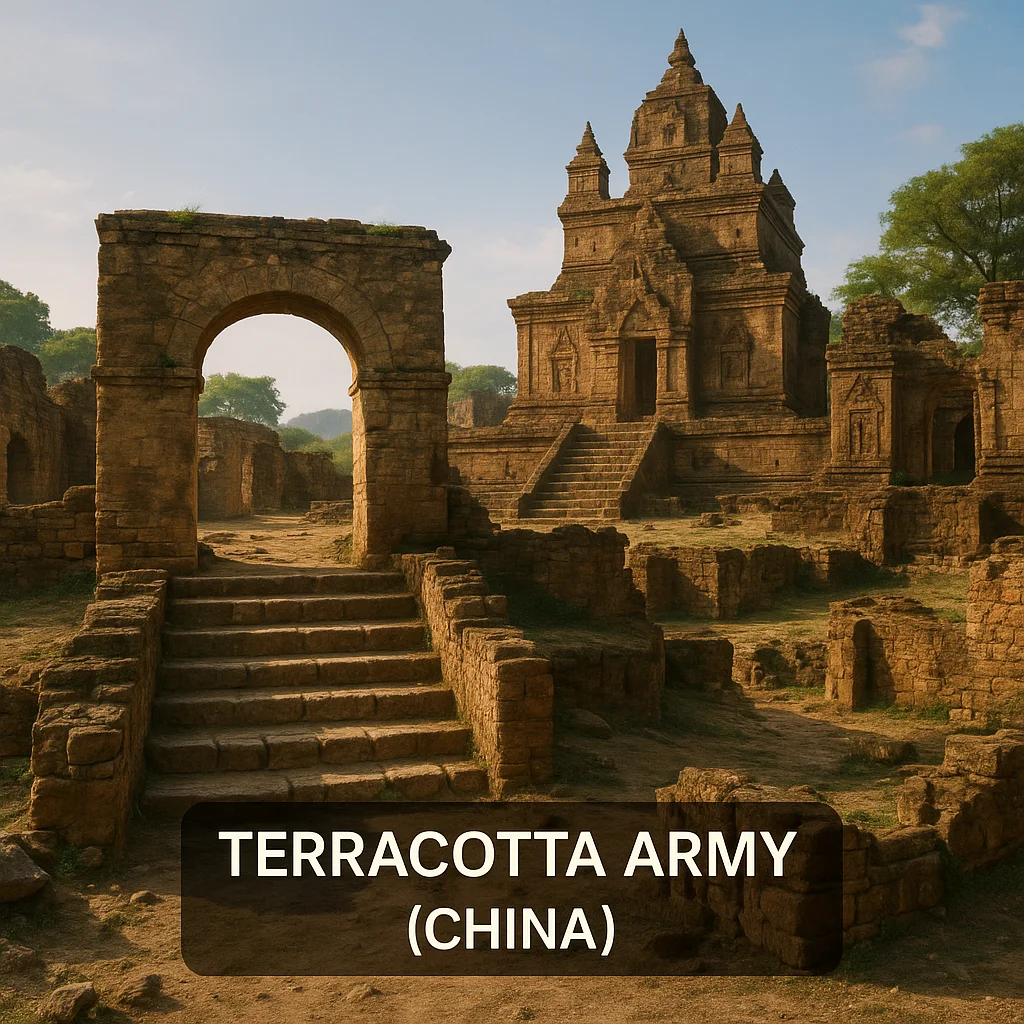
What makes the Terracotta Army special is its sheer scale and craftsmanship. Thousands of statues, each with unique facial features, were created to accompany the Emperor Qin Shi Huang in the afterlife.
Visitors to the site can explore both outdoor pits containing the army and museum-style indoor exhibitions. It's an educational experience walking through the installations where archaelogical work continues to this day.
- Location: Xi'an, Shaanxi Province, China
- Era: Around 210 BCE
- Typical Visit Length: Half-day to full day
- Difficulty: Easy to medium, mostly walkable
- Best Season: Spring and autumn for mild weather
- Highlight: Pit 1 with infantry and chariots
🗺️ Where It Is and How to Orient Yourself
The Terracotta Army is situated in Xi'an, in China’s Shaanxi Province. Xi'an, a city known for its rich history, serves as a historical gateway to China's ancient past.
Visitors typically arrive through Xi'an Xianyang International Airport or by train at Xi'an Railway Station. Since the site is located about 40 kilometers from the city center, a day trip is feasible, though an overnight stay allows for a more relaxed experience.
The site lies within a region characterized by gentle hills and fertile plains, making it easily accessible and providing a picturesque backdrop for photos.
🕰️ History in a Nutshell
The Terracotta Army was commissioned by Emperor Qin Shi Huang, the first emperor of a unified China, in the late third century BCE. It was part of his mausoleum, intended to protect him in the afterlife.
The creation of this army marked a peak in Qin dynastic power, symbolizing both dominance and the emperor's eternal reign. However, following Qin Shi Huang's death, his dynasty quickly fell.
The significance of this site remained unknown until its discovery by local farmers in 1974, sparking international interest and shedding light on ancient Chinese customs and beliefs surrounding death and the afterlife.
⭐ Top Highlights You Should Not Miss
- Pit 1: The largest excavation area featuring an army of soldiers, archers, and chariots.
- Noble Commanders: A section with statues representing the higher ranks, with rich detail in armor and headgear.
- Museum Exhibits: Showcasing artifacts, tools, and information about the excavation process.
Pit 1 is a vast expanse where the full structure of ranks of soldiers can be seen in a wide view, providing a breathtaking sight that captures the essence of Qin Shi Huang's massive necropolis.
🧱 Architecture, Materials, and Design (Made Simple)
The Terracotta Army is primarily made from terracotta clay, a durable material that was molded and fired to create the life-sized figures. Each figure was hand-crafted, resulting in unique features.
The style influenced by early Chinese funerary practices is reflected in the intricate design of the soldiers' armor and weaponry, which demonstrate both artistic and military sophistication.
Particularly striking are the individual facial features of each soldier, implying not only artistic skill but also organizational mastery. Some areas have been carefully restored, allowing visitors to appreciate both original and reconstructed elements.
🎟️ Visiting Guide (Time, Tickets, and What to Expect)
Most visitors spend between three to five hours on site, depending on their interest level and pace. Expect separate ticket areas for the pits and additional museum halls.
The site generally opens in the morning and closes by late afternoon, though operations can vary with seasons. It's advisable to arrive early to avoid crowds and bring water, a hat, and comfortable walking shoes.
🚆 How to Get There and Move Around
Travelers can reach the site by bus, taxi, or private vehicle from Xi'an city center. Public buses offer a cost-effective solution, while taxis give convenience and flexibility.
Entrance is unified, with clearly marked paths allowing easy movement. Note that some uneven terrain exists, but much of the area is accessible and beginner-friendly.
🌤️ Best Season, Weather, and Time of Day
The best times to visit are during spring (March to May) and autumn (September to November), offering milder temperatures. Early mornings or late afternoons provide ideal lighting for photos.
If visiting during the wetter summer months, have a plan for indoor alternatives, including the museum exhibits on site which offer shelter and fascinating insights into the site's history.
⚠️ Safety, Rules, and Respectful Etiquette
Visitors should wear sturdy footwear and dress for variable weather conditions. Respectful behavior is expected, particularly in quiet or sacred areas signposted throughout the grounds.
While photography is generally allowed, restrictions may apply to the use of flash or drones. Stay on designated paths to preserve the site, and avoid touching the statues to prevent damage.
🗺️ Nearby Places and a Simple One-Day Itinerary
In addition to the Terracotta Army, explore Xi'an’s City Wall, the vibrant Muslim Quarter, or the ancient Giant Wild Goose Pagoda. Each provides a further glimpse into China's dynamic history.
- Morning: Arrive early at the Terracotta Army and explore the pits.
- Midday: Visit the on-site museum for more detailed exhibits.
- Afternoon: Return to Xi'an city for lunch in the Muslim Quarter.
- Evening: Walk around Xi'an’s Ancient City Wall at sunset.
🧩 Stories, Myths, and Common Questions
Myth: Legend says the terracotta statues were real soldiers transformed into stone. Truth: They are intricately designed clay figures, reflecting the artistry of ancient craftsmen.
Question: Was the Terracotta Army a "lost" civilization? Answer: No, but it was undiscovered for centuries until the 20th century.
Question: Is a guide needed? Answer: While not compulsory, guides offer valuable insights, enhancing the historical understanding of the site.
📌 Summary and Who This Site Is Best For
- The Terracotta Army is a large collection of ancient clay soldiers in Xi'an, China.
- Located in Shaanxi Province, reachable from Xi'an.
- Commissioned by the first emperor of China as his eternal guardians.
- Includes three main pits and a museum showcasing thousands of figurines.
- Made from intricate terracotta clay, demonstrating mastery of ancient crafts.
- Visit length varies from a quick look to a detailed exploration.
- Best visited in spring or autumn; early images are most rewarding.
- Maintain respect by staying on paths and observing photography rules.
- Nearby, explore Xi'an's rich historical offerings like the City Wall.
- Memorable for its unprecedented scale and artistry, unique to this emperor's mausoleum.
The Terracotta Army is ideal for those fascinated by ancient history, meticulous craftsmanship, and legendary emperors. Families, history enthusiasts, and photographers will find much to appreciate.
The site embodies cultural history and artistic accomplishment, making it a significant visit for understanding ancient China. Whether you're a seasoned traveler or a curious beginner, it promises a rewarding experience.
Visit responsibly, respecting the site's heritage and contributing to its preservation for future generations.