🏛️ Valley of the Kings (Egypt)
🔎 Quick Facts and Why It Matters
The Valley of the Kings is a famous archaeological site in Egypt, known worldwide for its extraordinary collection of tombs belonging to pharaohs and powerful nobles from the New Kingdom period. It offers visitors a deep dive into ancient Egyptian civilization through a network of richly decorated crypts.
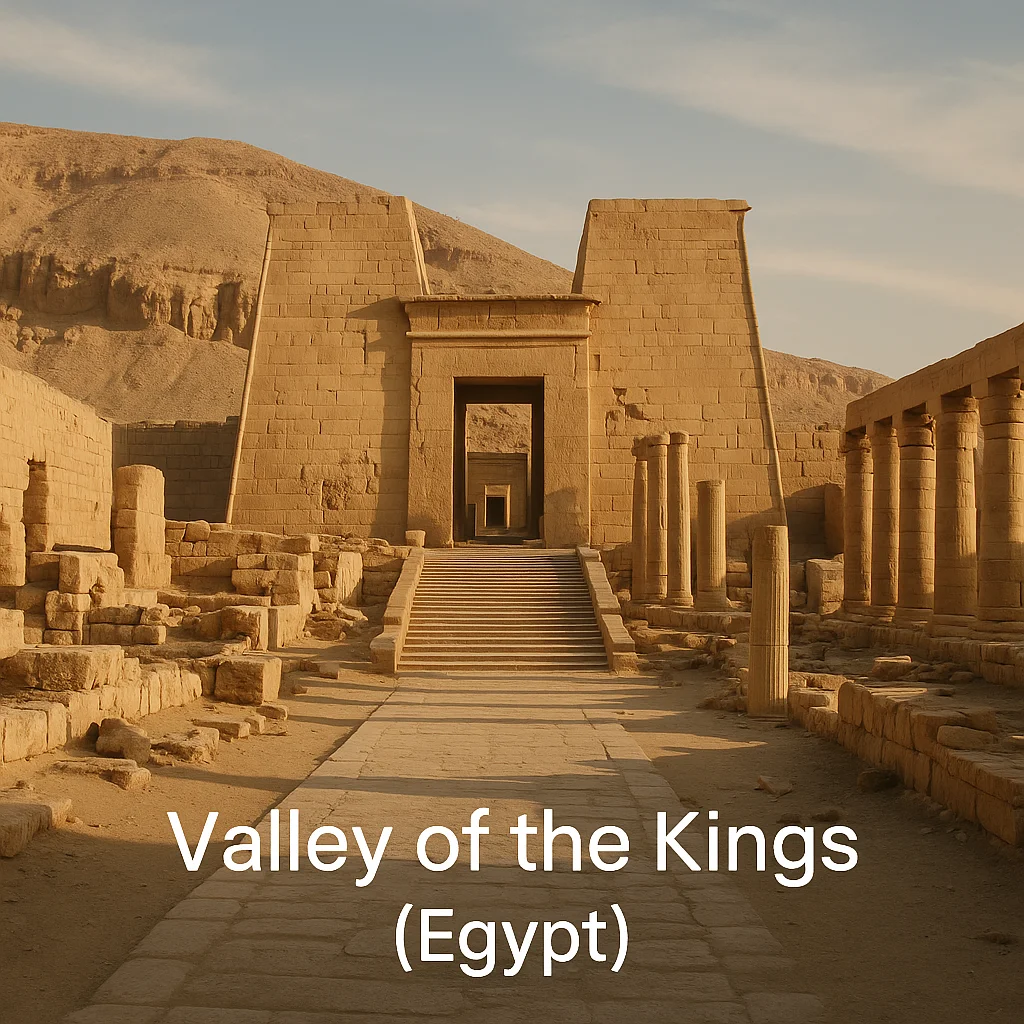
What makes the Valley of the Kings truly special is its concentration of elaborate tombs filled with intricate wall paintings and hieroglyphs. This site provides a walkable journey through history, where travelers can witness ancient art and engineering at their finest. Wandering through these ancient chambers gives visitors a chance to imagine the glory of Egypt's past.
In this guide, beginners will learn about the key attractions of the Valley of the Kings, the historical context of the site, and practical tips to make a visit smooth and informative. We'll also cover the architectural marvels of the tombs and other significant highlights.
- Location: Luxor, Egypt
- Era: New Kingdom of Ancient Egypt (circa 16th to 11th century BC)
- Typical Visit Length: 2-4 hours
- Visiting Difficulty: Moderate (steps and uneven pathways)
- Best Season: Late fall to early spring (cooler temperatures)
- Main Highlight: Tomb of Tutankhamun
🗺️ Where It Is and How to Orient Yourself
The Valley of the Kings is located on the west bank of the Nile River, opposite the city of Luxor, in southern Egypt. Luxor is the closest major city and serves as the main gateway for visitors arriving by air or rail. Luxor's international airport connects to several regional hubs without fixed schedules in this guide.
Visiting the Valley of the Kings can be managed as a day trip from Luxor, although staying overnight allows for a more leisurely exploration. The valley is nestled in a desert area, flanked by rocky hills which provide a natural backdrop to this historic locale.
For a mental map, picture the site amid a vast desert plateau, with tombs carved into the hillsides, visible as visitors follow a main path weaving through this ancient necropolis.
🕰️ History in a Nutshell
The Valley of the Kings was established as a royal burial ground during the New Kingdom period and was actively used between the 16th and 11th centuries BC. It served as the final resting place for pharaohs and privileged nobles, aiming to secure their passage to the afterlife.
The site's peak use coincided with Egypt's expanded power and wealth, reflected in the craftsmanship and scale of the tombs. Over time, the site fell out of use, with the decline of the New Kingdom and no longer serving as an elite burial place.
Today, the Valley of the Kings persists as a ruin primarily due to the area's dry desert conditions, which have helped preserve the tombs and their intricate decorations over millennia.
⭐ Top Highlights You Should Not Miss
- Tomb of Tutankhamun (KV62)
- Tomb of Ramses VI (KV9)
- Tomb of Seti I (KV17)
- Valley Viewpoints
The Tomb of Tutankhamun is perhaps the most famous in the valley. Although smaller in size, its significance lies in the vibrant treasures found within. The best photo spot is just outside the tomb's entrance, providing a full structure visible context against the valley backdrop.
The Tomb of Ramses VI offers expansive corridors adorned with detailed hieroglyphic engravings. Capture the entire entrance façade and surrounding hill by positioning yourself to include the tomb's stairway approach.
Seti I's tomb is one of the longest and deepest, revealing breathtaking funerary art. A photo taken from afar captures the open area around its wide view with surrounding context.
For panoramic valley views, head to one of the higher ridges to see the entire necropolis landscape laid out beneath the expansive desert sky.
🧱 Architecture, Materials, and Design (Made Simple)
The Valley of the Kings features tombs constructed primarily from the limestone of the surrounding hills. Workers hand-carved extensive networks of chambers, utilizing techniques including chiseling and plastering to create smooth surfaces for painting.
The architectural style reflects ancient Egyptian traditions, focusing on symmetry and alignment with the stars. Many tombs feature long corridors leading to an inner burial chamber, displaying vibrant frescoes of celestial and religious scenes.
Recognizable features include iconic arches, vividly colored reliefs, and abundant hieroglyphs. Restoration projects have carefully preserved original elements, stabilizing and cleaning many areas for public viewing without altering the inherent design.
🎟️ Visiting Guide (Time, Tickets, and What to Expect)
Visitors typically spend between 2 to 4 hours exploring the site. Entry into the valley requires a ticket, with additional tickets needed for specific tombs like Tutankhamun and Seti I. Guided tours are available, offering invaluable context, although self-guided visits are possible with guidebooks.
The site generally operates from morning till late afternoon, with seasonal changes in opening times. It's wise to arrive early to avoid midday heat and crowds. Basic amenities like water stations and shade areas add comfort to the experience.
First-time visitors should prioritize hydration and prepare for the sun by wearing hats and sunscreen. Comfortable walking shoes are essential due to uneven and rocky terrain.
🚆 How to Get There and Move Around
Access to the Valley of the Kings is achievable by taxi or organized tours from Luxor. While public transport isn't direct, private drivers offer a convenient ride catering to customized schedules. Self-driving provides flexibility but requires careful route planning.
The site has a primary entrance that simplifies navigation for beginners. The paths between the tombs are well-marked, making self-guidance manageable, though uneven surfaces can challenge accessibility for those with mobility issues.
🌤️ Best Season, Weather, and Time of Day
Visiting between late fall to early spring provides cooler and more comfortable temperatures, making it the best season for sightseeing. Mornings and late afternoons are optimal for avoiding midday sun, with slanting light ideal for photography.
If rain occurs, which is rare, consider visiting the local museums or other covered historical sites in Luxor. Always check the weather forecast to tailor your visit for the best experience.
⚠️ Safety, Rules, and Respectful Etiquette
Due to uneven ground, sturdy footwear with good grip is advisable. Respect sacred spaces by keeping voices down in tombs and observing all signage. Certain areas may have photography restrictions; always comply with posted rules.
Conservation efforts are key; avoid touching or leaning against fragile walls or carvings, and stay within designated walkways. Be mindful of personal belongings, especially in crowded areas, to guard against petty theft.
🗺️ Nearby Places and a Simple One-Day Itinerary
Consider extending your visit to nearby attractions such as the Temple of Hatshepsut, the Colossi of Memnon, and the Luxor Temple. The Ramesseum is another intriguing monument from the same historical period.
- Morning: Start at the Valley of the Kings, focusing on key tombs.
- Midday: Explore the Temple of Hatshepsut.
- Afternoon: Visit the Colossi of Memnon and the Ramesseum.
- Evening: Enjoy a leisurely stroll and dinner in Luxor.
🧩 Stories, Myths, and Common Questions
Is the Valley of the Kings a hidden city? While not hidden, the valley's location shields it from view until one enters. It's a straightforward necropolis rather than a "lost city".
Were all pharaohs buried here? Not all. The Valley of the Kings was mainly used during Egypt's New Kingdom, with earlier pharaohs buried elsewhere, like in pyramids.
How challenging is it to navigate the site? Though some parts can be steep or uneven, pathways are well-trodden. Most visitors find it moderately challenging.
Is it suitable for kids? While children can explore, keep them close due to unguarded edges and delicate art. Engaging stories from guides can enhance their experience.
Are guided tours beneficial? Yes, guides offer in-depth insights and historical context, enriching your understanding far beyond basic guidebooks.
📌 Summary and Who This Site Is Best For
- Ancient burial site located in Luxor, Egypt
- Historical focus: New Kingdom era
- Key highlight: Tutankhamun's Tomb
- Rich in vibrant frescoes and hieroglyphs
- Examine extensive limestone craftsmanship
- Visit advised to allocate 2–4 hours
- Best season: Late fall to early spring
- Cultural respect and careful behavior emphasized
- Nearby must-sees: Hatshepsut, Memnon, Luxor Temple
- Memorable fact: Dry climate preserved tombs for millennia
The Valley of the Kings is particularly appealing to history enthusiasts, archaeology students, and families seeking educational experiences. Photographers will appreciate the vivid art and expansive landscapes.
Despite the challenges of its desert location, visiting the Valley of the Kings is a rewarding journey through a pivotal era in human history. The care taken to preserve and share this site makes it a worthy effort for any traveler.
We encourage all visitors to approach the Valley of the Kings with respect and curiosity, ensuring its legacy continues for generations to admire and learn from.